

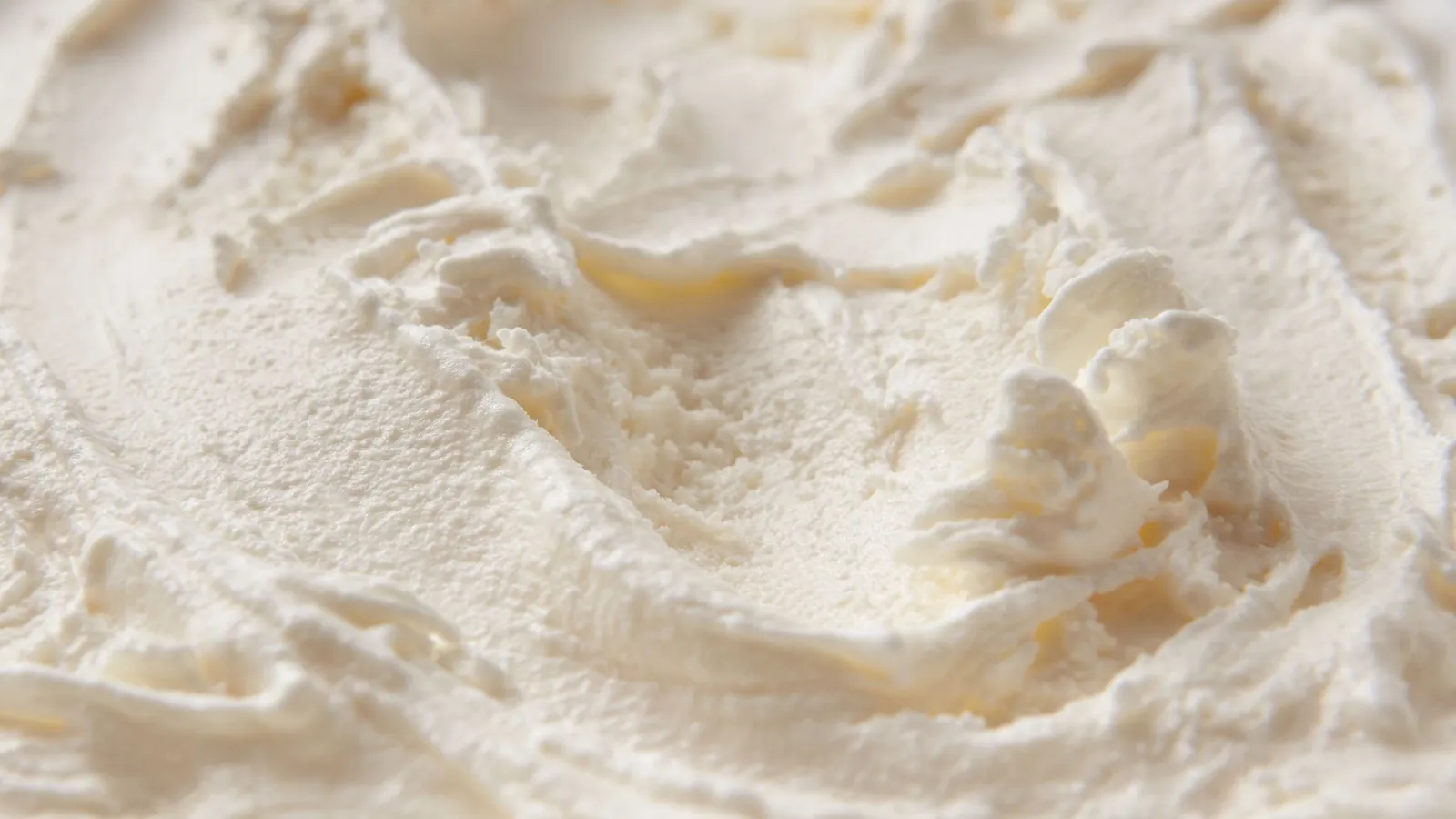
Picture a production operator watching cream climb the whisk. It has gone from a quiet puddle to a soft, glossy mound. One last whisk should give it a little extra strength. Then the surface turns rough. The swirl that looked ready for a cake now looks as though it has picked up tiny crumbs.
The change can feel unfair because the cream was so close. Yet it follows a perfectly understandable sequence. Whipping introduces air and changes how fat droplets connect. A useful foam sits partway along that journey, and continued working can carry it beyond the texture the product needs.
A little joining does a useful job
Dairy cream contains fat droplets dispersed in a watery phase. As the whisk draws in air, milk proteins help stabilise the new bubble surfaces. Meanwhile, collisions between fat droplets allow some of them to join partly together. This behaviour is often called partial coalescence.
Those partly connected droplets help form a supporting structure around the air bubbles. The cream gains body, and a lifted whisk starts leaving a shape behind. Both air incorporation and the developing fat structure matter. A foam can look impressively large while still draining or losing shape during holding.
The fat inside each droplet also matters. A suitable balance of solid fat crystals and liquid fat helps the droplets make useful connections. That balance depends on temperature and on the cream's earlier cooling and holding history. The ingredient arriving at the mixer already has a story.
Temperature travels with the cream
Start by checking the cream itself. A chilled room or a cold bowl tells only part of the story. Cream can warm during transfer, mixing and waiting, particularly when the batch sits beside equipment giving off heat. Record the product temperature at meaningful stages of the actual process.
Warmer fat behaves differently from properly conditioned chilled fat, so whipping speed and foam stability can change. Cooling history deserves attention too. Cream brought rapidly to a cold reading may behave differently from cream that has had time to develop its fat crystal structure under a controlled procedure.
Use the preparation guidance for the cream being tested, and keep that preparation consistent between trials. Dairy cream and formulated whipping toppings have different compositions. Within dairy cream, fat content and processing history can also change performance. Identify the material before deciding what a good whipping curve should look like.
The extra whisk has consequences
As whipping continues, the fat connections become more extensive. The smooth foam can become coarse, with visible grains and liquid separating from the structure. Further working can take it towards butter formation, where fat gathers into a more continuous mass and the watery phase is expelled.
A fixed mixing time may miss this transition when batch size, starting temperature or mixer loading changes. Watch the surface, the whisk tracks and the way the cream lifts. Near the intended endpoint, small changes in working can have a noticeable effect on the result.
The cream also receives more handling after the mixer stops. Transferring it, filling a piping bag and forcing it through a nozzle all add mechanical work. Choose an endpoint that allows for those steps. A sample judged only in the bowl has yet to do much of its real job.
Give the swirl a proper audition
Define the application before comparing candidates. A cake filling needs to spread and hold between layers. A piped decoration needs a clean outline. A spooned dessert may need a softer feel. Agree on the target with the people who will handle and eat the finished product.
- Match cream identity, cooling history, batch size and starting temperature.
- Record mixer setup and the appearance at the chosen whipping endpoint.
- Pipe or spread through the equipment used in the intended application.
- Check shape, drainage and surface smoothness after the planned chilled hold.
- Taste at the intended serving temperature for lightness, graininess and a greasy coating.
Keep photographs and short descriptions together. A tall peak, a sharp piping ridge and a pleasant mouthfeel describe different aspects of performance. Comparing them side by side helps the team choose a usable balance. Include the cream on the actual cake or dessert, where contact with other components can affect holding.
For the next trial, change one part of the preparation or whipping procedure and keep a reference. If the roughness appears only after piping, concentrate on the handling between the bowl and the finished swirl. If it appears in the bowl, follow the temperature and whipping record first.
That last whisk becomes easier to judge when everyone knows what the cream must do next. Bring your bowl-to-nozzle observations to Specsy or the SpecSol team, and we can help you shape a practical comparison. The aim is a swirl that looks inviting and stays lovely to eat.