

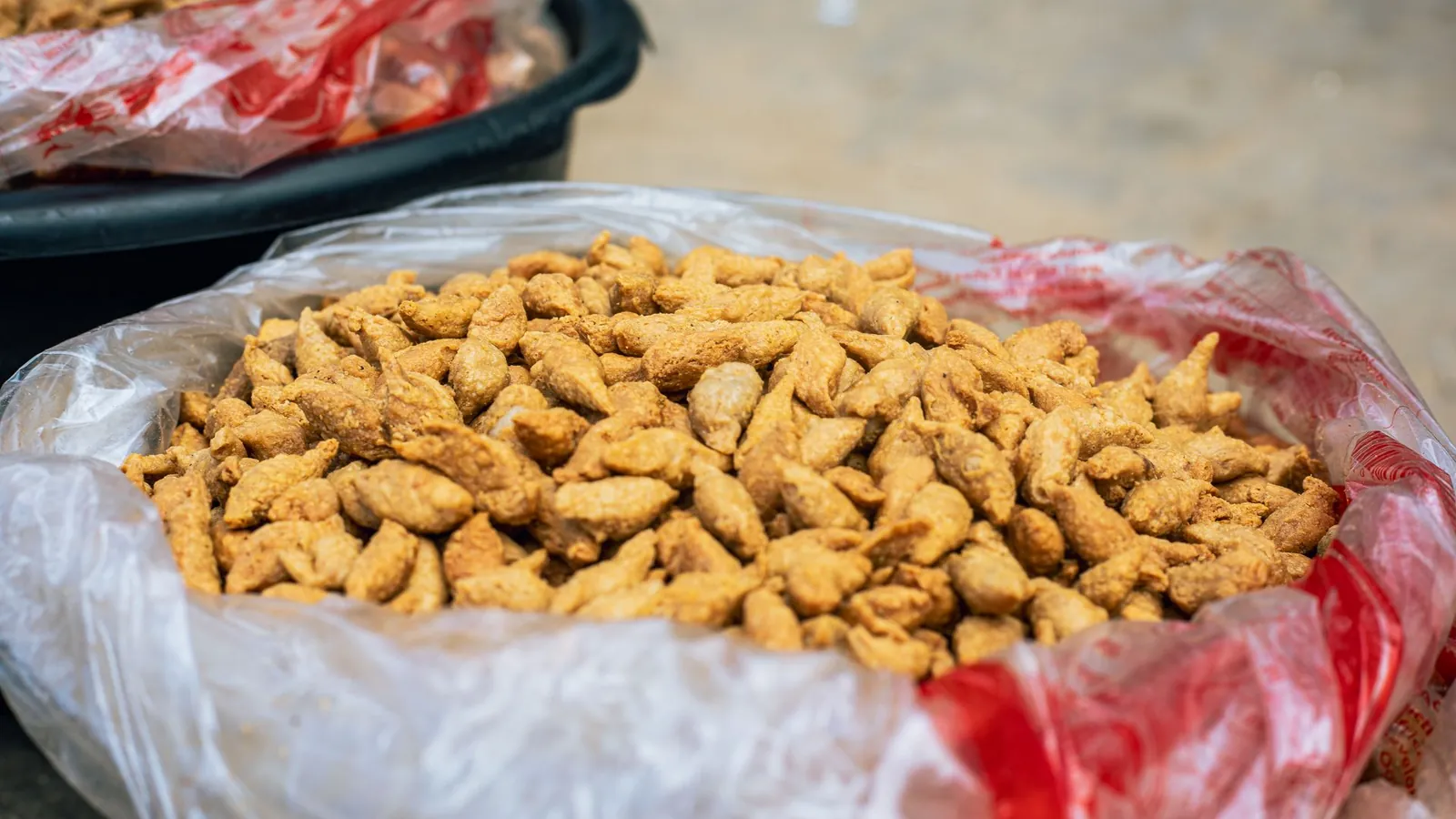
Imagine a development cook lifting a plant protein chunk from a pan of gravy. It looks plump and well coated. The knife passes through the outside, then meets a stubborn centre. The colour says dinner is ready. The bite says there is still work to do.
Textured plant protein is a structured ingredient, not simply loose protein pressed into a shape. For dry chunks, preparing that structure is part of the recipe. Hydration, draining and cooking each contribute to the final result, and they deserve separate observations.
A chunk has an inside worth meeting
Many dry textured proteins are made by extrusion. Heat, moisture and mechanical work transform a protein-rich mixture into a structure that can be dried and cut into pieces. Depending on the process, the result can contain pores, layers and channels through which water moves.
Those structures differ between ingredients. A light, open chunk and a dense piece may share a general description but take up water differently. The protein source, accompanying ingredients and processing history can also affect flavour and texture.
Think of hydration as water entering and interacting with an existing structure. The outside encounters the liquid first. The centre needs water to reach it too. A wet surface is therefore an observation about the surface, not proof that the whole piece is ready.
Size changes the journey to the centre
A larger or thicker chunk generally gives water farther to travel. Internal density and the way pores connect can matter just as much as the overall shape. Compare pieces that represent the size range actually arriving in production, including the larger examples.
Cut samples through the middle during development and compare the centre with the outside. Note whether the middle is dry, firm, rubbery or simply different from the target bite. These descriptions are more useful than the single word chewy, which can mean several things to different tasters.
Follow the preparation instructions for the particular ingredient as a starting method, then verify the result in your application. There is no universal soaking procedure that makes every dry textured protein behave identically. Record liquid temperature, preparation time and mixing conditions without treating one successful trial as a rule for all grades.
Water uptake and flavour uptake are not twins
A piece can absorb water yet still taste bland in the middle. The movement and binding of flavour components depend on their properties and the food around them. A strongly coloured gravy on the outside does not demonstrate that flavour has reached the centre.
Compare the hydration liquid and sequence deliberately. Preparing in water and then cooking in sauce is a different route from hydrating in a seasoned liquid. Keep the rest of the recipe consistent so the comparison answers a clear question about preparation.
Include the base flavour of the protein in the tasting notes. More seasoning may disguise an imbalance in the first mouthful while leaving an unwanted finish. Assess aroma, centre flavour and aftertaste as separate observations before deciding that the whole issue is insufficient seasoning.
Draining is an ingredient operation too
The amount of free liquid carried into the next stage changes the effective recipe. Inconsistent draining can make one batch dilute the gravy more than another. Pressing or squeezing can also affect the chunk structure, so record the method rather than leaving it to personal judgement.
Compare the prepared mass after a consistent draining procedure if uptake is part of your trial. A weight recorded while the pieces are dripping cannot be compared fairly with one recorded after pressing. Neither result is useful unless the preparation history travels with it.
Look for breakage during handling. A piece that hydrates readily but falls apart in the mixer may not suit the intended product. The target is a useful balance between tenderness, shape retention and the chewing character of the finished meal.
The final cooking step gets a vote
Cooking in the actual sauce adds further heat, mixing and holding. Evaluate the chunks after that full sequence, including the intended reheating step where relevant. A promising hydrated sample can become too soft or remain too firm by the time the meal is eaten.
- Identify the ingredient grade and the actual range of piece sizes.
- Cut hydrated pieces and compare the centre with the outer layer.
- Standardise draining and record any pressing or squeezing.
- Check flavour uptake separately from water uptake.
- Assess tenderness and integrity after cooking, holding and intended reheating.
Use suitable hygiene and temperature controls throughout preparation. Hydration changes a dry ingredient into a moist food, so the holding stage belongs within the site's food safety procedure. A texture trial does not justify leaving prepared chunks waiting without control.
The cook's knife has offered a useful shortcut: look inside before changing the whole dish. Once the centre, draining method and final cooking step agree, the chunk can deliver the bite the recipe promised from the start.