

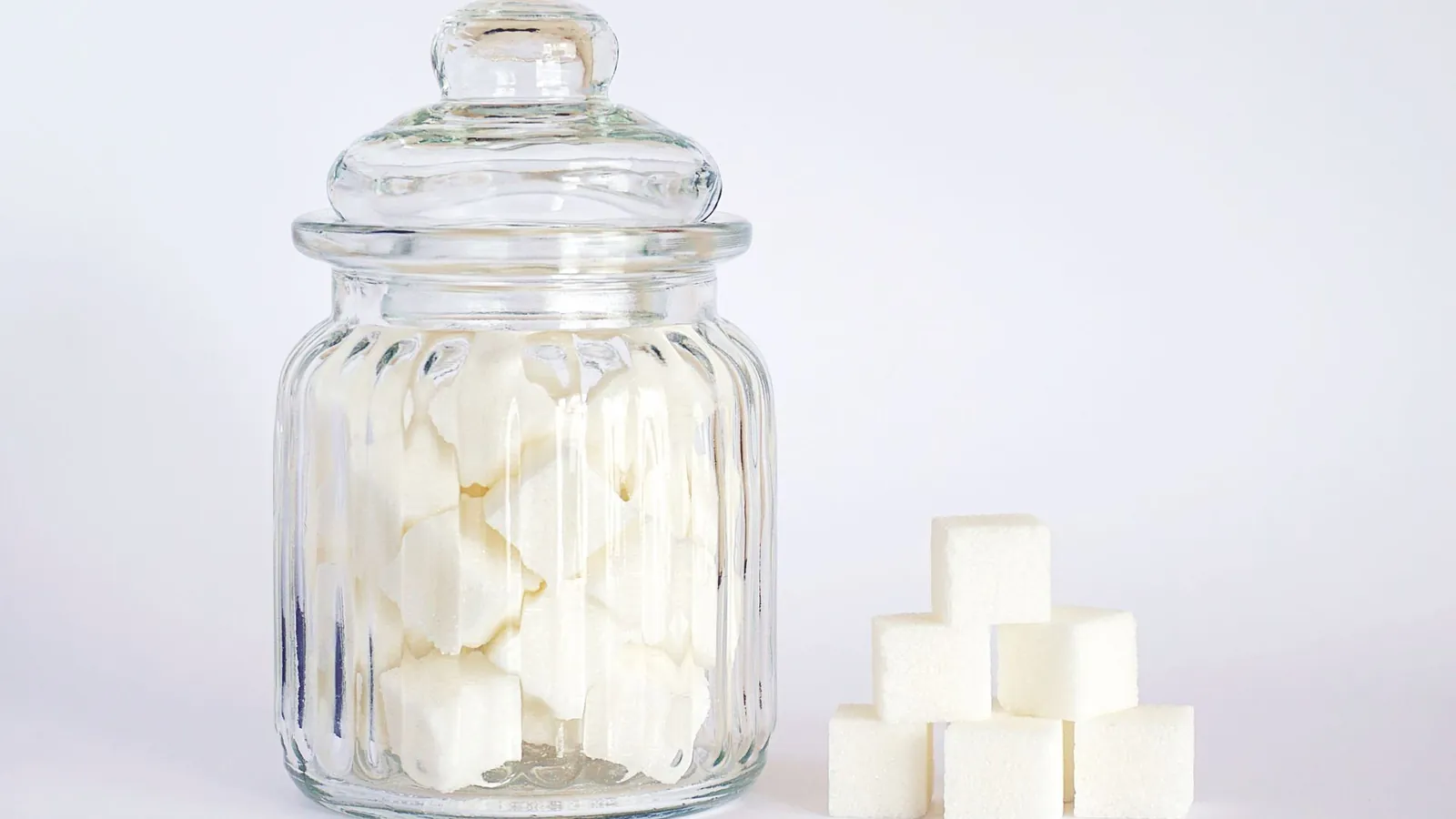
The developer tastes the new sweet and nods at the sweetness. Then comes a pause. The piece feels thin, slightly odd and nothing like the satisfying bite of the reference. In this imagined development session, the sweetness target has been met while the product itself has wandered off.
The missing ingredient was doing more work than the tasting note suggested. Sugar contributes physical material as well as sweetness. Taking it out can leave gaps in structure, water behaviour and eating quality that a sweetness adjustment cannot fill.
The sugar has more than one job
Depending on the food, sugar contributes bulk, helps form a glass or a crystalline structure, influences viscosity and changes how water behaves. It can also take part in browning reactions and affect flavour release.
Those roles vary by application. In a hard sweet, the sugar structure is central to the bite. In a frozen dessert, dissolved sugars affect freezing behaviour. In a baked product, sugar interacts with the development of texture and colour during heating.
Start by describing the role sugar plays in the particular product. A general instruction to make it less sweet or reduce sugar does not yet explain what the finished food must still do. That functional description makes the next ingredient discussion much more productive.
Sweetness and bulk need separate answers
Intense sweeteners can provide substantial sweetness with very little physical material. That makes them useful for a sweetness task, but they do not automatically replace the mass and structure of the sugar removed.
Ingredients considered for bulk replacement can include suitable fibres, polyols and other carbohydrate ingredients. They differ in solubility, water binding, flavour and texture. Some contribute sweetness of their own, while others mainly change the physical properties of the food.
There is no universal exchange in which any bulking ingredient takes over every sugar function. The replacement system may need several complementary jobs: providing solids, managing moisture, supporting texture and balancing sweetness over the course of a bite.
Follow the water
Changing dissolved solids changes the environment around water. The result can affect softness, stickiness, crystallisation and how components interact. A product that feels acceptable immediately after manufacture may change during storage as moisture redistributes.
Water activity and moisture content are related to different questions. Moisture content describes how much water is present. Water activity describes how available that water is, which matters to product stability. Neither should be assumed unchanged simply because the finished mass looks similar.
Reassess the product's established preservation controls when reformulation affects them. A successful texture trial is not proof that the original shelf-life assessment still applies. Use suitable measurements and validation for the changed food rather than relying on sweetness or appearance.
Mouthfeel can surprise the tasting panel
Some polyols can create a cooling sensation as they dissolve in the mouth. That may suit a mint-flavoured product but feel unexpected in another sweet. Treat cooling as a sensory property to assess, not an automatic defect or benefit.
Bulking ingredients can also change chewiness, dryness, lingering coating and the way flavours arrive. A replacement that looks excellent in a basic mixture may feel different once fat, protein or other solids join the recipe.
Compare the full food under normal eating conditions. The intended portion and the time taken to eat it can reveal a lingering sweetness or texture that a quick taste misses. Invite specific descriptions rather than a single judgement of better or worse.
Nutrition needs a complete view
Less sugar is one design objective. The finished nutrition profile also depends on what replaces it and what else changes in the recipe. Do not assume that a sweetness match or a sugar reduction alone settles energy content, portion suitability or every nutritional goal.
Digestive tolerance is another consideration when screening some fibres and polyols. Responses depend on the ingredient, the amount consumed and the individual. Avoid promising that a formulation will suit everyone, and consider the intended consumption pattern during development.
For ingredient choices and product claims, check the current FSSAI regulations. Keep the analytical work and label review connected to the actual final formula. A development nickname is not evidence for a claim on the pack.
A checklist for rebuilding the bite
- List sugar's physical and sensory roles in the reference food.
- Define the intended texture, sweetness profile and nutrition objectives.
- Compare replacement ingredients in the complete formulation.
- Check cooling sensation, aftertaste and lingering mouthfeel.
- Follow texture, moisture behaviour and relevant stability measures in storage.
- Review the finished nutrition information and proposed claims.
Keep a reference and record which function each change is meant to improve. If the sample becomes softer, decide whether that is desirable softness or the beginning of a handling problem. Clear observations are more useful than trying to make every replacement ingredient sound successful.
Back at the imagined bench, the developer has a better brief than simply putting the sweetness back. The task is to rebuild a food that works from the first bite to the last. That gives sugar reduction a fair chance to be satisfying as well as purposeful.