

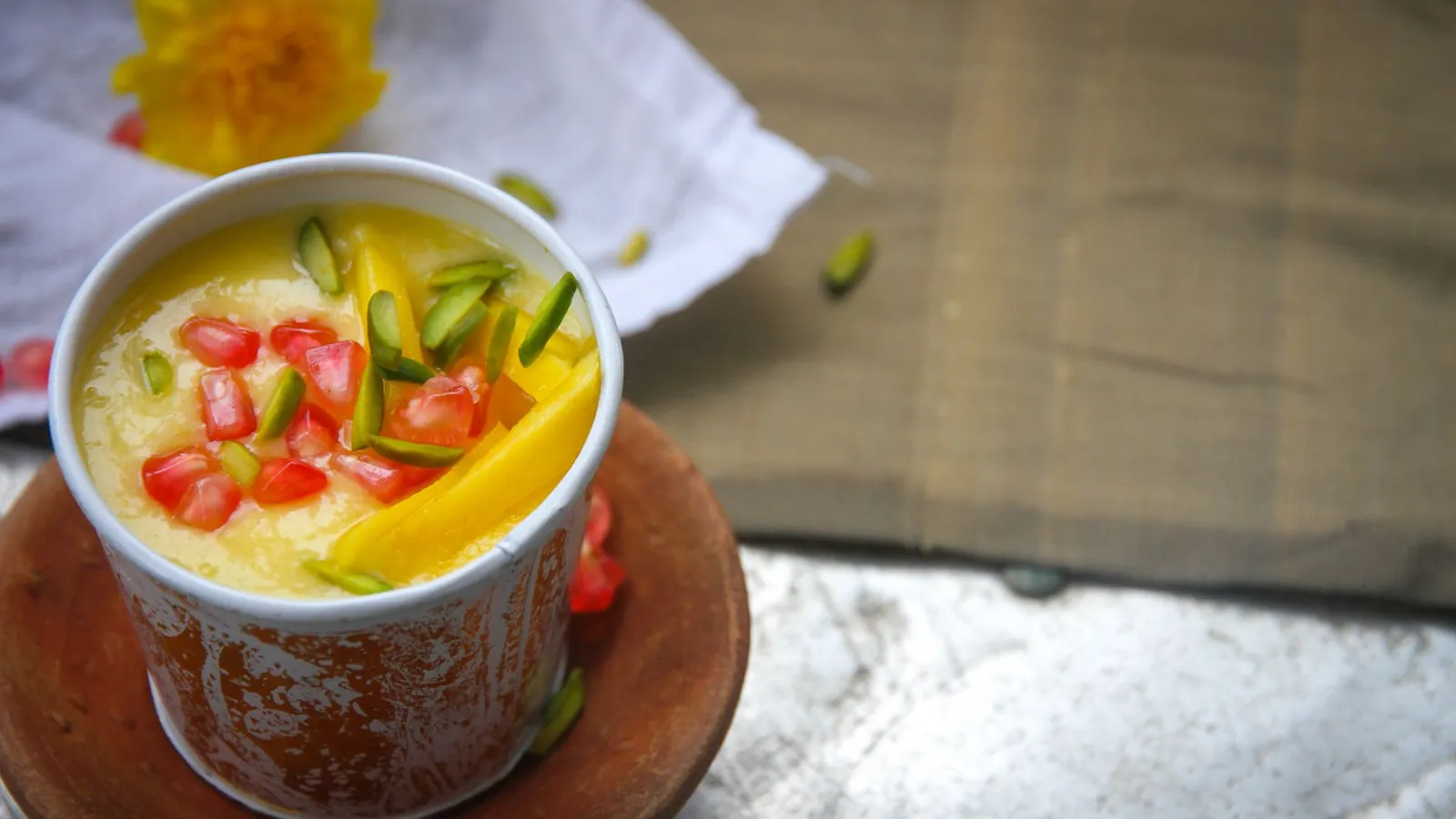
Picture a dairy operator drawing a spoon through a fresh batch of shrikhand. The groove stays neatly in place. At the filler, a cup receives the same product, but the surface slowly levels itself. The operator looks back towards the mixer. Somewhere along that short journey, the spoon mark has lost its confidence.
It is tempting to reach for the recipe sheet immediately. First, follow the route. Shrikhand is a concentrated cultured milk product with a structure that responds to handling. The mixer, pump, pipework and nozzle can each change what arrives in the cup, even when the ingredient list stays exactly the same.
The structure has already done some work
Culturing changes the milk proteins so that they form a gel. Draining concentrates the material, and subsequent mixing with the other ingredients creates the familiar smooth dessert. The finished body depends on the starting milk structure, concentration, composition and the way that structure has been worked.
Mechanical work moves layers of product past one another. Food technologists call this shear. A spoon applies it, and so does a pump. In a structured product, shear can rearrange or disrupt the connections that help it resist movement. Smoothness and firmness therefore need to be considered together.
Some apparent thinning happens while the product is moving. Some structure may rebuild during rest, while other changes persist. Do not assume that every soft sample is permanently damaged, or that every sample will recover. The useful question is how this particular shrikhand behaves after the handling and holding it will actually experience.
Walk beside the product
Start with the final mixing stage. Record how long mixing continues after the desired smoothness has been reached. A batch waiting for an available filler may receive extra agitation simply because nobody has stopped the mixer. That waiting period belongs in the process record.
Next, follow transfer. Pump operation, restrictions, bends and any recirculation can add work. A sample that has travelled around a return loop repeatedly has had a different experience from one that went straight to the filler. Record the actual route rather than relying only on the pipework drawing.
Finally, watch the nozzle and filling action. A product can leave the holding vessel in good condition and change during the last part of the journey. Compare samples around individual stages where hygienic sampling is possible. This gives the team a location to investigate instead of a general complaint about thin cups.
Give the samples the same chance
Temperature can make a texture comparison misleading. A cooler mixer sample may seem firmer than a warmer nozzle sample even if handling is only part of the explanation. Measure the product temperature, then compare under a consistent, appropriate chilled assessment procedure.
Resting time matters just as much. Judging one cup immediately and another after a long rest mixes the effects of handling and recovery. Use matched observation points after collection. Keep the sampling method gentle and consistent, because vigorous spooning can itself work the structure you are trying to assess.
Use the same cup, fill depth and spoon movement for a simple practical comparison. If an instrumental texture or flow test is available, keep its preparation and measurement conditions consistent too. A reading without a sample history can look precise while answering the wrong question.
A short route checklist
- Identify the batch and the point where the desired mixer texture was reached.
- Record subsequent agitation, waiting and any recirculation.
- Collect labelled samples before transfer and after the relevant filling stage.
- Match product temperature, sample handling and resting time before comparison.
- Record spoon-mark retention, spreading and eating texture separately.
- Check the filled cup again after its planned chilled hold.
Photographs taken from the same angle can make the change easy to discuss. Pair them with short descriptions such as holds a groove, slowly levels or spreads readily. Agree what an acceptable cup should do before comparing alternatives, so the target does not shift halfway through the discussion.
Fix the stage that changes the body
If the biggest change appears during unnecessary recirculation, investigate that route with production. If it appears after prolonged mixing, review the endpoint and waiting procedure. Changes to equipment operation must still provide effective mixing, hygienic handling and the required filling performance.
Formulation can influence tolerance to handling, but an ingredient change should have a defined job. Adding more thickening material without understanding the route may create a heavy or sticky dessert at the mixer and still leave an inconsistent cup. Evaluate the complete process, including the pleasantness of the finished spoonful.
Keep visible whey separation as a separate observation. A soft, uniform shrikhand and a firm product with liquid collecting around it are different defects, although both can occur together. Record each clearly so that a successful correction for one is not mistaken for a solution to the other.
The spoon mark is a helpful clue, not the whole verdict. Bring the journey from mixer to cup to Specsy or the SpecSol team. With matching samples and a clear handling record, the next trial can focus on keeping that lovely body all the way to dessert.