

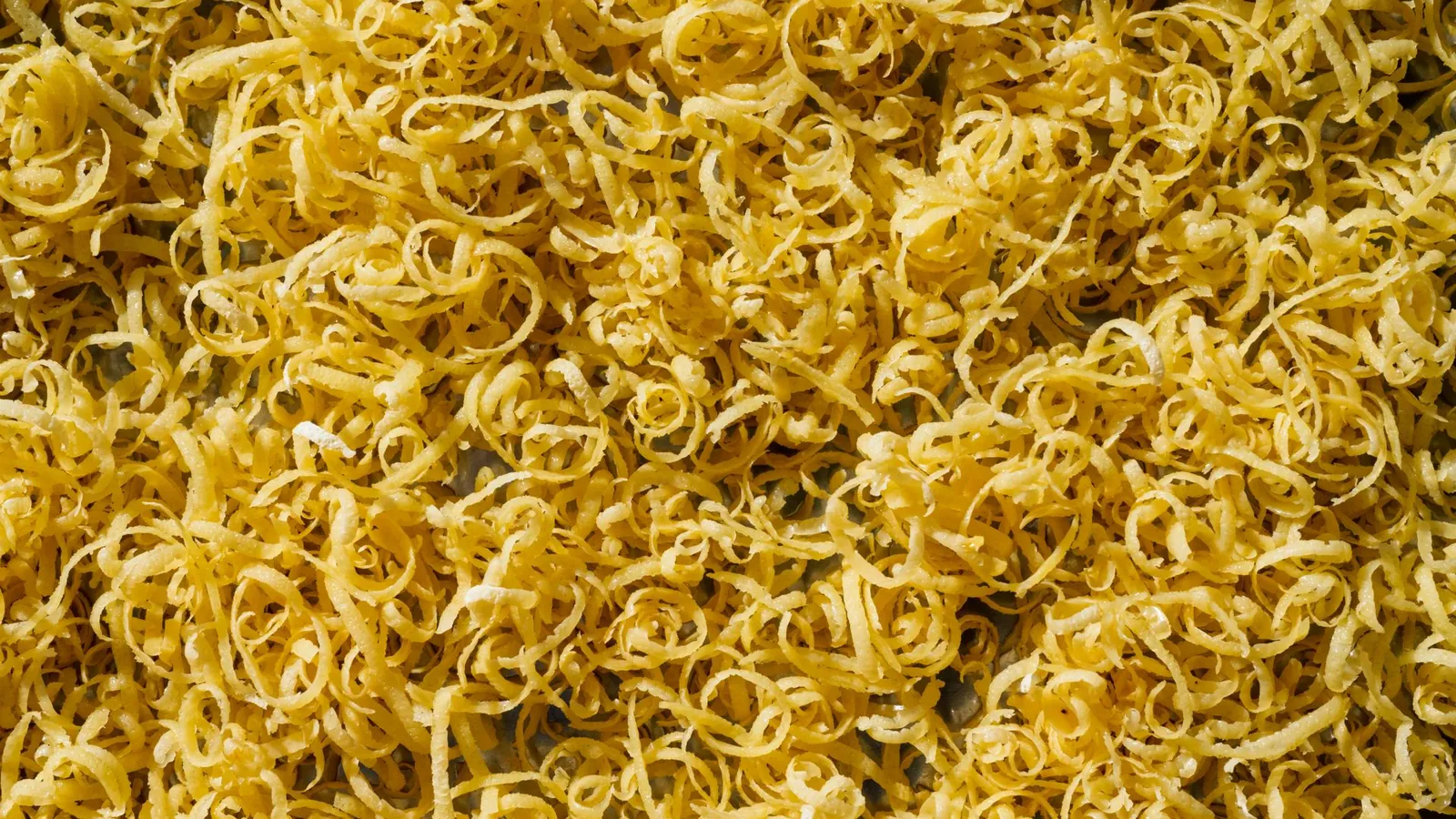
Picture a namkeen operator watching the sev die above the fryer. A steady curtain of strands should be falling towards the oil. Instead, short fragments appear, pause and tumble away. Some openings behave nicely. Others seem to have given up. The dough looks much like yesterday's, which makes the scene more puzzling.
Before adding water or changing the flour, watch where the break happens. Does the strand emerge already ragged, stretch briefly and snap, or stop flowing altogether? Those are different clues. Strand formation depends on the dough moving through the die and remaining connected long enough to reach the fryer.
The dough must flow and hold together
Sev dough needs enough mobility to pass through small openings, alongside enough cohesion to form a continuous strand. A stiff, unevenly hydrated dough can resist flow or break as it emerges. An excessively soft dough may lose definition or handle poorly. Neither result is described fully by the word thick.
Besan contains starch, protein and other components that interact with water. The dough is not a simple liquid, and its behaviour changes with preparation. Unlike a wheat bread dough, it should not be assessed by expecting the same stretchy gluten structure. Judge it by the job it must do.
Other recipe ingredients also influence flow and the fried result. Fat can change lubrication and texture, while salt and seasonings contribute to the overall system. Keep their identity and addition sequence consistent during the first investigation so that a dough comparison remains meaningful.
Small particles still need time with water
Flour particle size and distribution affect how water reaches the material and how the dough feels. A change in besan can alter hydration and flow even when the weighed recipe is unchanged. Check lot identity and the relevant flour specification before assuming that all bags will behave identically.
Mixing must distribute water through the dough. Dry pockets can interrupt a strand, while wetter patches can flow differently through neighbouring openings. Inspect the mixed dough for uniformity using the site's normal handling method. A smooth-looking surface can conceal uneven preparation underneath.
Resting allows hydration to continue and can change consistency before extrusion. Keep the rest controlled and repeatable, including covering and the conditions around the dough. A portion left exposed near warm equipment may lose surface moisture while the covered reference does not.
The die deserves its own inspection
If only certain openings misbehave, inspect those locations before reformulating the whole batch. Obstructions, dried dough and damaged edges can disrupt flow. Check the die safely using the established cleaning and maintenance procedure. Do not attempt to clear openings while equipment is operating.
Look at the feed too. An uneven supply of dough or interrupted pressure can produce pulsing strands. Record whether the problem follows a refill, a pause or a change in hopper level. The pattern over time may be more informative than a single handful of dough.
A different die changes the task asked of the dough. Opening dimensions and condition influence resistance to flow and the emerging strand. Use the intended die for the comparison and record its identity. A successful hand test cannot fully reproduce the production path.
Separate the curtain from the crunch
A continuous strand is a useful production result, but the snack still has to fry and eat well. A dough adjustment that improves flow may also change moisture removal, oil uptake and final bite. Keep strand formation and fried texture as separate observations before deciding whether the change helped overall.
- Identify the besan lot, recipe and actual preparation sequence.
- Check dough uniformity after mixing and after the controlled rest.
- Note whether breakage occurs across the die or at specific openings.
- Record pauses, refills and changes in feed consistency.
- Compare strand continuity using the same die and handling method.
- Assess the cooled fried product for shape, crispness and eating texture.
Photograph or record the emerging strands where this can be done safely. A short observation showing continuous flow followed by a pause is easier to discuss than a general note saying poor extrusion. Attach it to the dough condition and equipment state at that moment.
Choose the next trial from the evidence
If a consistently prepared dough fails at the same openings, equipment condition becomes the obvious next check. If all openings deteriorate as exposed dough waits, investigate holding and moisture distribution. If the problem starts with a new flour lot, compare its behaviour under the established preparation.
Change one relevant factor and keep a reference. Avoid repeated small additions made without a record, because the final dough then becomes difficult to reproduce. A useful correction should make the process more predictable for the next operator as well as improve the current trial.
The sev curtain need not be dramatic. Steady strands are exactly the happy ending the line wants. Ask Specsy or the SpecSol team to review your dough, die and fried-bite observations, and give the next batch a clearer route from mixer to fryer.