

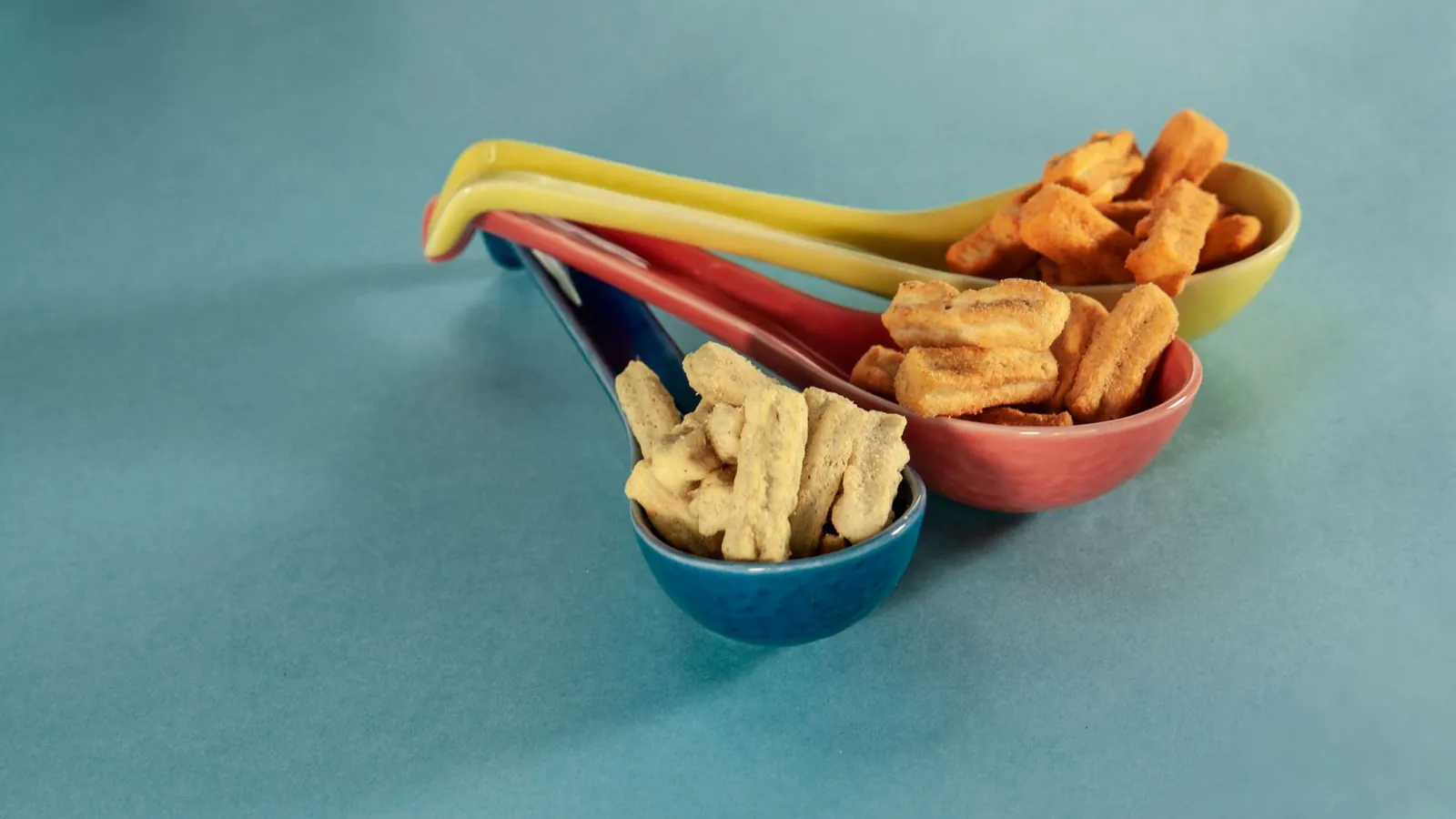
Picture an R&D lead reading notes from a dessert tasting. One panel member writes creamy. Another writes thick. A third writes greasy, while a fourth praises the smoothness. Everyone tasted the same sample, but the meeting is beginning to sound as though several desserts attended.
The panel may be noticing real differences between sensations rather than disagreeing about the sample. Creamy is a useful everyday word, but it can gather several ideas into one comfortable description. Product development becomes easier when the team unpacks that word into observations it can share.
Give each sensation a clear job
Thickness concerns resistance to flow or movement under a defined assessment. It can be noticed while pouring, moving a spoon or working a sample in the mouth. Those actions are not identical, so agree which one the panel is judging.
Smoothness concerns the absence of noticeable roughness or particles during a specified part of eating. A dessert can be thick and smooth, thick and grainy, or relatively thin and smooth. Treating thickness as a measure of smoothness hides these useful combinations.
Lubrication describes how readily surfaces move against one another during oral handling. Coating describes material or a sensation remaining on oral surfaces after the sample is swallowed or removed. A product can feel smooth during eating yet leave a coating that some tasters find heavy.
Start with the food on your bench
Choose a small set of attributes relevant to the product and its development question. A spoonable dessert may need thickness, graininess and mouth coating. A drink may need different emphasis. A long list of impressive words becomes unhelpful if the panel cannot use it consistently.
Write a short working definition for each attribute, including how and when to assess it. For example, decide whether coating refers to the immediate impression after swallowing or to what remains later in the agreed routine. Timing belongs in the definition.
Avoid definitions that simply repeat the word. Describing creaminess as how creamy it feels leaves everyone where they started. Describe the action and sensation instead, and keep positive or negative preference language out of the attribute definition.
Reference foods turn words into shared experiences
A suitable reference gives the panel something concrete to discuss. It might be a prepared starch paste for a thickness exercise, or a smooth and a deliberately grainier dessert for exploring particle perception. Choose safe, relevant materials that the team can prepare consistently.
Reference foods are rarely pure examples of a single property. A thicker paste may also feel more adhesive, while an oil-containing reference may change flavour as well as lubrication. State which attribute the exercise addresses and discuss the other sensations rather than pretending they are absent.
Document preparation, serving temperature, container and holding conditions. If the reference changes between sessions, the shared meaning can drift with it. Make sure the materials suit the panel's dietary and allergen requirements before using them in training.
Practise agreement before judging a reformulation
Let panel members assess the same reference using the agreed action and description. Collect their observations before discussing them together. Differences then become useful questions: did someone judge the spoon movement while someone else judged the finish in the mouth?
Use an agreed scale with clearly described anchors if scoring is needed. The purpose is to improve consistency in applying the definition, not to force every person to report an identical sensory experience. Persistent differences may indicate that a definition or reference needs more work.
Repeat selected samples across sessions to see whether the vocabulary remains stable. Keep preparation and serving conditions controlled. If results shift, check the samples, method and panel understanding before attributing every change to the new formulation.
A compact vocabulary check
- Choose attributes that answer the current development question.
- Define the assessment action and the moment of observation.
- Select safe references with repeatable preparation.
- Agree what low and high intensity mean for each attribute.
- Practise on shared samples before comparing reformulations.
- Review definitions when repeated disagreements appear.
Keep descriptive testing separate from liking. A panel can agree that a dessert leaves more coating without agreeing whether that is pleasant. Preference testing asks who enjoys the product and how much; calibration helps assessors use a defined vocabulary consistently. Both can be useful, but they answer different questions.
Hiding sample identities can reduce some expectation effects, yet it does not create shared definitions. A perfectly coded sample still receives confusing notes if creamy means thickness to one person and lingering fat to another. Clear language remains necessary whatever sample presentation method is chosen.
Back at the imagined meeting, the R&D lead can now translate the notes into a practical brief. Keep the smoothness, reduce the coating, preserve enough thickness for the spoon. Ask Specsy or the SpecSol team to help sharpen your texture vocabulary, and let the next tasting produce decisions as well as adjectives.