

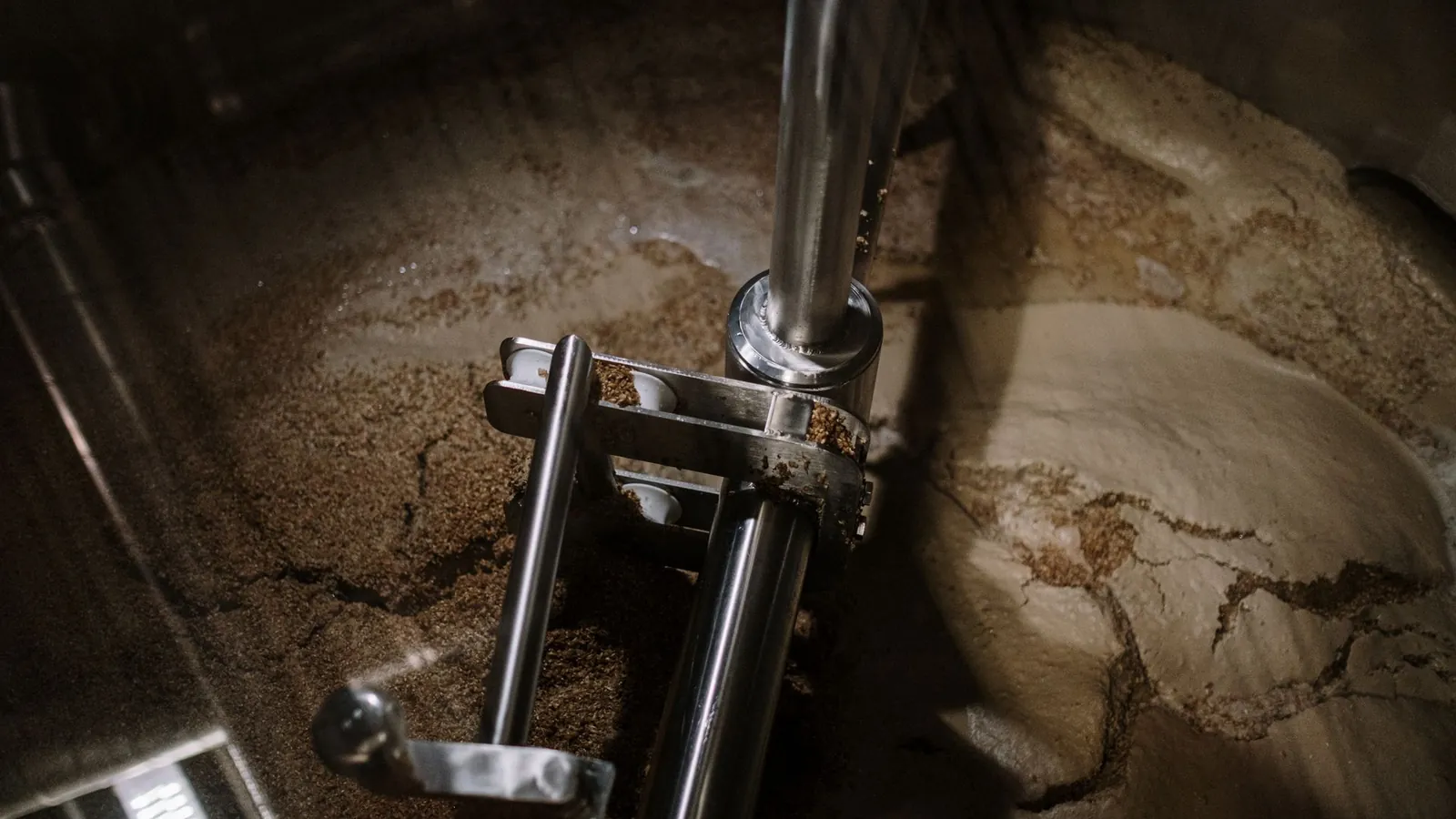
Picture a plant manager looking into a kettle of gravy. The laboratory version was smooth and ready on schedule. This larger batch has the same recipe, yet the material near the wall looks well cooked while the middle seems to be taking its time. The kettle has grown; the cooking behaviour has changed with it.
Scaling the ingredient weights is an important first step, but it does not scale the movement of heat automatically. Heat must cross surfaces and travel through the product. Vessel shape, agitation and changing thickness determine how effectively that journey happens.
More product does not bring matching surface area
When similarly shaped vessels become larger, their volume grows faster than their surface area. That means there is less vessel surface available per unit of product. A larger batch therefore does not simply receive the same heating experience because the jacket uses the same setting.
Real equipment adds further differences. Vessel proportions, heating surfaces, baffles and mixing arrangements may change between the laboratory and the plant. A broad saucepan with an open surface and a deep jacketed kettle are different cooking environments, even before anyone turns on the heat.
This helps explain why copying the lab time is unreliable. The larger batch may heat more slowly in some regions, while material near a hot wall receives a different exposure. Use measurements from the product to understand the result rather than extending the clock by guesswork.
The wall is only the start of the journey
Heat passes from the heating medium through the vessel wall and into the food. It then needs to spread through the batch. Agitation helps bring material towards and away from the heated surface, replacing warmer layers with cooler product.
A thin liquid may circulate readily, while a thick gravy can move very differently. Starch cooking and other structural changes can increase resistance to movement during the process. The batch that mixed comfortably at the start may need closer attention later.
Wall deposits can make matters worse by interfering with heat transfer and exposing attached material to prolonged heating. Scraping arrangements, where present, need to function as intended. Review any fouling or scorching alongside the temperature record instead of treating it as a separate cleaning inconvenience.
Mixer speed is not a complete description
A familiar speed setting does not guarantee familiar product movement. Impeller design, diameter, clearance and vessel geometry affect the flow. The mixing action also needs to suit the changing texture and any pieces that should remain intact.
Watch for poorly moving regions and circulation that leaves part of the batch behind. Observation through approved access points can support the investigation, but a moving surface alone does not prove uniform movement throughout the kettle. Equipment assessment may be needed to understand the full pattern.
More agitation can improve some aspects of heat transfer while damaging particles or changing texture. Treat it as a process variable with several consequences. The aim is effective, consistent cooking with the required product quality, rather than the fastest possible mixer setting.
Measure the food, including the cooling journey
Record actual product temperatures over time using suitable instruments and an agreed measurement plan. Probe position matters because different locations can tell different stories. Keep the heating-medium settings alongside those measurements without confusing the two.
Follow the complete sequence: loading, heating, holding, transfer and cooling. A sample taken from the kettle may still receive substantial heat exposure while waiting to be filled or cooled. The larger batch can introduce delays that were absent from the laboratory trial.
Cooling deserves its own attention. Heat must leave the food through an effective route, and larger quantities can cool differently from small samples. Compare the actual plant cooling behaviour within the validated process, including the conditions experienced after transfer.
A scale-up checklist that follows the batch
- Record recipe, batch size, loading order and starting product condition.
- Identify vessel geometry, heating surfaces and mixing arrangement.
- Measure product heating at relevant locations using an agreed plan.
- Observe circulation, wall deposits and changes in thickness.
- Record holding, transfer and cooling alongside the cooking stage.
- Compare finished texture, flavour and uniformity after the complete process.
Include final mass or solids observations where they help explain concentration. Evaporation from an open laboratory pan can differ from evaporation in the plant. A thicker sample may reflect different water loss as well as different cooking, so the recipe weights alone do not settle the comparison.
Take representative samples and identify where they came from. An easy-to-reach spoonful near a wall cannot describe the entire kettle. Match sample preparation and assessment conditions before deciding whether a plant batch reproduces the laboratory result.
Validate the process before calling it ready
Laboratory texture success does not establish a safe or suitable production process. The responsible technical team must assess and validate the plant sequence for the actual food and equipment. Changes to heating, holding, cooling or formulation can affect that assessment.
Use the scale-up record to choose focused improvements and confirm them in the full process. The saucepan has provided a useful starting point, and the kettle now needs evidence of its own. Ask Specsy or the SpecSol team to help organise the observations, so a bigger batch comes with a clearer cooking story.