

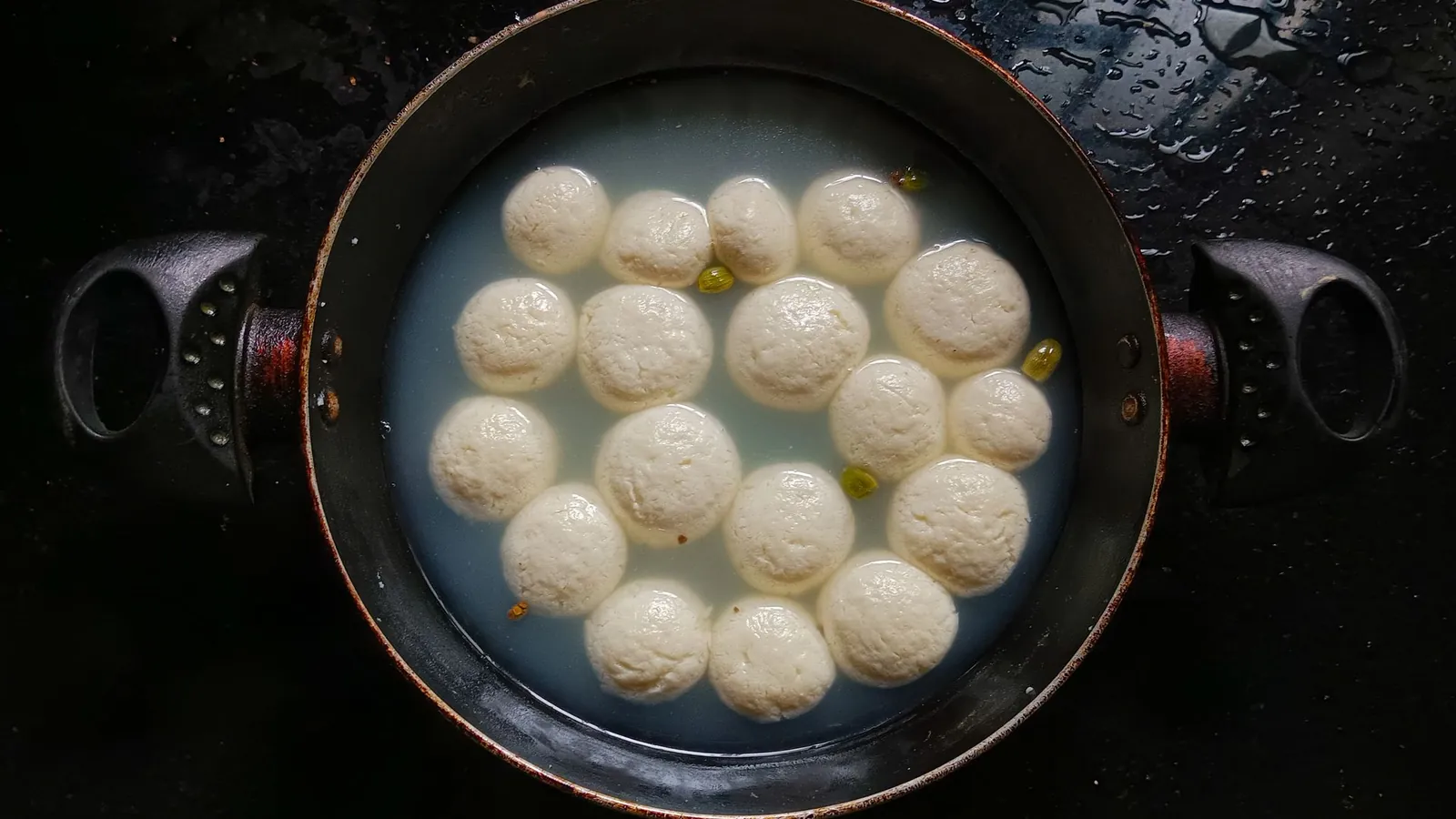
Picture a mithai operator lifting a tray of plump rasgulla from the cooking vessel. The sweets look round and proud. They move into the holding syrup, and the operator turns to the next task. On returning, the smooth surfaces have gathered wrinkles. The promising finish has changed while nobody was watching.
The cooking vessel showed only one stage of the product. Rasgulla must also survive transfer, a different syrup environment and cooling. Its porous chhena structure needs to support the expanded shape through that whole journey. A good investigation follows the sweet instead of stopping where it looked its best.
A soft structure with a demanding job
Chhena is formed by coagulating milk proteins and separating whey. Its moisture, composition and handling influence the material used to make the sweet. Chhena that feels unusually dry, wet or coarse can respond differently during kneading and cooking.
Kneading helps distribute moisture and develop a cohesive mass suitable for shaping. Uneven working may leave weak areas or an inconsistent texture. More kneading is not automatically better; judge the chhena condition and the resulting sweet rather than treating extra work as a universal correction.
During cooking, the sweet develops an expanded, porous structure containing liquid and spaces within a protein-rich matrix. That structure must remain connected enough to hold its shape. A large-looking sweet can still have fragile walls, so expansion alone does not prove that development was successful.
Keep the starting chhena in the story
Compare chhena preparation records before changing the syrup. Milk composition, coagulation, drainage and the time before use can all influence the starting material. Record the actual condition of the chhena alongside the process, using the site's agreed assessments.
Shaping consistency matters too. Differences in portion size, cracks or unevenly worked areas can produce different cooking responses within one vessel. Inspect the pieces before cooking and connect finished defects to those observations where possible.
Keep preparation and cooking trials organised. If chhena moisture, kneading, portion size and syrup conditions all change together, a better result may still leave the cause unclear. A useful trial produces both a better sweet and an explanation the next shift can follow.
The new syrup changes the surroundings
The syrup outside a rasgulla and the liquid within its pores interact. Water can move as differences in concentration tend to balance, while dissolved sugar also moves through the accessible structure. The sweet is therefore still changing after it leaves the cooking vessel.
A more concentrated surrounding syrup can encourage water to move out of the sweet, depending on the conditions and its structure. A different syrup environment can also change uptake and texture in other ways. Avoid reducing the entire defect to a single rule about thin or thick syrup.
Temperature changes happen at the same time. Cooling alters the physical state of the hot, expanded sweet, and a weak structure may lose shape during that transition. Wrinkling can have several contributing causes, so the timing of the change is a valuable clue.
Watch the handover, not only the endpoints
Record the condition of both cooking and holding syrup using the established procedure. Include temperature and the method used to assess concentration. Measurements need consistent preparation and interpretation; a visual judgement of stickiness is not a reliable substitute.
Observe the transfer itself. Rough handling, crowding or pressure from other sweets can distort a delicate product. A dent appearing immediately after contact is different from gradual shrinkage throughout cooling. Keep those descriptions separate in the trial record.
Follow the same identified group of sweets through the stages where practical. Photographs taken in a consistent arrangement help show when the first change appears. Avoid repeatedly squeezing the very pieces intended for shape observation, since testing can become another source of damage.
A shape-and-springiness checklist
- Record chhena condition, drainage history and kneading procedure.
- Check uncooked portions for consistency and surface cracks.
- Observe expansion and integrity at the cooking endpoint.
- Record cooking and holding syrup conditions before transfer.
- Note handling damage separately from gradual wrinkling.
- Compare shape, springiness and liquid release after consistent cooling and holding.
Taste and assess texture at the intended serving condition using suitable, safely handled samples. A sweet can look round yet feel tough, or appear soft while breaking apart too easily. Agree on the desired balance of tenderness and resilience before choosing a winning trial.
Use matched comparison points. A hot sweet and a cooled sweet will not necessarily give the same response to gentle compression. Keep the method and timing consistent, and describe recovery of shape separately from the amount of syrup released.
The next correction should follow the evidence. Investigate chhena preparation when weak structure is apparent before transfer, or focus on the transfer environment when the change begins there. Keep the complete established cooking and hygiene controls intact while assessing any proposed change.
The proud puff is a lovely beginning, but the serving bowl gets the final vote. Ask Specsy or the SpecSol team to review your observations from chhena to cooled rasgulla. The wrinkles become much easier to discuss when their first appearance has a place in the story.