

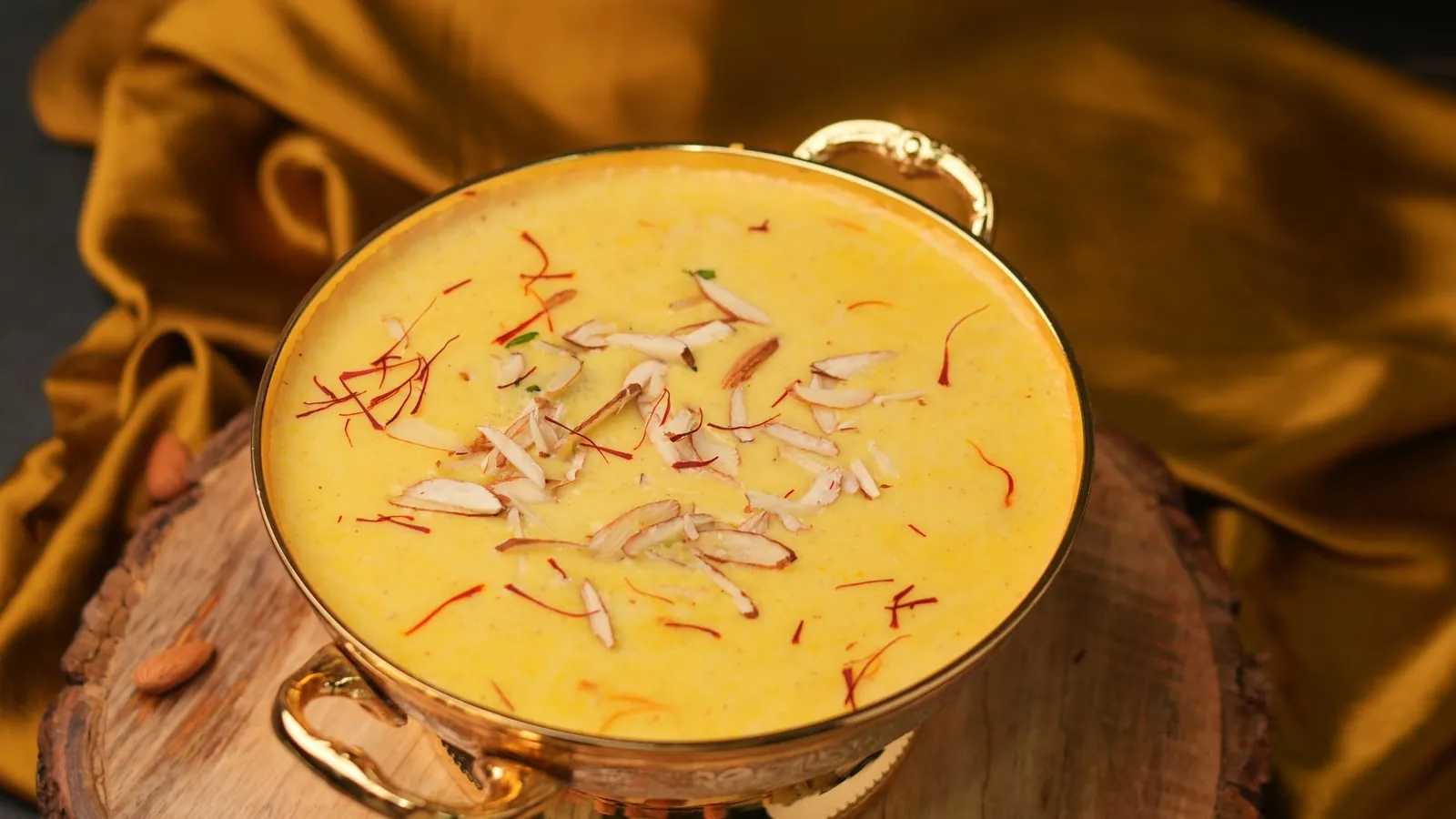
Picture a dairy developer lifting a spoon from a rabri trial. The milk is rich, the sweetness comfortable and the colour inviting. But the spoon comes up smooth. Where are the soft folds that make the next mouthful a little different from the last?
The dessert has plenty of body, yet something is missing. Rabri with a layered style needs both concentrated milk and recognisable milk flakes. Making the liquid thicker does not automatically build those flakes. They have their own formation and handling story, beginning at the exposed milk surface.
The interesting work happens on top
As milk heats in an open vessel, water evaporates from its surface. Milk proteins and fat contribute to a film at that boundary between milk and air. Heating changes some of the proteins, while local concentration helps the surface become a coherent layer that can be lifted.
This film differs from a lump formed by uneven powder mixing or a scorched deposit scraped from the pan. A useful rabri layer should become a tender part of the dessert. Dark, burnt fragments or hard pieces need their own investigation rather than being counted as extra texture.
The surrounding milk is concentrating at the same time. Its body and flavour develop as water leaves. These linked changes need attention together: a lovely surface layer cannot compensate for a thin base, and a rich base cannot replace the folds a layered product promises.
Give the surface a chance
A constantly disturbed surface struggles to build an intact film. Vigorous movement can break a forming layer and carry the fragments back into the liquid before they have developed the desired character. The result may look admirably uniform while missing the intended rabri texture.
That does not mean leaving a heated vessel unattended. Milk near the heating surface still needs appropriate movement and protection from local sticking or scorching. The practical task is to manage contact with the hot vessel while allowing suitable areas of the surface to form layers.
Vessel shape, exposed surface and the way the milk moves all influence this balance. A deep, narrow trial vessel and a broad production pan need not produce the same layers simply because their final milk concentration matches. Record the equipment and working method alongside the formulation.
Collecting is different from blending
Once a suitable layer forms, the way it is gathered matters. Gentle collection can preserve broad folds. Repeated scraping, beating or forcing the layer through a narrow opening can turn it into much smaller fragments. Neither appearance is automatically wrong, but only one may match your product brief.
Agree what the intended flakes should feel like. Soft ribbons, delicate sheets and small tender pieces give different spoonfuls. Very large folds can distribute unevenly between cups, while extremely fine fragments may disappear into the background. Choose an achievable target that also eats pleasantly.
When collected layers return to the concentrated milk, use a folding approach suited to preserving them. Full homogenisation pursues a different goal: reducing differences throughout the product. Once a layer has been broken into tiny pieces, resting the finished rabri will not simply stitch it back together.
The filling step gets a vote
Follow the product beyond the pan. A transfer pump, a recirculation loop or a restrictive filling nozzle can change flake size after the cooking team has done everything carefully. Compare the dessert before transfer and after filling using the same gentle sampling method.
Temperature also changes how the surrounding milk flows. A colder sample may appear thicker and hold folds differently from a warm one. Bring comparison samples to the same intended serving condition before deciding that one trial has more body or better layer distribution.
Check the complete cup rather than selecting its prettiest spoonful. Layers can gather unevenly during holding or filling. Examine the top, middle and lower portion, and include cups from different parts of the run. The customer should not need luck to find the interesting texture.
A checklist for the next spoonful
- Describe the target flake size, tenderness and distribution before the trial.
- Record milk preparation, vessel shape and the pattern of surface movement.
- Observe layer formation separately from concentration of the surrounding milk.
- Compare layers after collection, folding, transfer and filling.
- Assess complete cups at a matched serving temperature after the intended hold.
Keep a simple photograph of a spread spoonful beside your notes. Describe whether the flakes bend gently, feel leathery or break into fine grains. Record the base separately as flowing, spoonable or pasty. Clear words help the team avoid fixing the liquid when the real problem is the layers.
For a useful comparison, change the handling step where the flakes first lose their character. Keep the milk preparation and intended concentration consistent. Continue the established hygiene, heating and cooling controls throughout; a texture trial belongs inside a controlled food process.
Back at the tasting bench, that spoonful can now tell a fuller story. The rich milk carries the flavour, and the folds give it interest. Ask Specsy or the SpecSol team to help follow your layers from surface to cup. A little care along the way can give each spoonful something lovely to discover.