

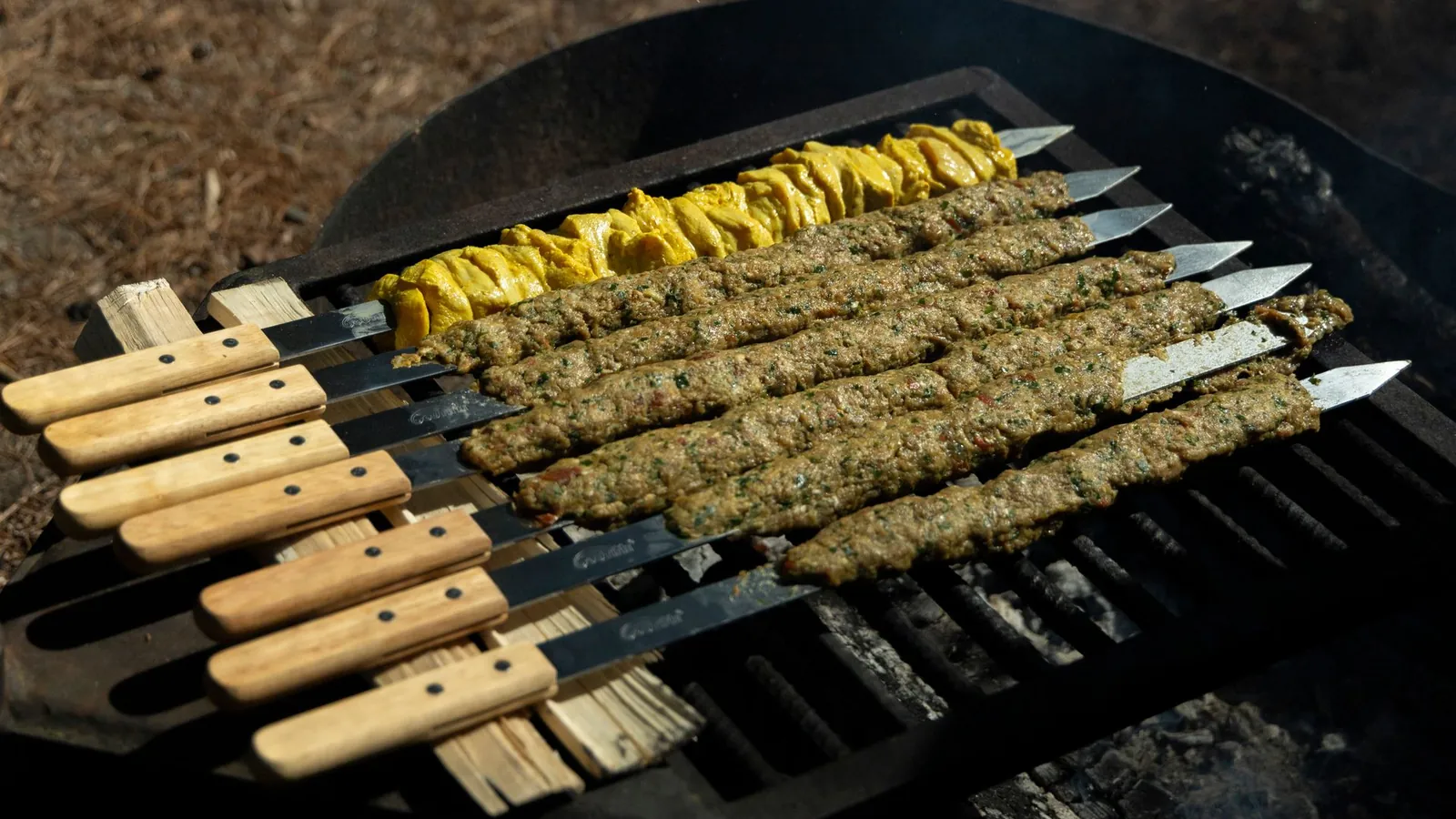
Imagine a development cook lifting a beautifully browned plant-based kebab from the grill. The outside looks ready, and the aroma has brought colleagues over to the bench. The skewer rises. Half the kebab stays behind. A mixture that moulded so neatly in the chilled bowl has become unexpectedly fragile in the heat.
Holding a kebab together involves several jobs. Ingredients must make contact, bind into a continuous structure and retain enough moisture for a pleasant bite. Cooking then changes that structure. Following those stages gives the team a clearer route than simply making the raw mixture thicker.
Help the pieces meet
Plant-based kebabs can contain textured protein, flour or protein powders, vegetables, fat, seasoning and binders. Large pieces contribute bite, while smaller material helps occupy the spaces between them. The mixture needs enough connected material to hold those pieces together when it is shaped and moved.
Particle size influences that contact. Very large or uneven pieces can create weak points, particularly around a narrow skewer. Very fine grinding may improve uniformity but lose the texture the product is meant to deliver. Evaluate the cut surface and the eating experience alongside ease of forming.
Mixing distributes the binding ingredients and brings the particles into contact. Too little mixing can leave pockets with different composition. Excessive working can damage pieces or produce an overly pasty texture. Record the sequence and endpoint so the same mixture can be reproduced beyond the development bowl.
Give hydration a place in the schedule
Dry proteins and other water-binding ingredients need time and suitable conditions to take up water. Their behaviour depends on the ingredient and its processing history. A textured protein piece with a dry centre can behave differently from one hydrated throughout, even when both feel wet on the outside.
Check the preparation procedure and inspect the centre of larger pieces. Record hydration and draining consistently. Water left on the surface and water held within the ingredients make different contributions to the mix, and variable draining can change the amount of free liquid entering the bowl.
Vegetables deserve the same attention. Their cut size, cooking history and draining can affect how much water they release later. If a mixture becomes wetter while it waits, examine the source of that liquid before deciding how to adjust the binding system.
The grill changes the structure
As cooking proceeds, fat can melt, water moves and escapes, and proteins change structure. Depending on their type and prior processing, proteins may contribute to setting or may offer limited additional binding. The chosen binder also has its own response to heat.
Some starches build structure as they cook with available water. Certain hydrocolloids provide cold viscosity, while others develop different textures on heating or cooling. The useful question is how the selected system behaves along the kebab's actual temperature path. Match ingredient preparation to that intended role.
A mixture can therefore feel firm when chilled and soften before its cooked structure develops. That vulnerable interval matters during turning and lifting. Observe when the first cracks appear, whether liquid collects around them and whether the centre is still soft when the outside looks brown.
Test the whole journey to the plate
Use the intended skewer, piece size and forming method. Pressing the mixture evenly helps avoid gaps around the skewer, while inconsistent thickness changes how quickly different areas cook. Record surface conditions on the grill and the point at which the kebab is first moved.
Keep the validated cooking procedure in place during comparisons. Use separate observations for release from the grill, cohesion around the skewer and breakage through the centre. They describe different failure locations and help the team decide where to investigate.
- Check protein hydration, vegetable draining and the distribution of free liquid.
- Record particle preparation, mixing sequence and mixture temperature.
- Compare forming and raw handling using the intended skewer.
- Observe cracks, liquid release and cohesion during cooking and turning.
- Assess the hot bite and the texture after the expected serving hold.
- Record cooking loss consistently alongside shape and sensory observations.
Choose a bite worth holding together
Strong binding can bring its own texture trade-offs. A kebab that survives every movement may still feel rubbery, sticky or dry. Set an eating target with the handling target, and ask tasters to describe tenderness, juiciness, particle definition and any pasty coating.
Start the next comparison with the most visible failure. If large pieces detach, examine contact and binder distribution. If liquid release accompanies collapse, review water management and the cooking sequence. Change one factor while keeping a reference, and repeat the complete shaping-to-serving route.
The cook in our opening scene now has more to bring back than a broken kebab. Share the hydration notes and the stage of failure with Specsy or the SpecSol team, or request a trial protocol. A useful binding system should earn its place on both the skewer and the plate.