

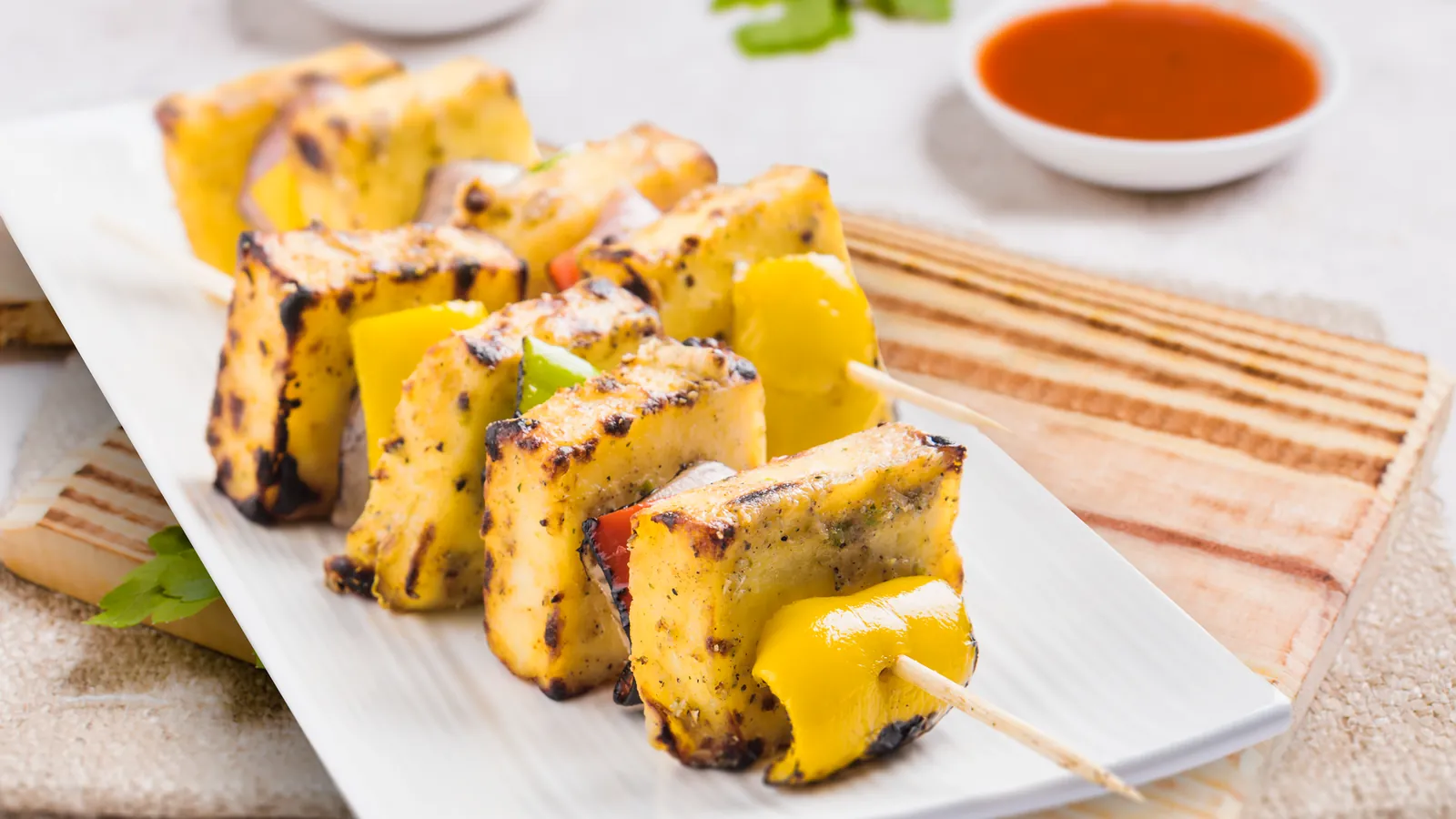
Picture a production lead lifting a paneer cube from a fresh tray. The edges are tidy. The colour looks right. Then comes the bite: springy, resistant, almost squeaky. The development sample had been soft enough to welcome a fork. This one seems ready to argue with it.
It is tempting to blame the press straight away. Pressing certainly matters, but the cube started becoming itself long before it reached the mould. Milk composition, heating, acid addition and curd handling all help decide whether the finished paneer feels tender, crumbly or rubbery.
A cube is a network, not a solid block
Paneer is made by bringing heated milk proteins together through acidification. Those proteins form a network containing moisture and fat. Imagine a soft mesh with liquid tucked into its spaces. The way that mesh forms, and how much liquid it retains, influence the bite.
Moisture usually helps tenderness, while a dense protein structure can feel firmer. Fat also changes how the structure feels in the mouth. That does not mean wetter paneer is always better. A cube still needs to survive cutting, packing and the cooking method it is intended for.
A squeak is a sensory clue, not a laboratory diagnosis. Describe it alongside resistance to biting, crumbliness, juiciness and the way the cube breaks. Otherwise, different people may use the same word for quite different defects.
Start with the milk and the heat
Compare the milk used for the soft reference and the firm batch. Protein, fat and total solids affect the starting balance. A change in milk composition can change texture even when the operator follows the same sequence. Check actual records rather than assuming the incoming milk behaved as usual.
Heating changes milk proteins and how they participate in curd formation. The temperature reached, the holding history and the temperature at acid addition belong in the same investigation. The dial setting alone cannot tell you what the milk experienced throughout the vessel.
Keep the established food safety controls in place while investigating texture. If a change to the heating process is proposed, have it assessed and validated through the plant's normal process. A softer cube is not a reason to improvise a heat treatment.
Acid addition sets the next scene
Acidification reduces the stability of the milk protein system and allows curd to form. How acid is distributed matters: uneven addition can create different local conditions before the batch becomes uniform. Record the addition method, mixing and endpoint rather than simply recording that acid went in.
The useful question is whether the curd formed consistently. Compare curd appearance, whey separation and the measured acidity endpoint using the same sampling method. Do not assume a fixed acid addition will always produce the same endpoint when the milk base changes.
Handling after formation matters too. Rough stirring or unnecessary disturbance can break the curd into finer pieces and alter drainage. Ask the operator to walk through the sequence. Small differences in movement often disappear from a recipe sheet but remain very visible in the finished food.
The press removes more than a puddle
Pressing helps bring the curd together and removes whey. Pressure, time, curd condition, mould geometry and drainage all influence the result. Extending pressing to obtain a particularly neat block can also move the texture away from the soft bite the development team wanted.
Check whether the centre and edges of the block behave alike. Compare positions within a batch, especially when mould loading or drainage differs. A single attractive cube from the top is not enough to represent the whole block.
Measure moisture if you have a suitable method, but keep a texture assessment alongside it. Similar moisture results do not guarantee identical protein structures. Cutting behaviour and eating quality help explain what the analytical result means for the actual product.
A short checklist before the next trial
- Match the milk composition and record its condition before processing.
- Compare the actual heating and acidification records with the soft reference.
- Observe mixing, curd handling and drainage before the press.
- Record mould loading, pressing time and pressure consistently.
- Sample different block positions and compare at the same serving temperature.
- Cook matched cubes in the intended dish and assess them again.
The curry gets a vote
Paneer that feels pleasant straight from the pack may become firmer after frying or prolonged cooking. Compare cubes of the same size through the same cooking sequence. Include the intended holding period before serving, because the first spoonful and the last may have different textures.
Choose the target bite in the finished dish, then work backwards through the process. The aim is a cube that holds its shape and still feels welcoming. Ask Specsy or the SpecSol team to help turn those observations into a focused trial, with less guesswork and a much happier fork.