

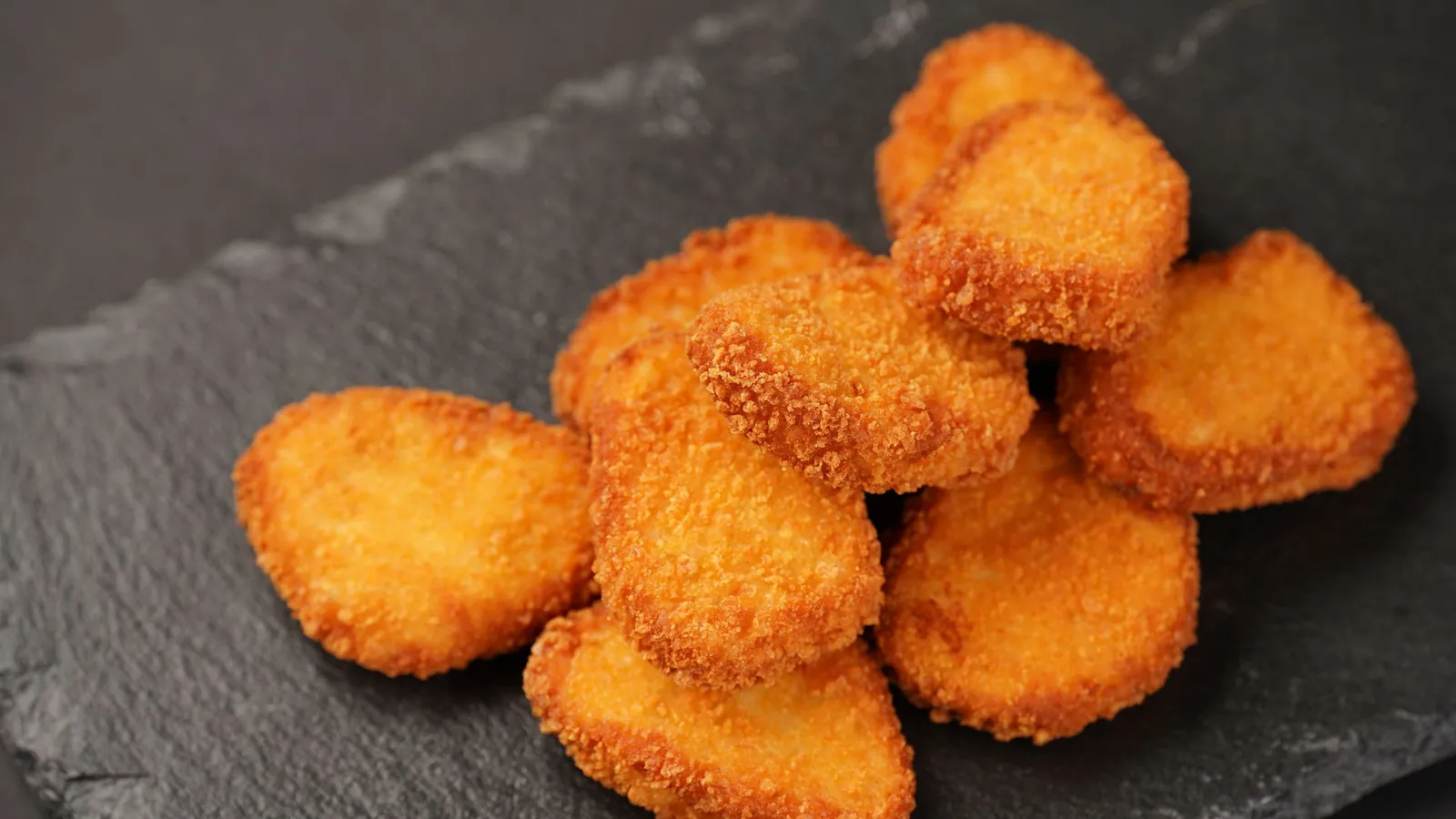
Picture a production cook lifting a nugget from a basket. The centre comes up neatly, but its golden shell stays behind. It is an impressive little jacket with nobody inside. The coating looks crisp and well coloured, so the first instinct is to blame a weak batter.
That may be part of the answer, but a coated nugget is a layered structure. Attachment depends on the food surface, any pre-dust, the batter and the crumb working together. A failure at one connection can release a shell that is perfectly strong on its own.
Start where the jacket meets the filling
A meat or plant-based nugget presents a surface with its own moisture, fat and texture. A wet surface, a dry patch and a smear of free fat do not receive a coating in the same way. Consistency before coating is therefore a useful first target.
Excess surface water can dilute the material at the interface and create a weak layer. Surface ice or frost brings additional complications when frozen pieces warm. At the other extreme, a surface that does not wet properly may fail to make good contact with the next layer.
Check whether the problem follows particular pieces or positions on the line. Uneven forming, variable resting time and inconsistent surface condition can produce patchy adhesion even when the batter tank is uniform. Look at the bare nugget before looking for an ingredient to rescue the finished coating.
Each layer has a practical job
A pre-dust can help manage surface moisture and provide a more consistent surface for batter attachment. It needs to adhere to the food itself. Loose excess powder can become a weak boundary, so a heavy-looking dusting is not automatically a better foundation.
The batter should wet that prepared surface and form a continuous layer. Its flow behaviour affects coverage, drainage and pickup, meaning how much batter remains attached. The crumb then needs contact with the wet batter so that the layers can develop into a connected coating.
Application conditions matter as much as the recipe. Gaps in coverage, long delays between layers or rough handling can undermine attachment. Before reformulating, inspect pieces after each stage. The earliest visible defect often offers a more useful clue than the finished nugget alone.
What a suitable starch can contribute
Starch can help build batter body and form structure during cooking. Suitable modified starch grades can contribute film formation and coating integrity, depending on their properties and the surrounding formulation. Some grades are selected to handle particular processing or storage stresses.
The word modified does not identify one universal behaviour. A grade that gives a useful batter consistency may behave differently from another during cooking, freezing or reheating. Ask what function is needed: better coverage, a stronger film, controlled pickup or improved integrity after the intended handling sequence.
Starch also works alongside flour, proteins and other coating ingredients. A change can affect crispness, colour and mouthfeel as well as adhesion. The aim is a connected coating that eats well, not simply the strongest possible layer wrapped around the centre.
Cooking tests the connections
During cooking, the core and coating change together. Water moves and steam develops, proteins set where present, and starch-containing layers develop structure. The core may also change shape. These movements can expose a weak interface that was not obvious on the uncooked piece.
Cut a cooked sample and look at where the layers separate. Does crumb detach from batter, or does the entire coating lift from the core? Is there a gap beneath an intact shell? Describing the location helps the team distinguish a coating-strength issue from an attachment issue.
Use the established cooking endpoint throughout comparisons. Changing cooking conditions solely to protect appearance can create a different and unsuitable test. Keep piece dimensions, loading and handling consistent so that a formulation change gets a fair assessment.
- Check the bare surface for moisture, fat, frost and unevenness.
- Inspect pre-dust attachment and remove uncontrolled loose excess.
- Record batter condition, coverage and pickup consistently.
- Locate the layer where separation begins after cooking.
- Repeat the assessment after intended storage and reheating.
The last bite matters as much as the first fry
A coating can perform well straight from the cooker and loosen after frozen storage or reheating. Follow the actual product journey, using the intended preparation method. Compare adhesion, crispness and the bite of the core together rather than selecting a winner from appearance alone.
In our imagined basket, the abandoned shell has at least shown where to begin. Keep a record of the surface, layers and handling sequence, then ask Specsy or the SpecSol team to help plan the next comparison. A good nugget should take its jacket all the way to the plate.