

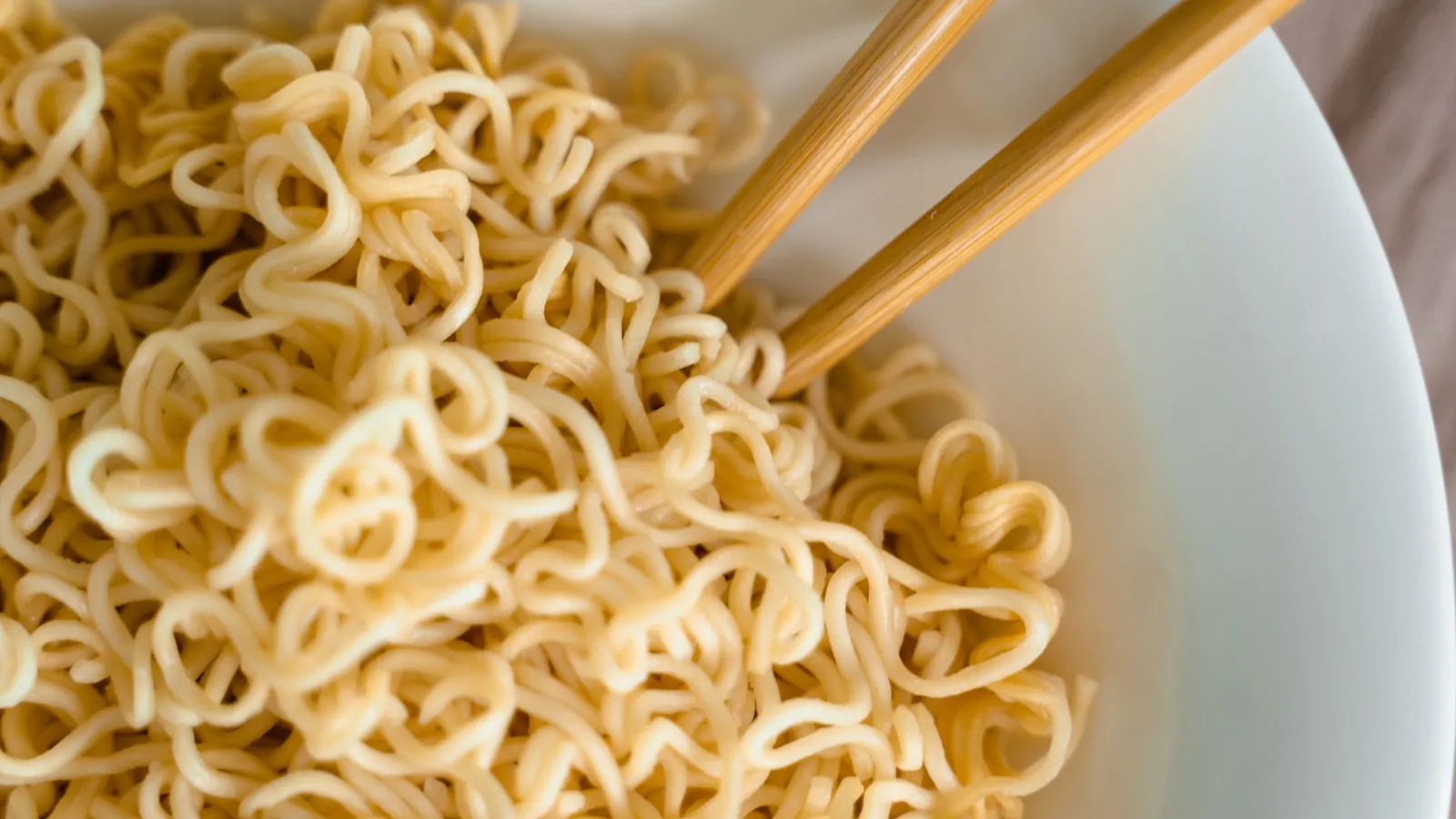
Picture a development cook lifting a noodle portion from the pan. The strands look tired, and the water beneath them has become a cloudy broth. A few broken pieces follow the spoon. The cook wanted a bowl of noodles, but some of the product seems to have decided to stay behind.
That lost material is the starting point for understanding cooking loss. During cooking, solids can escape from noodles or pasta into the surrounding water. Some cloudiness may be normal for a product. The useful question is whether the loss, strand condition and eating quality match the intended result.
Water goes in, some solids come out
Cooking brings water and heat into the noodle. Starch granules absorb water and swell as they gelatinise. Other changes occur in the surrounding structure. If that structure does not hold together well enough, swollen material and soluble components can move into the cooking water.
Surface flour and loose fragments can also contribute to cloudiness. A dusty noodle may cloud the pan early even when the strand itself remains sound. Separate surface material from progressive breakdown during cooking before deciding that the entire dough structure is weak.
The water's appearance is a clue rather than a complete measurement. Colour, seasoning and fine suspended particles can affect what the cook sees. A darker or cloudier pan does not provide a reliable numerical comparison by itself, especially across different noodle styles.
The strand needs a supporting structure
In wheat-based products, the protein network helps hold the starch-containing structure together. Flour properties, hydration and dough development influence how that network forms. Protein quantity alone does not fully describe performance; its quality and the process matter as well.
Starch properties also affect swelling and the way material behaves during heating. Different flours and starch ingredients can give different results, even when the dough feels similar before cooking. A substitution should therefore be tested through the finished cooking method, not judged only at mixing.
Rice and other non-wheat noodles rely on different structural arrangements, often involving processed starch. Avoid applying a wheat-pasta explanation unchanged to every noodle. Identify the product and how its structure is built before choosing which raw-material properties to investigate.
Processing leaves a memory
Mixing and hydration influence how evenly the dough develops. Dry pockets, uneven water distribution or inconsistent resting can create weak areas. Record the actual sequence and dough condition so that a cooking result can be traced back to what happened before shaping.
Sheeting, cutting and extrusion also affect the finished strand. Cracks, damaged edges or rough surfaces can provide sites where material escapes. Compare uncooked samples closely, including their dimensions, before attributing differences entirely to the ingredient composition.
Drying or precooking history may change the structure and subsequent cooking response. A noodle that looks dry and intact can still carry differences from those stages. Keep process records with retained samples, and compare like products rather than treating every dried strand as equivalent.
Give every batch the same pan
A fair cooking comparison begins with a defined method. Keep the noodle portion, water quantity, pan, heating approach and agitation consistent. Use a clear endpoint suited to the product. Otherwise, one sample may simply have spent longer being stirred in boiling water.
Record water composition where it is relevant and keep it consistent between trials. Include any salt or other additions in the method. Changes to the cooking environment can affect hydration and texture, making an uncontrolled kitchen comparison difficult to interpret.
Decide how cooking loss will be measured before testing. A laboratory method may collect the cooking liquid and determine the solids it contains after controlled drying. Use an appropriate established method with consistent collection and any required correction for substances already present in the water.
A cooking checklist with a bite test
- Confirm product identity, ingredient lots and processing history.
- Inspect uncooked strands for dust, cracks and size variation.
- Use the same cooking setup and a defined endpoint.
- Collect cooking liquid consistently for the chosen assessment.
- Record broken strands, stickiness and surface condition.
- Taste safely prepared samples for firmness, cohesion and overall bite.
Interpret cooking-water results alongside the noodle itself. A low loss is useful only if the product also cooks properly and eats well. An undercooked strand may retain solids while having an unpleasant centre, so keeping everything in the noodle is not the only objective.
Also follow the intended serving route. Noodles eaten immediately, held in sauce or reheated later face different conditions. Use the relevant preparation and holding sequence for development decisions, while keeping the core comparison method consistent enough to explain what changed.
Back at the pan, the cloudy water has become information rather than an accusation. Ask Specsy or the SpecSol team to help connect your ingredient, processing and cooking observations. The aim is a strand that gives the cook a manageable portion and the eater a satisfying bite.