

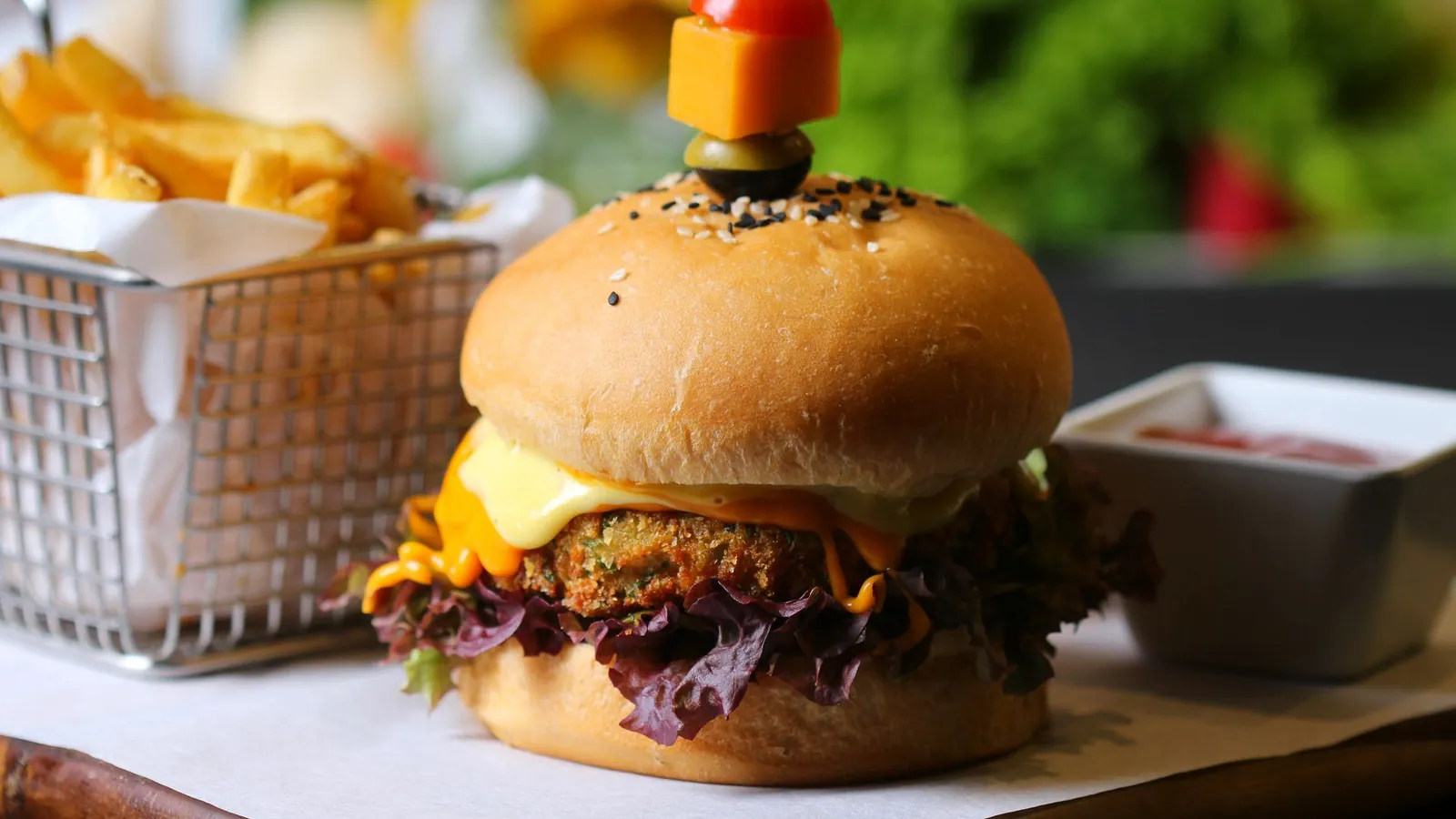
The developer slides a spatula beneath a plant-based patty, expecting a delicate lift. Instead, the soft mixture has become easier to handle as it cooks. In this imagined kitchen, heat has helped build a temporary support structure rather than simply melting everything down.
Methylcellulose can contribute to that behaviour. It is a hydrocolloid derived from cellulose, the structural material found in plant cell walls. Its useful trick is heat-induced gelation, although the result depends on the grade, preparation and complete food.
A different response to heat
Many familiar gels become softer when warmed. Methylcellulose can behave differently: under suitable conditions, heating encourages dissolved polymer chains to associate and form a gel. That network can help a food hold together while it is hot.
The everyday explanation is enough for most development discussions. Long molecular chains that were dispersed in water begin to form connections as the temperature rises. The resulting structure changes how the mixture flows and holds its shape.
This does not mean every methylcellulose mixture turns into the same firm block. The gel can vary in strength and character. The ingredient specification and the surrounding recipe determine what sort of support it can provide.
Cooling changes the arrangement again
Methylcellulose gelation is thermoreversible. In practical terms, the hot gel can weaken as it cools and the polymer returns towards its hydrated state. The structure that helped during cooking may therefore be less supportive at a lower serving temperature.
That can be useful, but it needs to match the product. A food eaten hot has a different brief from one sold chilled or left to cool before eating. The holding period between cooking and serving may be as important as the moment the patty leaves the pan.
The complete food will not necessarily return to its raw texture. Proteins may have set, starch may have cooked and moisture may have escaped. Methylcellulose is only one contributor within that changing structure.
Grade choice is part of formulation
Methylcellulose grades differ in properties that affect hydration, solution viscosity and gelation behaviour. A shared ingredient name does not guarantee matching performance. Select a grade for its intended function rather than assuming a thicker cold solution must always make the best hot gel.
Ask for preparation guidance and relevant functional information. The useful questions are about the process and eating experience: how the ingredient hydrates, when it develops structure and how that structure behaves during holding.
Avoid copying a working method from a different grade without checking it. A preparation that disperses well in one trial can produce lumps or uneven functionality in another. The name on the recipe is a starting point, not a complete operating instruction.
Preparation gives the chains a chance
Dry hydrocolloid particles need to disperse and hydrate properly. If their surfaces hydrate too quickly in a concentrated patch, they can trap dry material inside lumps. The mixture may then look thick while containing unevenly prepared ingredient.
Methylcellulose often uses preparation methods that separate dispersion from full hydration. The appropriate temperature sequence and mixing approach depend on the grade and system. Follow the specific guidance rather than treating it like any other gum added to water.
Water availability matters too. Other ingredients compete for water and alter the environment around the polymer. Record order of addition, mixing, temperatures and resting conditions so that the preparation can be repeated on the next shift.
Test more than the easy lift
A patty that survives the spatula has passed a handling check, but that is only part of the eating brief. Assess firmness, cohesion, juiciness and mouthfeel at the intended serving stage.
Then allow a matched sample to cool through the normal serving delay. Does it still hold together? Does the bite become too soft, or do other components provide the structure it needs? Reheating may deserve a separate test if it is part of the intended use.
Also look for water release and uneven texture. A surface that appears firm can hide a weaker centre, particularly when heating is uneven. Keep portion shape and cooking conditions consistent when comparing formulations.
A hot-and-cooled checklist
- Confirm the grade and its recommended preparation method.
- Record dispersion, hydration and order of addition.
- Keep portion shape and cooking conditions matched.
- Assess hot handling separately from eating quality.
- Recheck texture after the normal serving delay.
- Include cooling and reheating when they belong to the product's journey.
Use these observations to decide whether methylcellulose needs support from the rest of the formulation. Protein structure, starch and particle arrangement may all contribute to the final result. A good system shares the work instead of expecting the hot gel to perform every task.
The imaginary developer can enjoy the clean lift from the pan, then keep watching. The real success is a food that stays pleasant through serving and eating. Understanding when the gel helps, and when it relaxes, makes that target much easier to reach.