

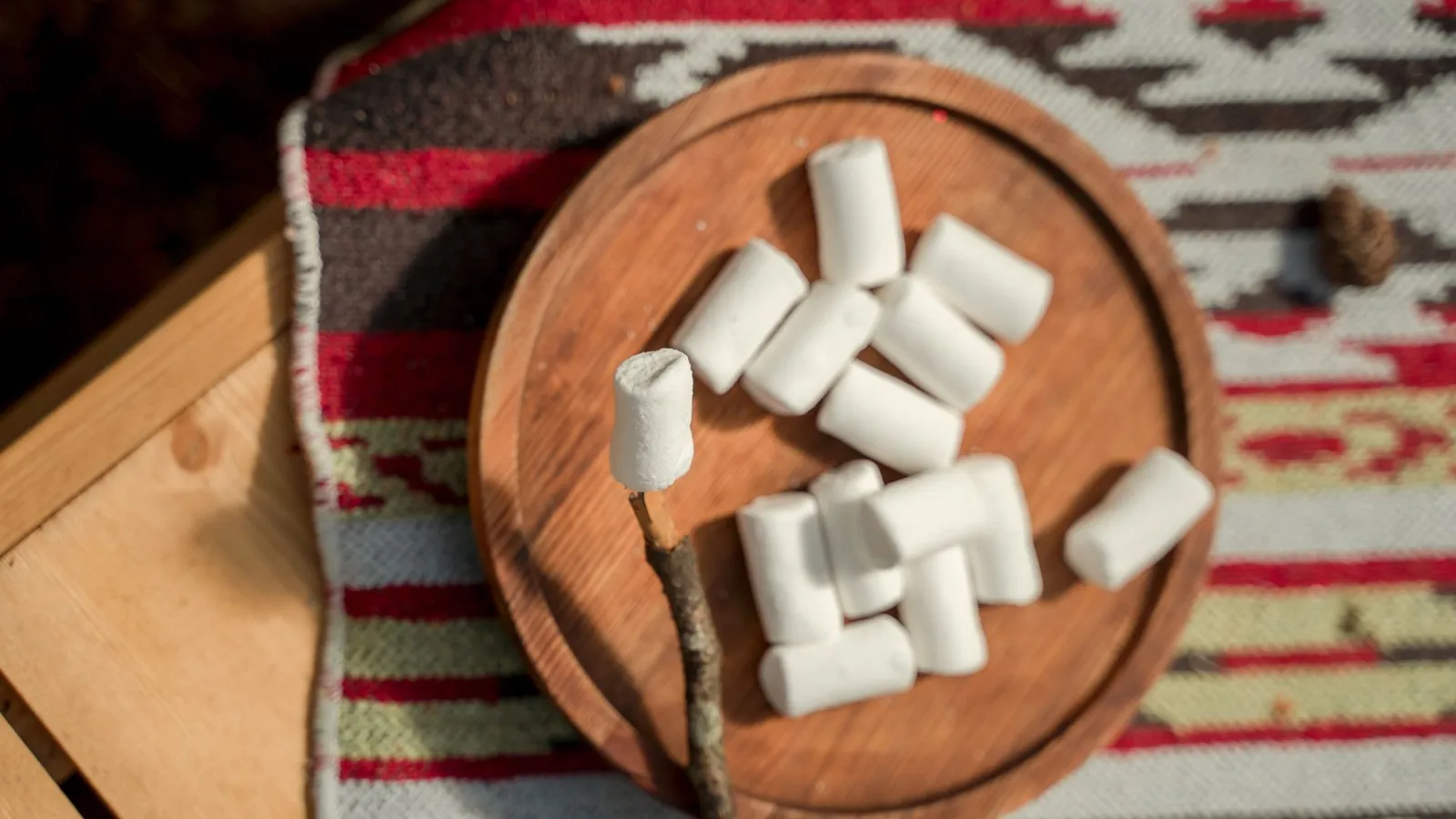
Imagine a confectionery operator depositing a tray of soft, airy marshmallows. The pieces sit tall and tidy, ready for their coating. On the next inspection, they look as though someone has gently pressed the whole tray. The mixer made plenty of foam, so where did the puff go?
A marshmallow needs more than air. It needs small bubbles that survive handling, surrounded by a mixture that becomes strong enough to hold the finished shape. Whipping, depositing and setting belong to the same story, even when different people supervise each step.
Making bubbles is only the opening act
Whipping brings air into the mixture and breaks it into bubbles. Foam-forming ingredients help create and protect the boundary between air and the surrounding liquid. In a conventional gelatin-based marshmallow, gelatin contributes to both foam stabilisation and the structure that develops as the mixture cools.
Other formulations use different combinations of ingredients to perform these jobs. They may need different preparation and setting conditions. Changing the gelling system is therefore more than exchanging one powder for another. The recipe still needs a way to create bubbles, protect them and support the final piece.
A large volume leaving the mixer proves that air entered the mixture. It does not prove that the bubbles will survive the pipework, depositor and setting period. A foam can look impressive at first and still lose volume before the structure becomes established.
What happens while the foam waits?
Liquid can drain through the spaces between bubbles. The thin films separating bubbles can weaken, allowing neighbouring bubbles to merge. Gas can also move between bubbles, changing their size distribution. These processes can make the foam coarser and less stable as it waits.
The surrounding mixture helps slow these changes. Its viscosity, composition and developing gel structure influence how easily liquid and bubbles move. The useful balance is a mixture that can be handled and deposited, then develops enough strength to retain the intended shape.
If setting is too slow for the handling sequence, the foam has more opportunity to change before it is supported. If the mixture sets too early, it may resist depositing or form uneven pieces. A successful trial must find a workable sequence, rather than maximising thickness at every stage.
Follow the foam through the equipment
Record the condition at the end of whipping, after any waiting period and at the depositor. Temperature matters because it affects viscosity and setting behaviour. Time matters because a mixture can keep changing while it sits in a hopper, even when the operator is waiting for the line.
Transfer and depositing impose their own mechanical treatment. Pumping, pressure changes and restrictions can alter an aerated mixture. The first tray may also have a different history from trays deposited after a prolonged hold. Keep their identities separate when assessing shape retention.
Preparation of the foam-forming and gelling ingredients deserves attention too. Incomplete hydration or an unsuitable addition sequence can leave the system unable to do its job consistently. Follow the preparation guidance for the selected ingredients, then verify the behaviour in the complete confectionery mixture.
Measure the puff without squeezing it away
Density is mass divided by volume. For a given formulation, comparing the mass of a consistent volume can help show differences in aeration. Use a defined filling and levelling method, because compressing one sample more firmly than another makes the result difficult to interpret.
Measure at agreed stages and record sample temperature. A change between mixer discharge and depositing can point towards a handling issue. A change during setting directs attention towards the period when the foam should be acquiring strength. Density alone cannot describe bubble size, so inspect a cut surface as well.
Compare springiness and shape after the same setting period. Pieces of different size or samples handled while still warm can give misleading impressions. Keep coating and storage conditions consistent too, so later surface or moisture changes are not confused with an immediate foam problem.
- Record ingredient preparation and the condition before whipping.
- Check aeration with a consistent volume and weighing method.
- Follow temperature and waiting time through transfer and depositing.
- Compare early and late trays without mixing their records.
- Assess bubble structure, springiness and shape after matched setting.
Give the bubbles a clear route to setting
Resist the tempting answer of simply whipping for longer. More aeration can produce a different foam without fixing the delay or weak structure that causes collapse. Choose the stage where the evidence first changes, then test a focused adjustment within the established process.
Our imagined operator now has more to work with than a disappointing tray. The puff has a journey, and each stage can be checked. Ask Specsy or the SpecSol team to help map that journey, so the marshmallow reaches its wrapper with its shape and gentle bounce intact.