

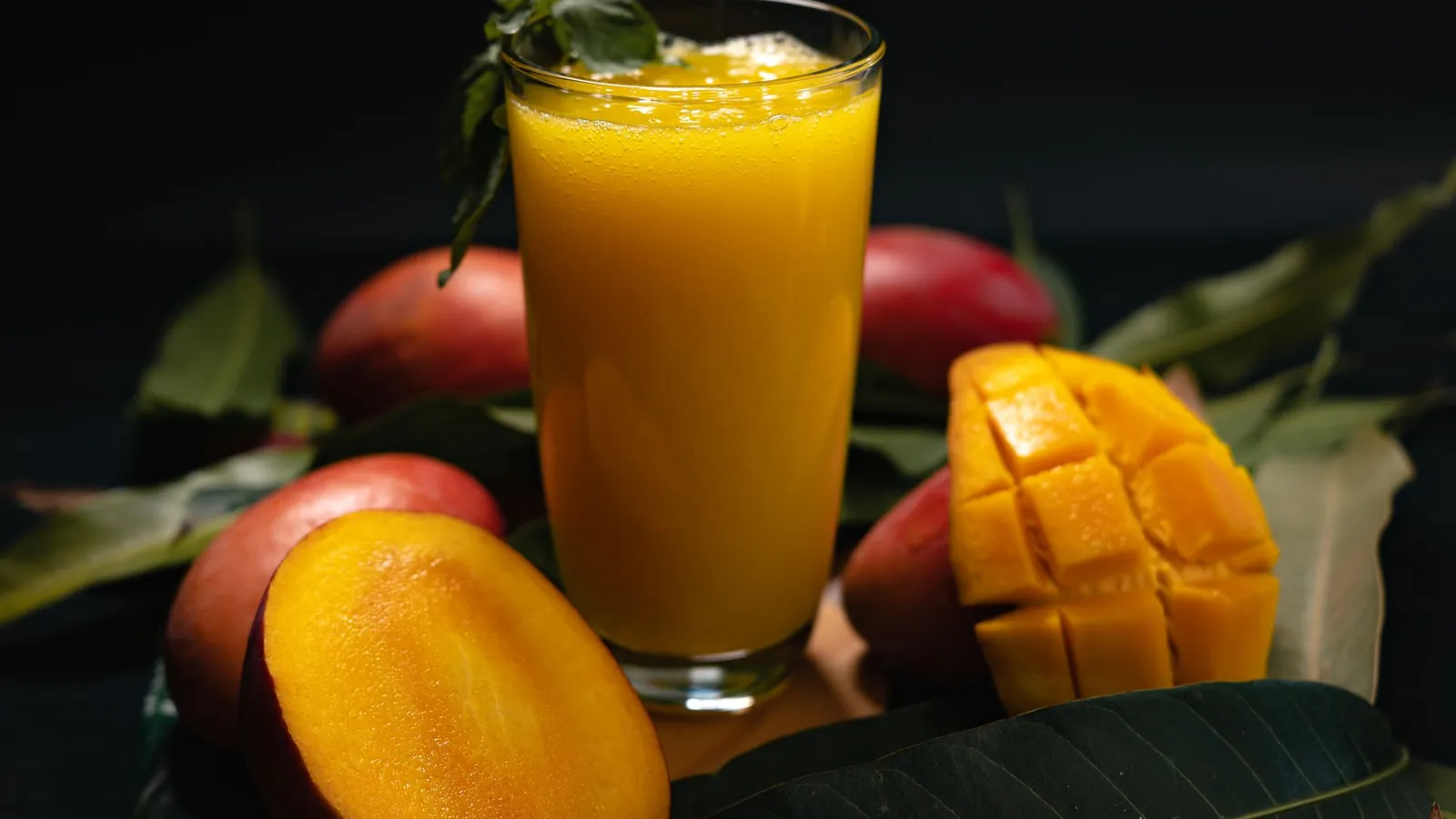
Picture a beverage QA lead holding a clear sample cup of mango nectar. Mixing stopped a while ago, yet tiny bubbles are still making their slow journey upwards. The drink was meant to be still. Meanwhile, the filling team is discussing why apparently similar fills do not always give the same weight.
These observations may share a cause: air carried into the nectar during processing. The bubbles take up space, and a thick pulp drink can make their escape surprisingly slow. Following where the air enters and where it can leave is more useful than simply waiting for the sample surface to look quiet.
Still drinks can collect air too
Pulp can carry air from earlier handling, and transfer can introduce more. A falling stream that splashes into a vessel brings liquid and air together. Mixing that draws a deep surface vortex can repeatedly pull air down into the product.
Watch the vessel when its level changes. A setup that behaves well with a full tank may entrain air near the end of a batch. Transfer connections and pump inlet conditions also deserve inspection when bubbles appear downstream without an obvious source at the mixer.
Air can exist as visible bubbles, much smaller dispersed bubbles and dissolved gas. These are related but different forms. A sample with no obvious foam is not necessarily free of air, and a foamy surface does not tell you exactly how much gas is present throughout the tank.
Thick nectar makes a slow exit
A bubble rises because it is less dense than the surrounding liquid. Its movement is opposed by the liquid around it. In a thick nectar, small bubbles may rise slowly enough to remain dispersed through transfer and filling.
Pulp particles and the liquid's structure can further complicate the journey. Some nectar flows readily while being stirred but moves much less at rest. The same consistency that helps suspend fruit material can therefore make passive bubble removal less straightforward.
This is why a quick glance at the top of a tank is a weak endpoint. Large bubbles may have escaped while fine ones remain. Compare samples with a consistent collection method and observation time, and avoid introducing a fresh batch of bubbles while taking the sample.
Bubbles occupy space on the filling line
Entrained gas increases the apparent volume occupied by a given amount of liquid product. A volume measurement that includes bubbles can therefore give a misleading picture of how much nectar is present. The precise effect on filling depends on the equipment and how it measures or controls delivery.
Compare net mass, apparent fill level and product condition together. A settling foam layer can change the visible level after filling. That does not automatically mean the filler delivered inconsistently, but it does mean that immediate appearance alone is an incomplete check.
Keep container tare and measurement procedures consistent. If the weight variation remains when air is controlled, continue investigating the filling system. Bubbles are a plausible explanation to test, not a convenient answer to every discrepancy on the line.
Remove air without losing the drink
Deaeration is a process for removing gas from the product. Under reduced pressure, gas can leave the liquid more readily, and equipment is designed to provide suitable exposure and separation. Performance depends on the product, temperature, flow and equipment conditions.
Use the established operating procedure for the actual nectar and system. More aggressive treatment is not automatically better. Aroma compounds can also be carried away, so judge mango aroma and flavour alongside air removal rather than choosing conditions solely for the quietest sample.
Follow the product after deaeration. Splashing, open transfer or unsuitable mixing downstream can reintroduce air. A successful equipment step loses its value if the nectar immediately repeats the conditions that created the bubbles in the first place.
A practical bubble trail
- Observe pulp addition, liquid return points and surface vortex formation.
- Compare conditions at different tank levels.
- Collect matched samples before and after the deaeration stage.
- Record sample temperature, collection method and observation time.
- Compare net fill mass with apparent volume and visible foam.
- Check finished nectar aroma, texture and appearance after packing.
Use these observations to choose a focused trial. Changing an addition route or mixing practice may reduce air entry, but must still give proper ingredient distribution. Review changes with the technical team so that mixing, hygiene and the validated beverage process remain effective.
Keep texture comparisons fair. Bubbles can change how a sample looks and feels, while differences in temperature can also change flow. Use the same preparation and testing conditions before deciding that the fruit solids or thickening system need adjustment.
The best result is a nectar that delivers its intended mango character with consistent filling and handling. Bring your bubble trail to Specsy or the SpecSol team. The tiny visitors in the sample cup can be useful witnesses, provided the investigation follows them back to where they joined the drink.