

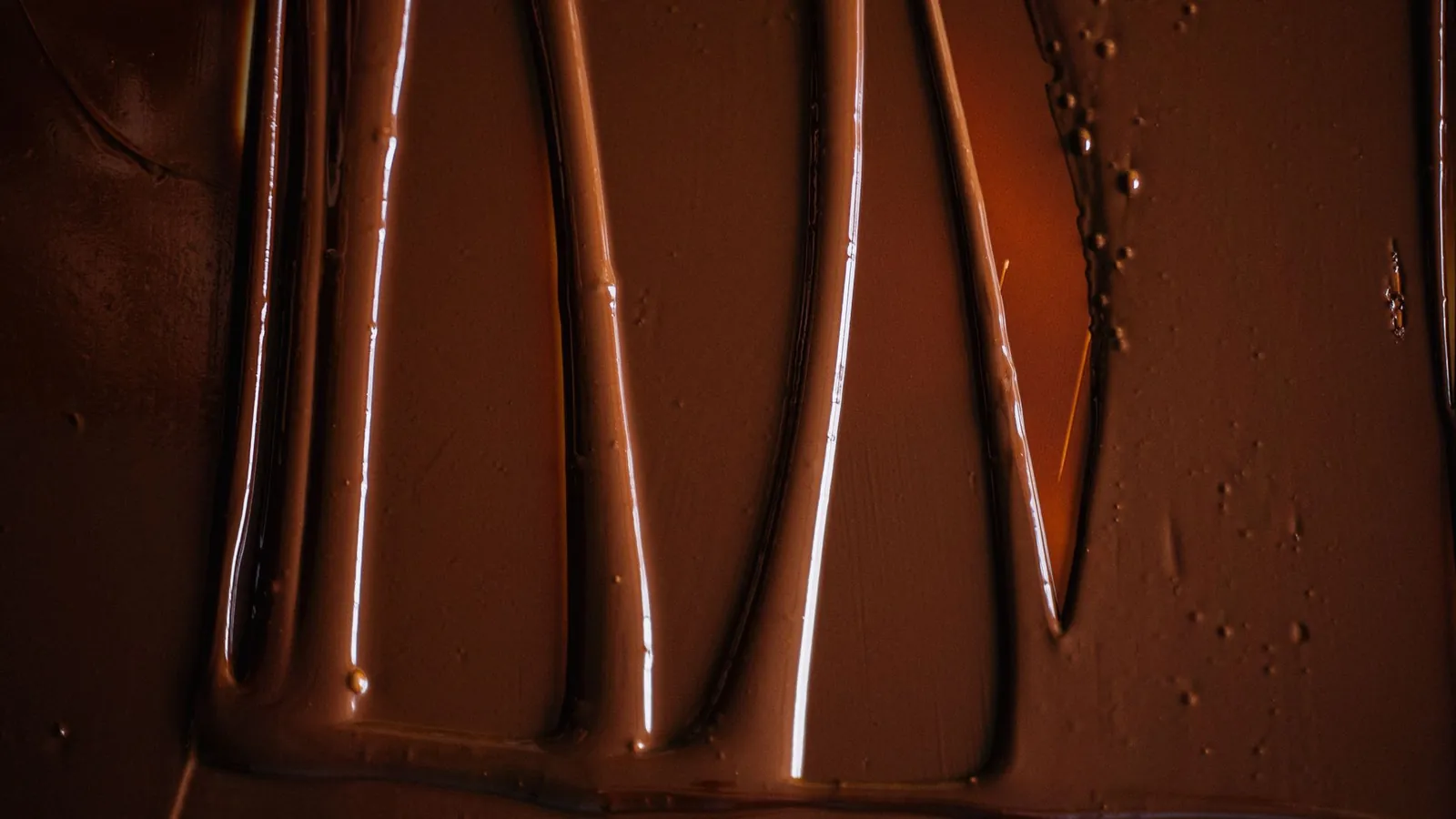
Picture a confectionery developer lifting a coated biscuit from a trial. The chocolate drains more readily and leaves a different layer behind. The recipe has not simply gained a generous splash of fat. A change involving lecithin has helped the mixture move, and now the team wants to understand what improved.
The answer begins with what melted chocolate actually contains. It is a crowded mixture of solid particles dispersed in a continuous fat phase. Making it flow involves moving those particles past one another, not merely melting a block into a simple liquid.
The particles share a busy space
Sugar, cocoa solids and, where present, milk solids remain as particles within the fat. Their amount, size and surface characteristics influence how the mixture behaves. The fat provides the surrounding phase, but the interactions between those particles help determine the effort needed to move the chocolate.
Lecithin contains surface-active components that can associate with particle surfaces. By changing interactions there, it can alter the flow of the suspension. This helps explain why a flow change can occur without a simple increase in the bulk fat contribution.
That useful effect is not a promise that every addition will make every chocolate thinner in every sense. The response depends on the complete formulation and the material being used. More lecithin does not automatically mean a better coating result.
Starting and moving are different questions
Chocolate may need a certain push before it begins to flow appreciably. This is described through yield stress. Once it is moving, its continuing resistance is described through viscosity. Plastic viscosity is one of the parameters used in common chocolate flow measurements.
These describe different parts of the behaviour. A formulation change can affect them differently, so a single description such as thinner may hide what actually happened. Ask which measurement changed and how that relates to the application.
At the bench, turn those ideas into observable questions. Does the coating start moving readily? Does it continue draining? Does it leave ridges, a thick foot or uncovered areas? Keep the observations specific so a flow report can be connected to what the line is doing.
Give the measurement a fair setting
Compare samples with a consistent temperature and preparation history. Chocolate behaviour changes with its physical condition, including the state of the fat. A sample that has cooled or developed a different crystal structure should not be treated as a direct ingredient comparison.
Use a defined measurement procedure appropriate to the equipment. Record sample conditioning, the measuring sequence and the reported parameters. A result taken by one method may not be directly comparable with a number from another method, even when both are labelled viscosity.
Keep moisture and handling under control. Damp utensils or condensation can create a separate flow problem. If a trial changes suddenly during preparation, check those events before attributing the result to the emulsifier. A clean comparison needs the ordinary production details to stay ordinary.
The biscuit has the final vote
Test the chocolate on the intended centre or product. Surface shape, temperature and condition affect pickup and drainage. A smooth test plate can help screen flow, but it cannot represent every corner, crumb or edge of the actual item being coated.
Hold the coating procedure steady. Changes in delivery, vibration, air handling or the interval before cooling can alter the layer left behind. Record those conditions alongside the formulation so the apparent ingredient improvement is not really a different coating setup.
Compare coverage with coating mass and appearance. Easier drainage might reduce an unwanted heavy base, yet excessive drainage for the application could leave thin patches. The aim is a suitable, repeatable layer with the required eating quality, rather than the fastest possible run-off.
A practical coating comparison
- Identify the chocolate formulation and the lecithin material being compared.
- Match temperature, conditioning and measurement procedure.
- Record starting-flow behaviour separately from resistance during movement.
- Coat the intended product under consistent line conditions.
- Assess pickup, drainage, coverage and the finished bite together.
Keep photographs of the top, sides and base after the coating has set under the intended process. A tidy top view can hide a heavy foot or a bare corner. Use representative samples rather than selecting the best-looking piece from each trial.
Check performance through the relevant holding and production period. A promising first cupful is useful, but the coating must also behave consistently as the line runs. Include observations after routine pauses and restarts where these are part of the normal operation.
For formulation changes, ask our team for starting levels and check the current FSSAI regulations. Bring the application brief and the measurement method together. That makes the discussion about what the ingredient needs to accomplish, rather than a disconnected request for a thinner sample.
The developer can now describe the improvement with more confidence: how the coating starts, how it drains and what remains on the biscuit. Ask Specsy or the SpecSol team to help read those observations. A useful flow change earns its place on the finished product, one well-coated bite at a time.