

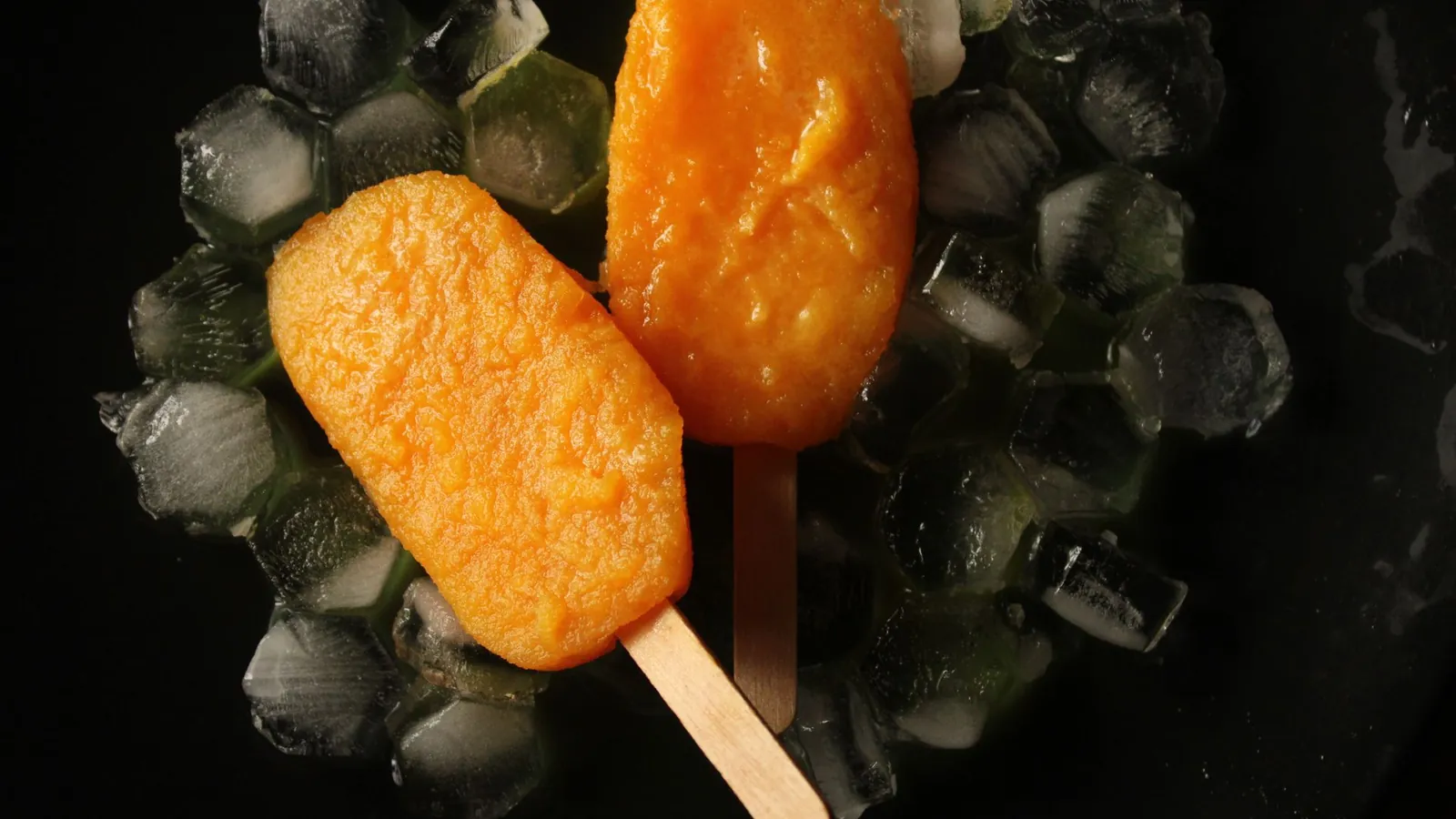
Picture a frozen-dessert operator giving a kulfi stick a confident pull. The stick moves. The kulfi does not. A second mould releases easily, while the next produces a soft, smeared surface. The tray now contains a puzzle: desserts from the same batch are leaving their moulds very differently.
The useful place to start is the thin contact zone between the mould and the frozen product. Release requires that attachment to weaken while the kulfi keeps enough strength to hold its shape. Pulling harder cannot reliably create that balance. The condition of the mould and the way it is warmed deserve a closer look.
Only the outside needs to let go
A frozen kulfi contains ice along with an unfrozen portion containing dissolved ingredients. It does not behave like a single solid block with one sharp melting event. As its surface warms, local softening and melting can weaken the attachment to the mould.
A controlled demoulding procedure uses this change near the surface. The centre should remain sufficiently firm for handling. Too little warming leaves the interface stubbornly attached. Too much can remove the clean outline, leave product behind or make the released kulfi vulnerable to damage.
That balance depends on the product and mould together. Mould material, wall condition, shape and initial temperature influence heat transfer. A release procedure that works for one combination should be checked before it is carried across to another mould or a changed dessert.
Read the evidence left behind
Inspect the empty mould immediately after release. A largely clean surface tells a different story from a thick smear or a broken piece still lodged inside. Photograph the released dessert alongside its mould so the defect remains connected to the conditions that produced it.
Look for dents, scratches, rough areas and residues. Local defects can make release uneven or mechanically catch the product. Keep cleaning and maintenance within the site's procedures. An improvised coating on the mould creates a new variable and should not become an unofficial answer to a worn surface.
Check whether failures repeat in particular mould positions. Uneven exposure during the release step can create a pattern across a rack. If the same positions keep causing trouble, investigate their contact with the warming medium and their starting condition before blaming the entire recipe.
The stick needs support too
A stick pulling free does not automatically prove that the outside is gripping too tightly. Stick position and the strength of the frozen product around it also matter. Compare placement depth, angle and alignment using the established setup, and watch for movement before freezing is complete.
Filling consistency deserves attention. Variation in fill mass, distribution of inclusions or trapped spaces can change the support around the stick and the shape of the dessert. Record what went into each suspect mould, especially when the problem appears intermittently rather than throughout the batch.
Freezing and subsequent storage history can also affect firmness at demoulding. Compare actual product condition across the rack. A freezer display is useful process information, but it cannot by itself show that every moulded dessert has reached the same state.
Make release a controlled comparison
Choose a reference mould and procedure that represent normal production. Compare candidates using the same product batch where practical. Keep the starting frozen condition and the handling after release consistent, so the assessment does not quietly become a comparison of different warming histories.
- Check mould identity, cleanliness, surface condition and position.
- Record fill consistency and stick placement before freezing.
- Confirm the starting product condition using the site's procedure.
- Keep exposure during the release step consistent and recorded.
- Observe release effort, residue, shape and surface finish together.
- Follow the dessert through the next handling and packing steps.
Avoid judging success only by how quickly the dessert drops out. A very soft surface may make release easy while causing marks, sticking or deformation further along the line. The best result is a clean exit followed by a product that remains easy to handle.
Warm the interface, protect the dessert
Review the release step with the people who operate it. Unrecorded extra dips or repeated attempts can create wide variation between pieces. A clear endpoint and a defined response to failed release help prevent an awkward mould from gathering an increasingly improvised treatment.
Keep any release medium and equipment under the site's hygiene controls. Prevent unintended contact or water entry where the process requires separation. Moving a dessert through a warming step also affects its thermal history, so changes need assessment within the full frozen-product process.
When a recipe changes, repeat the comparison. Sugar, milk solids and other ingredients can influence freezing behaviour and texture, which may change the demoulding response. Test the finished product instead of assuming that familiar moulds guarantee familiar release.
Back at the tray, the aim is pleasantly ordinary: the stick stays secure, the mould lets go and the kulfi keeps its shape. Ask Specsy or the SpecSol team to help review your release observations. A little attention to the surface can save a great deal of tugging.