

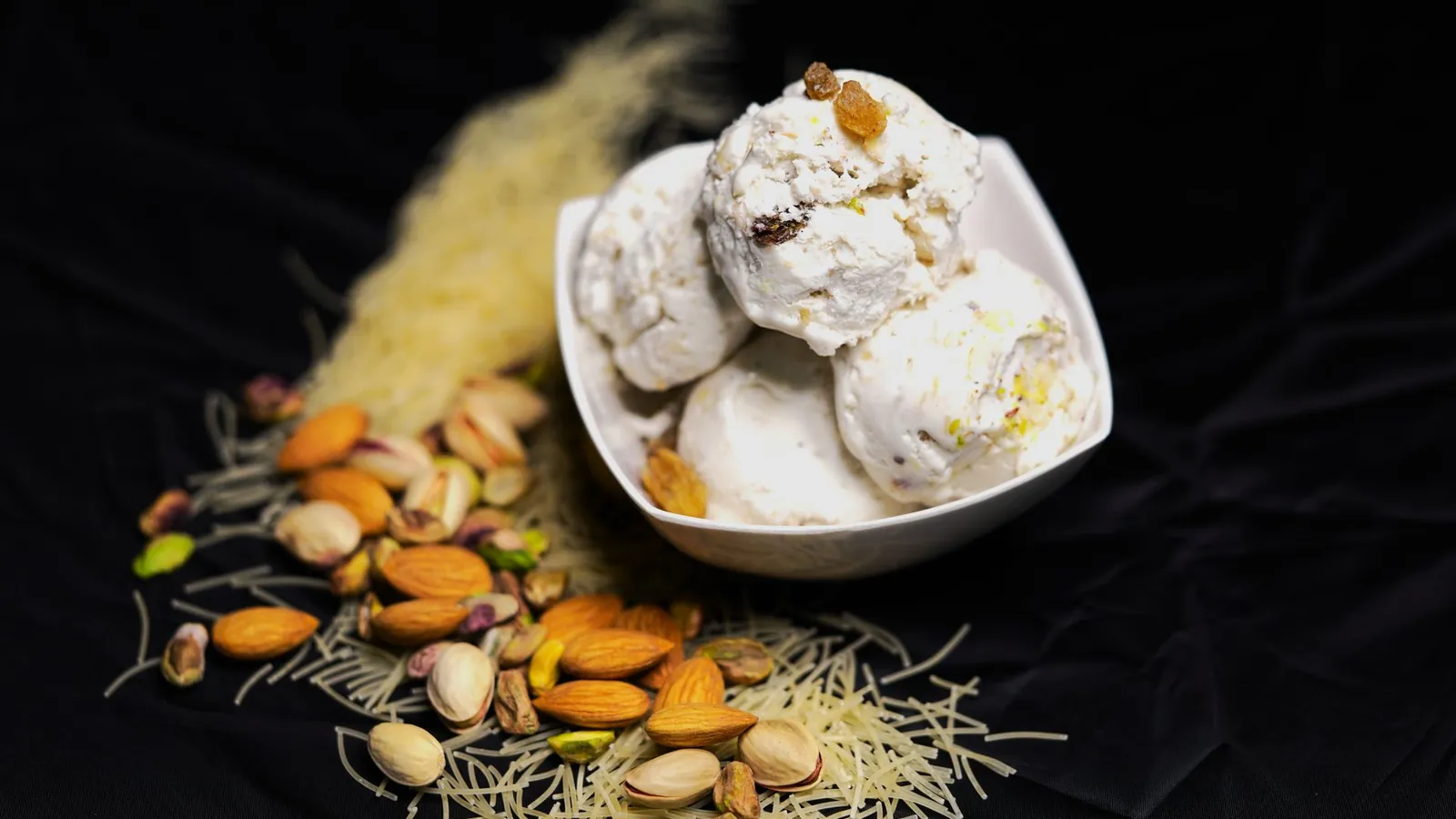
Imagine a frozen-dessert QA lead leaving a gritty kulfi sample to soften under controlled assessment conditions. The icy resistance fades, but a fine sandy feeling remains. The spoon moves easily now. The mouthfeel still suggests that someone has hidden tiny grains in the milk.
That lingering grit is a useful clue. Ice crystals are not the only particles that can make a frozen dessert feel rough. Lactose, the natural sugar in milk, can also form crystals. Before changing the freezing process, the team needs to find out which sort of roughness it is chasing.
Ice melts, milk sugar has to dissolve
Ice crystals disappear through melting as the sample warms. Lactose crystals disappear by dissolving into the surrounding liquid, which is a different process. They may remain noticeable after much of the ice has melted, depending on the sample's composition and the assessment conditions.
This makes a softening comparison helpful, but it is not a complete identification test. Nuts, spice particles, undispersed powder and other solids can also feel gritty. A recipe containing deliberate inclusions needs particular care because the expected texture can hide a second source of particles.
Describe what is felt before naming the cause. Is the roughness coarse and icy, fine and sandy, or irregular like fragments? Does it appear throughout the kulfi or only near an inclusion? Retain suitable samples for examination rather than asking the tasting panel to settle the chemistry by itself.
The liquid between the ice gets crowded
When a milk mixture freezes, much of the water becomes ice. Dissolved materials remain concentrated in the liquid that has not frozen. Lactose therefore finds itself in a smaller liquid space than it occupied in the original mix. Its behaviour in that concentrated phase matters to the final texture.
If conditions favour crystallisation, lactose can come out of solution and form crystals. Crystal formation and growth take time and depend on the product and its history. A smooth freshly frozen sample does not guarantee that every retained sample will stay smooth through storage.
Milk solids contribute valuable body and flavour, but they also bring lactose. Increasing milk powder or concentrating the milk further changes more than richness. It changes the balance of lactose, water and other solids, so the complete formula needs to be considered together.
Follow the milk through the recipe
Start with all the dairy ingredients, including concentrated materials and any rework used under an established procedure. Record their composition and contribution to the batch. Looking only at the amount labelled milk powder can miss lactose entering through another part of the recipe.
Then follow concentration and batch completion. Differences in evaporation can leave apparently similar batches with different solids contents. Check the actual final batch condition rather than assuming that the same heating time produces the same concentration every day.
Review powder incorporation too. A particle present before freezing deserves a different investigation from one that develops during frozen storage. Examine the prepared mix using an appropriate method. That early check can prevent a dispersing problem from being mistaken for later crystallisation.
Follow kulfi through storage
Track freezing, hardening, transport and storage as a connected history. Temperature changes affect the balance of ice and liquid and can alter the conditions in which crystals develop. They can also make ice texture worse, so more than one mechanism may be present in the same sample.
Compare retained packs with recorded histories, prepared and assessed consistently. If a product is smooth initially but sandy later, keep that timing visible in the investigation. It gives the team a better starting point than a single photograph of a spoonful at the end.
A stabiliser may help manage water movement and ice-related texture in a suitable system. It does not automatically remove excess lactose or dissolve existing lactose crystals. Treating the wrong mechanism can make the dessert thicker while leaving the original grit happily in place.
A short route from clue to confirmation
- Record whether particles are present before freezing.
- Compare freshly prepared and stored samples with known histories.
- Observe the texture as samples soften under controlled conditions.
- Review lactose sources, concentration and final mix composition.
- Use suitable microscopy or laboratory examination to identify uncertain particles.
- Assess any correction through the intended storage period.
Agree sample handling with the laboratory before sending a portion for identification. Warming, dilution or other preparation can change the particles being investigated. The method needs to preserve or reveal the relevant structure, with the limitations of the result clearly understood.
Once the cause is supported, trial an appropriate formulation or process change against the existing product. Keep flavour, body and eating temperature in the comparison. A smoother kulfi still needs to taste rich and familiar; removing one defect should not quietly remove the reason people enjoy it.
The imagined QA lead can now give the grit a more useful job description. Some particles belong to the recipe, some point to ice, and some may be lactose crystals. Bring your observations to Specsy or the SpecSol team, and let the next trial answer the right question.