

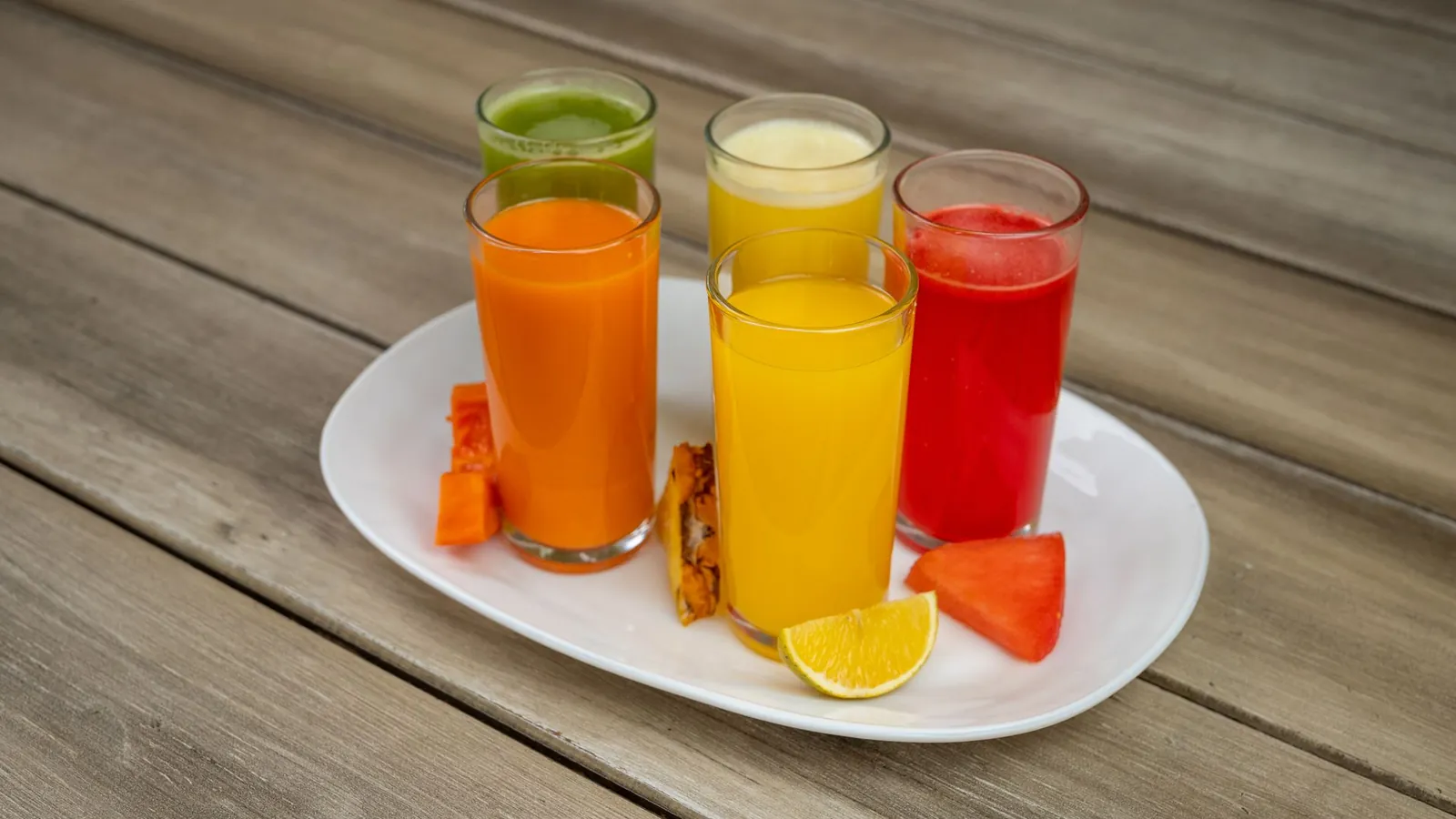
The QA lead wipes the prism, checks again and gets the same answer. The drinks appear to agree with the instrument, but the tasting panel certainly does not. In this imagined beverage room, one sample tastes sharply fruity and the other tastes rounder and sweeter.
Nobody needs to accuse the instrument of taking sides. A refractometer and a person tasting a drink are answering different questions. The trouble starts when the number on the screen is treated as a complete description of sugar, sweetness and quality.
The instrument follows light
A refractometer measures how light changes direction when it passes through a sample. This property, called refractive index, changes with composition and temperature. The instrument converts its measurement into a reading on a selected scale.
The Brix scale is referenced to sucrose dissolved in water. In that simple reference system, the relationship between the reading and sucrose concentration is well defined. A real juice contains more than sucrose and water, so the interpretation needs a little care.
Fruit acids, minerals and other dissolved components can contribute to the reading. For many juice applications, refractometric Brix is used as a practical indication of soluble solids. It is useful precisely because the measurement is quick, but it is not a separate count of every sugar molecule.
Sweetness has its own conversation
Different sugars do not taste equally sweet. Their proportions can change between fruit materials, even when the total amount of dissolved material appears similar. Acidity also changes the balance of a drink, making a given sweetness seem more or less prominent.
Aroma, bitterness and serving temperature add further influences. The panel tastes a complete beverage, not an isolated sucrose solution. A tart sample and a gentler sample can therefore share a Brix reading without delivering the same experience.
That does not make tasting a substitute for measurement either. Use each for its own job. A consistent instrument result can support process control, while a structured tasting comparison helps describe the balance the consumer will notice.
Total sugars needs an appropriate analysis
If the question is how much total sugar the finished beverage contains, use an analytical method suited to identifying and measuring the relevant sugars. A Brix reading alone cannot separate sugars from other contributors to refractive index.
The distinction becomes especially important when comparing substantially different formulations. A change in fruit base, added soluble ingredients or sweetening approach can alter the relationship between Brix and the property you intended to follow.
For routine production, an established Brix target may still be a valuable check within a defined recipe and method. Keep that relationship attached to the product. Do not assume that a target developed for one drink transfers neatly to another because both belong on the same filling line.
Give the prism a fair sample
Before judging the beverage, check the measurement procedure. A dirty prism, traces of rinse water or residue from the previous sample can influence the result. Clean the measuring surface as instructed and confirm instrument performance using the appropriate checks.
Sample preparation matters too. Pulp, suspended particles, bubbles and uneven mixing can make a small test portion unrepresentative or interfere with a clean reading. Follow a consistent method for the particular drink and instrument. Do not improvise a different filtration or settling step whenever a result looks inconvenient.
If the product has separated, decide what the measurement is meant to represent. A clear layer from the top is not automatically a sample of the whole batch. Mix and prepare the sample according to the agreed procedure, and record any preparation needed before measurement.
Temperature compensation is helpful, with boundaries
Temperature affects refractive index. Instruments may compensate automatically, but that does not remove the need to follow their operating instructions or allow the sample and measuring surface to settle appropriately.
Compensation is based on assumptions. Check that the instrument and selected mode are suitable for the product being tested. A hot drop that changes rapidly on a cooler prism can be a poor basis for comparing batches, even when a temperature symbol appears on the screen.
Use the same preparation and measurement conditions for reference and candidate samples. Record the method with the result so that another shift can repeat the comparison rather than merely copy the target.
A quick check before accepting the number
- Confirm the instrument check and a clean measuring surface.
- Identify the batch, sampling point and preparation method.
- Use consistent temperature handling and the appropriate instrument mode.
- Repeat a doubtful result with a fresh representative portion.
- Compare flavour separately under matched serving conditions.
- Request suitable sugar analysis when sugar composition is the actual question.
Back at the tasting bench, the matching readings are no longer a mystery. They describe a useful optical measurement, while the panel describes the experience in the cup. Keeping both observations gives the team a better drink and a much more honest specification.