

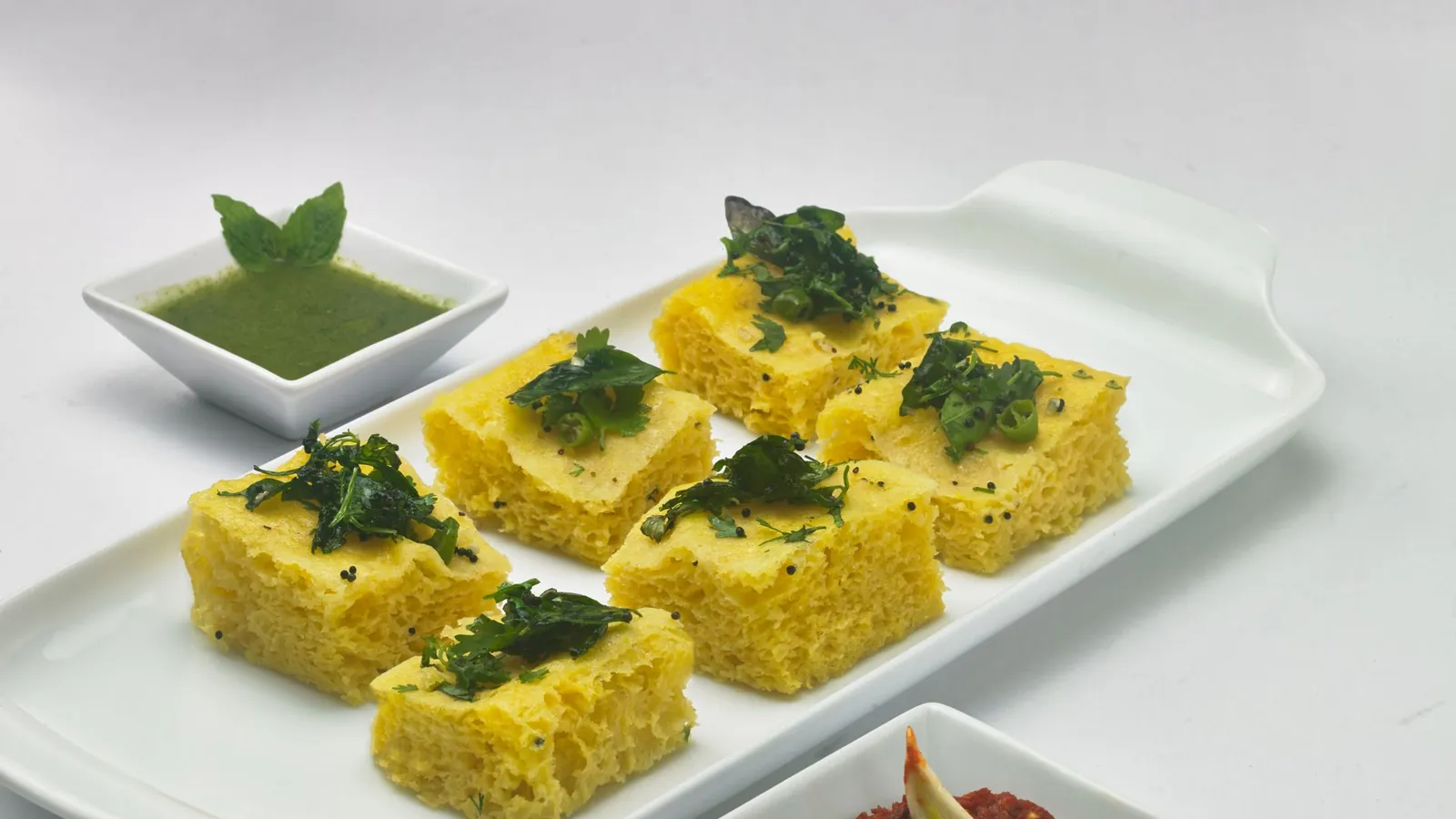
Picture a production cook mixing an instant dhokla batter. It looks lively, with little bubbles appearing at the surface. Then another tray needs attention, the steamer is occupied and the bowl waits. When the dhokla finally emerges, the expected light crumb has become a disappointingly dense slab.
The premix may have produced gas perfectly well. The problem is whether that gas was still in the right place when the structure set. A good result depends on gas generation, gas retention and cooking arriving in a useful sequence, rather like a team turning up for the same shift.
A bubble needs more than an entrance
In a chemically leavened instant mix, a suitable acid and bicarbonate system can release carbon dioxide when the prepared batter conditions allow them to react. Water brings components into contact. Temperature and the particular leavening ingredients influence how the reaction develops.
Some systems release gas readily during preparation, while others reserve more of their action for heating. The exact pattern belongs to the formulation. Do not assume that every instant premix has the same waiting tolerance simply because the dry powders look similar.
Gas production is only the beginning. Bubbles need to remain dispersed in the batter and expand usefully during cooking. Finally, the developing food structure must hold the spaces they create. Gas that escapes into the room cannot return later to lift the tray.
The batter has to hold the invitation open
Batter consistency affects how bubbles move and survive. A very fluid mixture may allow them to rise and escape readily. A mixture that is difficult to expand presents another problem. Flour properties, hydration and mixing all influence the balance, so gas production should be assessed alongside batter behaviour.
Mixing incorporates air and distributes ingredients, but working the batter after gas has developed can also disturb bubbles. Repeated stirring during a delay may change the structure again. Record the actual sequence, including the extra stir that rarely makes it onto the preparation sheet.
A foamy surface is therefore a clue rather than a promise. It may show that gas is being generated, but it does not demonstrate that the finished crumb will be well aerated. Judge the cooked product and the route to it together.
The steamer is part of the formula's working conditions
During steaming, heat changes the batter into a structure that can hold its shape. Starch swelling and gelatinisation, together with changes in proteins, contribute to setting. Meanwhile, gas expands and the batter must accommodate that expansion without losing its useful bubble structure.
Tray depth, loading and the condition of the steamer affect heating. A prepared batter entering a ready steamer has a different start from one placed into equipment that is still coming into operation. Follow the established cooking procedure and check the product is adequately cooked.
Keep the preparation sequence realistic. If the intended operation mixes several trays while only some can be steamed, waiting is part of the application. Either the workflow or the premix performance must account for it. A trial with immediate steaming cannot establish tolerance of a much longer queue.
Read the dry mix's history too
Moisture exposure during storage can affect dry premix condition and may allow reactive ingredients to change before use. Inspect packaging integrity, storage records and any signs of caking. A dry mix needs to reach the kitchen in the condition the preparation method assumes.
Ingredient distribution also matters. An uneven blend can give portions different leavening behaviour even when the cook follows the same instructions. Compare samples from representative packs and keep the mixing method consistent before deciding that every variation begins at the steamer.
Review leavening choices with flavour as well as lift in mind. An adjustment that changes reaction balance can affect the taste of the finished product. More gas is not automatically a better answer, and an unpleasant aftertaste is not a worthwhile exchange for a taller tray.
A simple timing trial tells a useful story
- Record premix identity, pack condition and preparation water.
- Keep mixing, batter quantity and tray format consistent.
- Compare the intended preparation sequence with a realistic waiting condition.
- Record any stirring or transfer after initial mixing.
- Use the same established steaming and cooling procedures.
- Compare crumb openness, tenderness, flavour and cooked condition.
Cut comparable sections through the centre and edge of each tray. A high surface alone can hide a dense lower region or large uneven holes. Look for a crumb that is consistently light enough for the product, while still strong enough to cut and serve neatly.
Use the results to write clear preparation instructions. The important details may include having the equipment ready, avoiding unplanned holding and handling the mixed batter consistently. Make those instructions easy for a busy cook to follow, rather than leaving the successful trial as an unwritten memory.
The imagined cook does not need to chase every bubble. The job is to give them a useful place and time to work. Ask Specsy or the SpecSol team to review your premix and preparation sequence, and help the next tray arrive with its lift still on board.