

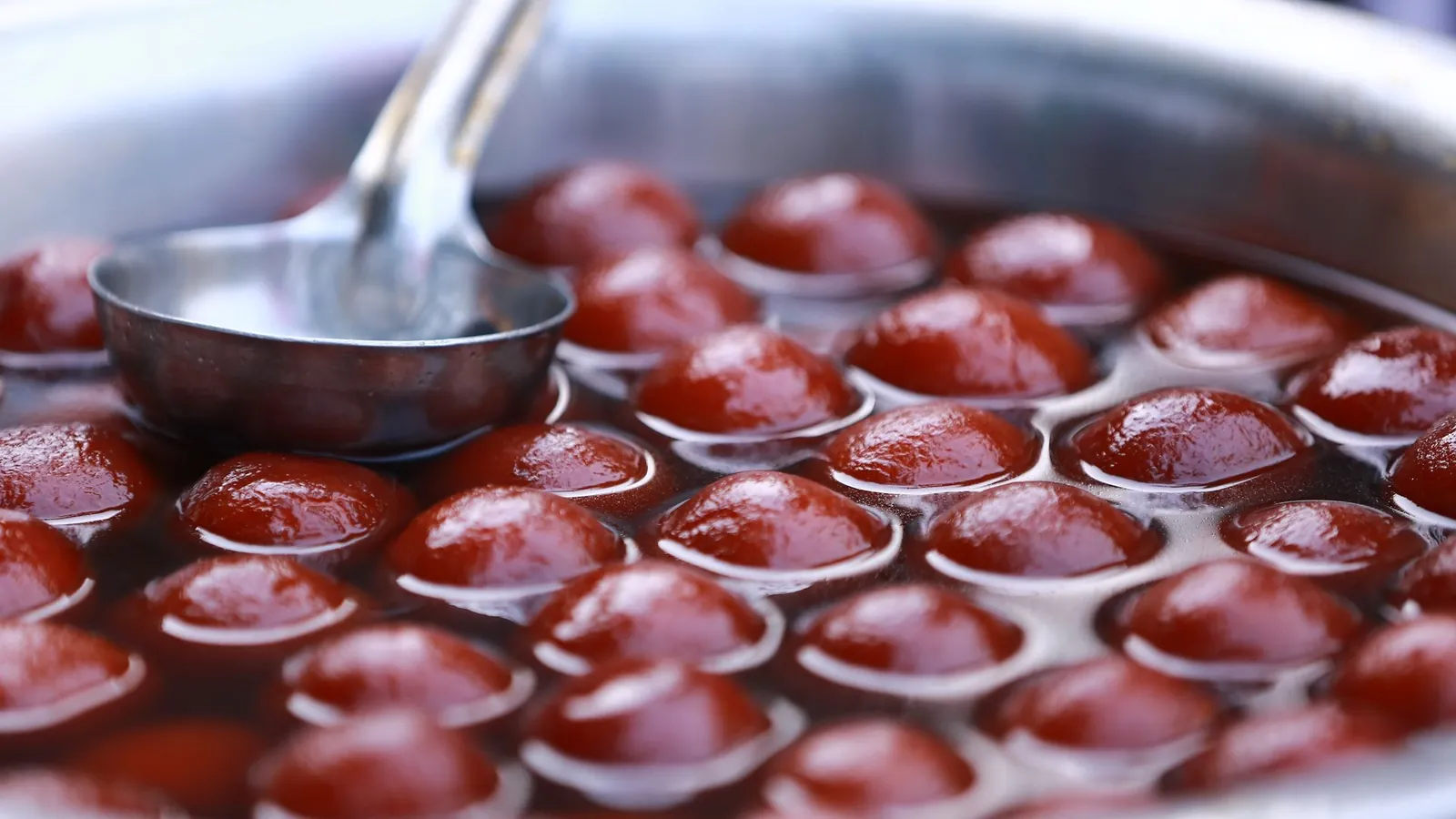
Imagine a mithai QA lead lifting a gulab jamun from its syrup. The surface shines, the colour looks inviting and the spoon slips through easily. Then the sweet is cut open. Around the outside, all is well. In the middle sits a pale, dry patch that seems to have missed the invitation.
The surface has told a convincing story, but only part of it. Syrup must travel into the fried structure. The route depends on how that structure was made, how far the liquid must move and what happens during soaking. A glossy coating cannot answer those questions.
The syrup needs a connected route
A fried gulab jamun contains small spaces within its solid structure. Syrup can enter accessible pores and move through connected passages, while water and dissolved sugar redistribute over time. The outside meets the syrup first. The centre has a longer journey to wait for.
Imagine a sponge with some open passages and some tightly compressed areas. Both can look similar from the outside, yet liquid moves through them differently. The comparison is useful for understanding the sweet, although real dough contains a more complicated mixture of milk solids, flour, fat and other ingredients.
A dense centre or a compact outer layer can make uptake more difficult. Cracks may admit syrup locally but give an uneven result and an unattractive appearance. The target is an appropriate, consistent structure throughout the sweet, rather than a surface that simply lets liquid rush through a few openings.
The dough writes the first part of the story
Start with consistent ingredient identity and preparation. Khoa condition, powder hydration and flour behaviour affect how the dough comes together. If the starting materials vary, identical mixing times may produce different textures. Record how the dough feels and handles as well as what the recipe contains.
Dough working changes the structure. Uneven mixing can leave dense patches or dry pockets, while excessive working can produce an unnecessarily firm dough in some formulations. Use the method developed for the actual recipe. A handling rule borrowed from another sweet may not transfer neatly.
Piece size matters because syrup must reach the middle. Keep portioning and shaping consistent during a comparison. A larger sweet has a different distance to its centre and may also fry differently. Comparing mixed sizes can make a sound soaking procedure appear unpredictable.
Frying builds the doorway
During frying, the outside loses moisture and sets while the interior develops its structure. The balance between surface setting and internal cooking matters. A deeply coloured shell does not by itself demonstrate that the centre has the structure needed for even syrup uptake.
Check the frying record, loading pattern and movement of the pieces. An overcrowded or inconsistently loaded fryer can give different pieces different histories. Follow the validated cooking process and compare the cut structure of suitably handled samples before assuming the syrup is responsible.
Look for a tough outer ring, a compact centre or large irregular voids. These observations help distinguish a structural problem from a soaking problem. Avoid changing frying conditions solely to improve colour, because that may change the interior and the eventual bite as well.
The bath matters as much as the sweet
Syrup concentration affects its thickness and the movement of water and sugar between syrup and sweet. A more concentrated syrup is not automatically a faster route to a sweeter centre. Thick syrup can move less readily through the available structure, and the resulting balance needs checking in the actual product.
Temperature also affects syrup flow and the condition of the fried sweet. Record both, rather than describing the bath simply as warm. Keep the soaking sequence consistent, including any wait after frying, immersion conditions and handling before assessment. Use established process controls for safe preparation and holding.
- Use matched pieces from the same dough and frying run.
- Record syrup preparation, concentration and temperature consistently.
- Keep immersion, soaking and draining procedures comparable.
- Cut through the centre and compare the outer ring with the middle.
- Assess centre moisture, sweetness and firmness separately.
- Check for breakage, surface softness and syrup changes during the run.
Give the middle its own verdict
Use the same assessment point for every trial. A sample cut straight from the bath is not directly comparable with one that has rested under controlled conditions. Standardise serving temperature too, because it changes how firmness and sweetness are perceived.
Photograph the cut face and write a short description before discussing the group result. If the centre remains compact across different soaking conditions, return to the dough and frying stages. If matched pieces behave differently in different baths, investigate the syrup record more closely.
The imagined QA lead can now give the surface and centre separate marks. That makes the next adjustment much less of a guessing game. Bring your cut sections and process notes to Specsy or the SpecSol team. A lovely gulab jamun deserves to be welcoming all the way through.