

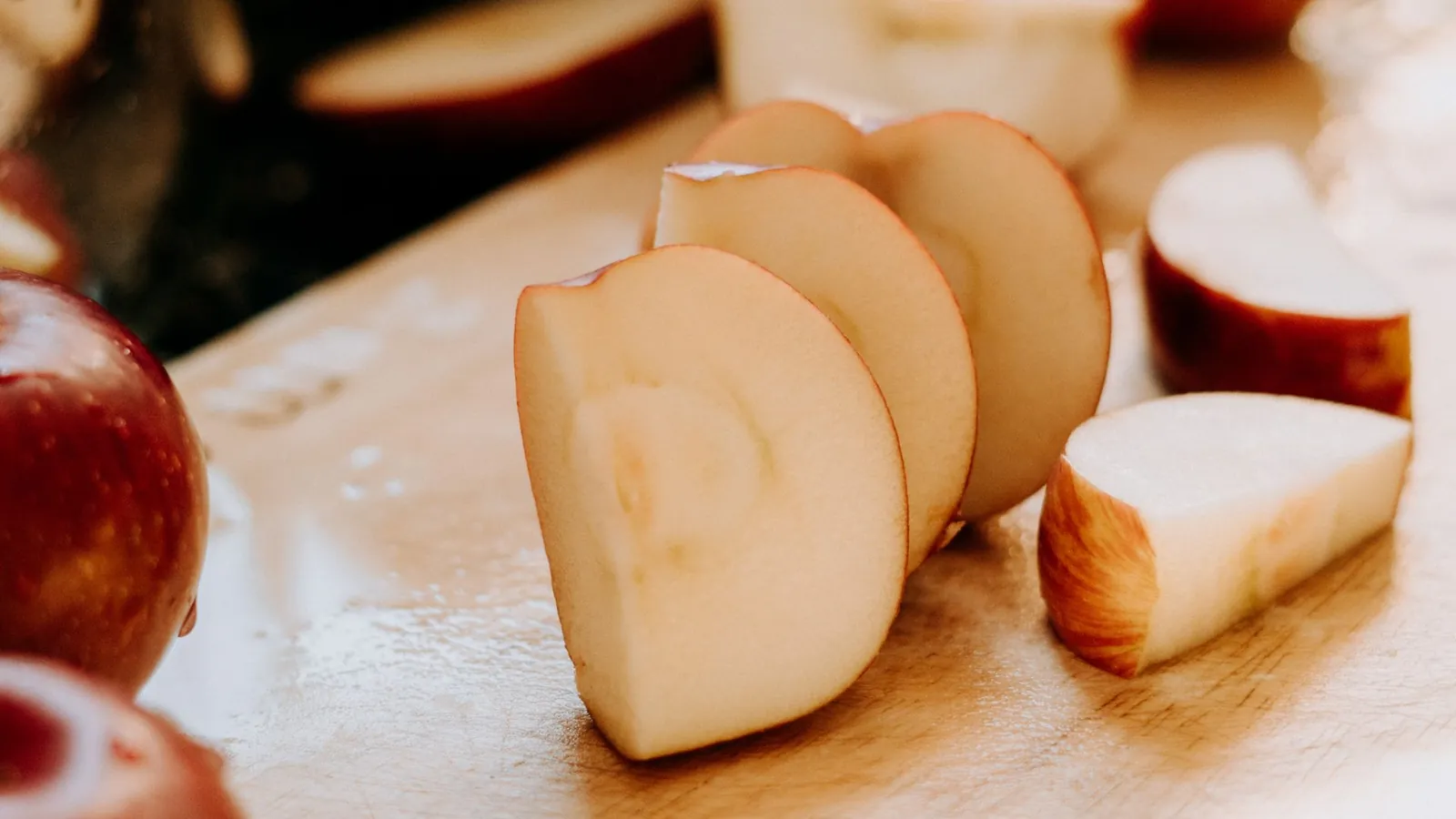
Picture a juice operator returning to a bowl of prepared fruit mash. A freshly cut piece beside it still looks bright and inviting. The mash has acquired a brownish tint while everybody was busy elsewhere. Nothing has reached the mixing tank, yet the colour has already moved on.
For susceptible fruits, cutting starts more than a size reduction step. It changes who can meet whom inside the tissue. Enzymes, fruit compounds and oxygen can come together, setting off reactions that gradually change the appearance. The preparation bench is already part of the beverage process.
Cutting opens the doors
In intact fruit tissue, cellular structures help keep some components apart. Cutting, crushing and bruising damage those structures. Enzymes commonly grouped under the name polyphenol oxidase can then act on suitable phenolic compounds in the presence of oxygen.
The first reaction products can undergo further changes that produce brown pigments. You do not need to see a dramatic colour change at the cutting blade for the process to have begun. The visible result may develop while the fruit waits for the next operation.
Different fruits, varieties and maturity stages behave differently. Their enzyme activity and available compounds are not identical. A preparation method that works comfortably for one fruit should therefore be checked with the actual material entering the new drink.
More surface gives air more opportunities
Crushing exposes far more tissue than leaving a piece intact. Mixing can bring fresh air into contact with that tissue, especially when the liquid splashes or forms a deep vortex. A bowl that looks still may already contain air introduced earlier.
Trace the route from sorting and cutting through pulping, transfer and holding. Include the little waits between equipment stages. The time beside the pulper may matter as much as the clearly labelled holding step on the process chart.
Also inspect fruit handling before cutting. Bruising can damage tissue before the operator begins the planned preparation. Comparing a carefully handled laboratory fruit with a bruised production lot can make the preparation method appear inconsistent when the starting materials were already different.
Name the colour change correctly
Enzymatic browning during preparation is different from an added colour fading during storage. It is also different from browning reactions driven by later heating. The stage at which the change first appears is an important clue.
Take identified samples along the preparation route using a consistent observation method. If the mash darkens before any colouring ingredient is added, the colour addition is unlikely to explain that early change. Follow what the fruit actually experienced before reaching the mixer.
Appearance alone cannot establish the full cause or the product's safety. Discolouration may have several explanations, and spoilage checks belong within the relevant quality procedures. Use the colour map to direct the investigation, with appropriate testing where the observations call for it.
Control the preparation, then check the flavour
Reducing unnecessary waiting and avoidable air incorporation can help limit opportunities for browning. Review transfer arrangements, mixing behaviour and scheduling before assuming that another ingredient must be added. Keep hygiene and the approved handling conditions central to those changes.
Suitable acidification or antioxidant approaches may help in particular formulations, but they also change the product. Acid can alter sourness, and an antioxidant effect may not last throughout processing and storage. Evaluate the complete drink and check the current FSSAI regulations.
A validated heat process may inactivate the relevant enzymes, depending on the fruit and treatment. It cannot be assumed to erase colour already formed. Do not change the established treatment casually or use an improvised heating step as a substitute for process review.
Make the comparison easy to read
Prepare trials from comparable fruit and keep the observation interval consistent. Judge colour under the same lighting in matching containers. Sample depth and a different background can make one mash look darker even before any chemical explanation is needed.
- Record fruit variety, maturity and visible bruising.
- Note cutting, crushing, transfer and waiting stages.
- Observe where air enters through splashing or mixing.
- Compare colour at matched points in the preparation sequence.
- Assess aroma, sourness and texture alongside appearance.
- Confirm performance after the complete intended process.
A colour measurement can support the visual record when the method is suitable. Photographs are useful too, provided lighting and exposure are consistent. Keep the observations attached to process records so the team can distinguish a real improvement from a more flattering photograph.
Return to the finished drink before choosing a change. A bright mash that produces a dull-tasting beverage has solved only part of the brief. Preparation controls need to preserve the intended fruit character as well as the appearance that first catches the eye.
The fruit has a busy journey before it reaches the bottle. Ask Specsy or the SpecSol team to walk through that journey with you. Sometimes the most useful colour decision happens while the mixer is still waiting.