

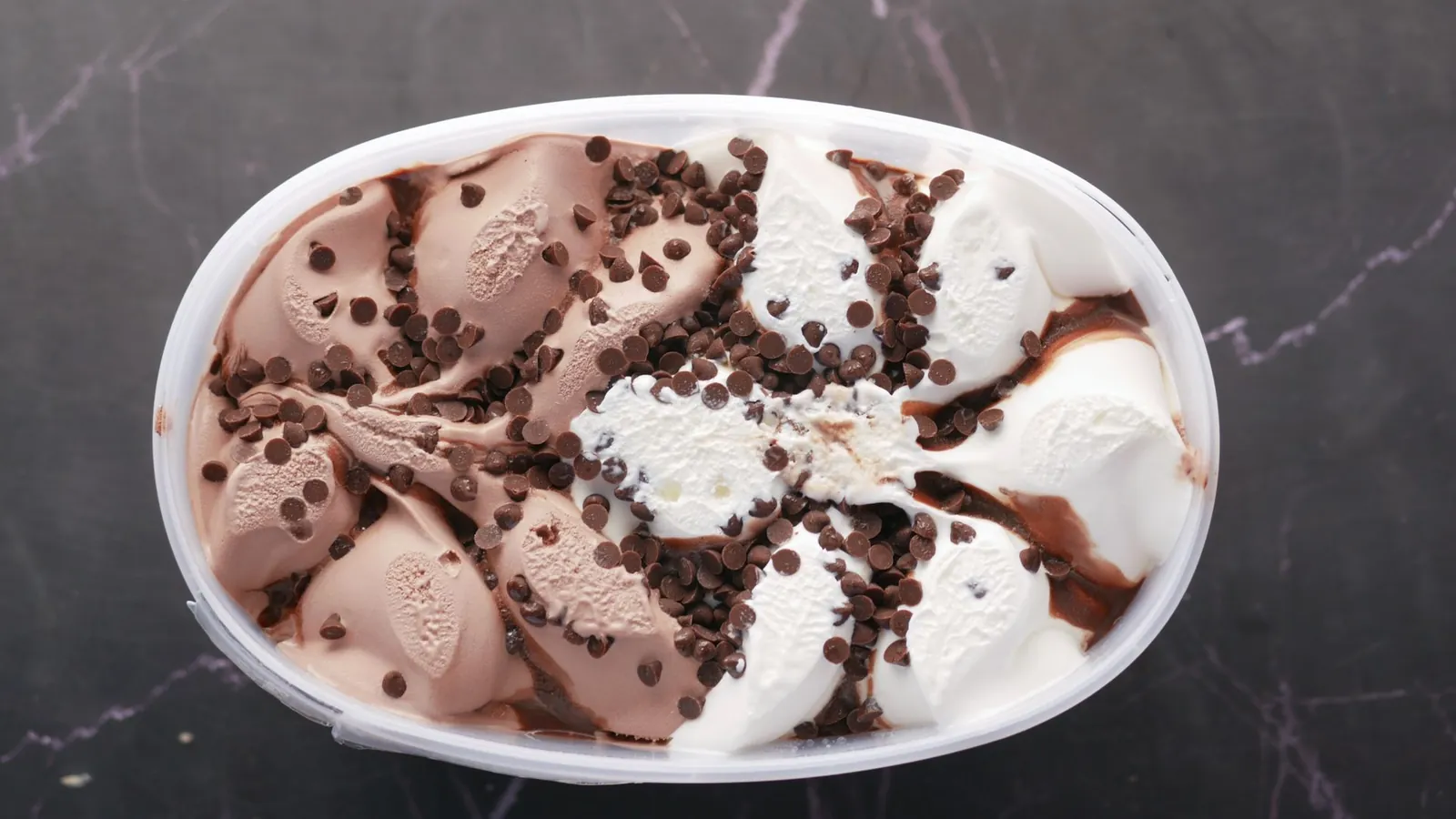
Imagine a packing operator lining up freshly filled frozen-dessert tubs. Their tops look level. Their lids fit neatly. Then the balance gives different readings. The operator looks from the tubs to the filler, wondering how the same space has acquired such different weights.
Air is an easy detail to overlook because it does not appear as a coloured layer or a visible ingredient. Yet a frozen dessert contains a structure of air bubbles alongside ice, fat and the remaining liquid phase. Change that structure and the relationship between volume and mass changes too.
Overrun is the extra space
During freezing, suitable equipment incorporates air into the mix while developing the frozen structure. The increase in volume relative to the starting mix is called overrun. It describes expansion due mainly to incorporated air, rather than a new quantity of mix being created.
For the same mix, a more aerated product generally has a lower density. A fixed volume therefore contains less mass. A tub filled to a similar height can be lighter because its contents contain more air, even when the filler has delivered the intended volume.
The reverse can also happen. Less incorporated air makes the product denser, so the same space holds more mass. This is why the balance and the fill-height check answer related but different questions. Neither result should be interpreted without understanding how the filler controls its delivery.
Air changes the spoonful too
Air contributes to the lightness and body of the dessert. Its amount matters, but so do bubble size, distribution and the structure supporting the bubbles. Products with similar overall density can still feel different if their ice crystals, fat structure or air cells differ.
Simply pushing towards more or less air is therefore an incomplete development brief. Agree the intended eating texture, scoop behaviour and appearance. A dense style may suit one dessert while a lighter style suits another. The useful target comes from the product, rather than a universal idea that more expansion is better.
Include the dessert after hardening and storage. A sample leaving the freezer has not completed its journey. Later temperature history and structural changes can affect the spoonful. Initial fill measurements help control production, while the finished product confirms whether the intended eating experience survives.
Check the tub before blaming the freezer
Start with the weighing procedure. Confirm that the balance is suitable and checked, that the empty-container mass is handled correctly and that lids or other components are included consistently. Product on the outside of a tub can also confuse a hurried measurement.
A similar-looking top is not proof of an identical filled volume. Voids beneath the surface, uneven deposits, differences in headspace or a changing container shape can complicate the comparison. Watch the actual filling cycle and examine representative tubs without pressing their contents down.
Connect observations to the timing of production. Start-up, interruptions and changes in flow can produce different conditions from steady running. Keep samples identified by their position in the run so an isolated restart problem does not get mistaken for a whole-batch formulation problem.
Measure without changing the sample
A defined-volume comparison can help connect mix and frozen-product density. Use a suitable documented method, a vessel of known volume and consistent weighing. The reference mix and the aerated product require controlled measurement conditions appropriate to each material; they cannot simply be treated as identical liquids.
Handle the frozen sample gently. Packing it firmly into a cup can compress or remove air. Letting it soften while searching for a balance changes its structure. An uneven scrape across the top changes the volume being weighed. These small handling differences can make a calculation look more precise than the sampling deserves.
Record temperature, collection point and the interval before measurement. Where inclusions are present, make sure the method accounts for their distribution. A cup that happens to contain extra fruit pieces may differ from its neighbour for reasons beyond air content. Compare like with like.
A short route to a useful answer
- Verify balance checks, container tare and the actual filling method.
- Record mix identity and freezer conditions with each sample.
- Compare defined volumes using consistent, gentle sample handling.
- Separate start-up and restart samples from steady production.
- Check finished tubs for mass, fill appearance and eating texture.
If finished-product density changes while delivery volume stays consistent, investigate the air incorporation and freezing process. Review the relevant equipment records with the production team. If density is steady but tub mass varies, examine delivery, interruptions and container handling more closely.
Sometimes both are moving. Make a change in a controlled trial and check its effect at both the freezer and the filler. Avoid chasing a light tub with a larger deposit before understanding whether that would create a different appearance or conceal an unstable process.
Those matching tubs are helpful witnesses once their measurements have context. Ask Specsy or the SpecSol team to walk through the mix-to-pack checks with you. The aim is a dessert that feels right on the spoon and arrives in the tub as consistently as it leaves the recipe sheet.