

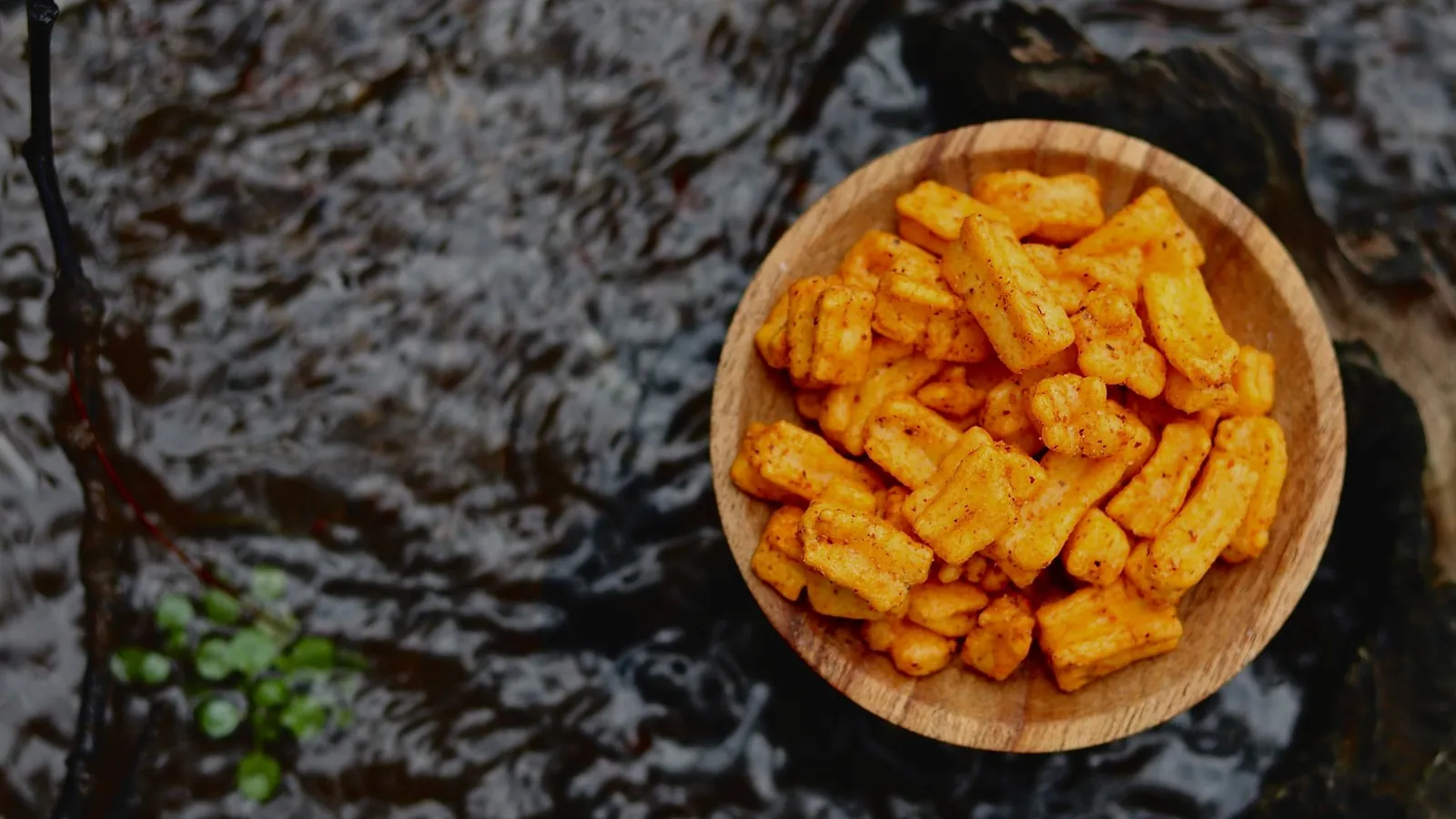
Imagine an extrusion operator watching the cutter. Airy curls should be appearing, ready for the next part of the line. Instead, dense little ropes arrive with a solid-looking centre. The cutter is doing its job, but the puff seems to have stayed inside the machine.
Expansion happens through a sequence, not a single setting. The feed must become a suitable cooked mixture, experience the conditions inside the extruder and then form a structure as it leaves the die. When the snack looks different, follow that sequence before deciding which adjustment is likely to help.
The die exit is a sudden change of scene
This story concerns directly expanded snacks, where expansion happens as the cooked material leaves the extruder. Some other snack processes make pellets that are expanded later. Knowing which process is being discussed prevents advice from one system being applied casually to another.
Inside a cooking extruder, moisture, heat and mechanical working transform a starch-containing feed. The material moves under pressure towards the die. As it exits, pressure falls sharply. Some water flashes into vapour, and expanding bubbles push the surrounding material outward.
The mixture must be able to stretch around those bubbles and then hold a porous structure. If it cannot expand effectively, or the structure collapses before it becomes firm enough, the final piece can be dense. Bigger bubbles alone do not guarantee the crisp, pleasant bite the product needs.
Moisture is part of the cooking system
Water helps the feed change during extrusion and influences how the material flows. It also affects the mechanical work transferred to the mixture. Feed moisture therefore changes more than the amount of water available to become vapour at the die.
Check actual incoming moisture and water addition together. A dry ingredient lot can differ from the previous one, so the same added water may not produce the same total feed condition. Uneven water distribution can also make the process fluctuate, even when the average addition appears correct.
There is no reliable rule that simply adding more water gives more puff. Moisture changes cooking, flow and the strength of the expanding structure together. Interpret it within the formulation and equipment, using a controlled trial rather than a correction based only on the appearance at the cutter.
The displayed temperature is only one clue
The mixture's cooking history includes heat from the equipment and mechanical working within the barrel. Feed rate, screw configuration and operating conditions affect that history. A displayed barrel temperature does not fully describe what every part of the product experienced.
Compare the actual records for a satisfactory run and the dense trial. Look for changes in feeding, water delivery, load behaviour and interruptions. Equipment condition and die configuration matter too. A partial obstruction or a changed flow path can alter the process even with the same recipe.
Follow approved operating and safety procedures when investigating. The useful aim is to understand the relationship between feed and process, not to chase expansion by making several unrecorded changes. Allow the process to reach a defined stable condition before collecting comparison samples.
Added ingredients join the structure
Protein, fibre and fat can change how a starch-rich mixture cooks and expands. Protein and fibre affect water distribution and the material surrounding the bubbles. They also change the share of starch in the recipe. A nutritionally motivated reformulation may therefore need a fresh process assessment.
Fat can alter lubrication and the mechanical working experienced by the feed. The effect depends on its amount, form and location in the process. Fat mixed into the feed does a different job from oil applied later as part of seasoning. Record those contributions separately.
These ingredients do not automatically prevent expansion. Their behaviour depends on the complete system. Compare the intended reformulation fairly, with attention to particle characteristics, hydration and the actual cooking history, instead of treating every dense snack as evidence that protein or fibre cannot work.
Measure more than the outside
- Record ingredient lots, feed preparation and actual moisture information.
- Attach samples to stable operating periods and the relevant process records.
- Compare piece dimensions and bulk density using a consistent method.
- Cut pieces to examine cell size, distribution and dense areas.
- Assess the bite after the same drying, cooling and conditioning procedure.
- Keep seasoning and final moisture differences out of the initial comparison.
Bulk density helps describe how much mass occupies a defined volume of snack. Use the same filling method, because piece shape and packing affect the result. Combine it with the cut structure and texture assessment. A large-looking piece can still have thick walls and a surprisingly hard bite.
The next good puff should come with a record that explains it. Bring your feed information and cut samples to Specsy or the SpecSol team. The aim is a light, enjoyable snack that the line can make consistently, with the puff arriving exactly where it belongs.