

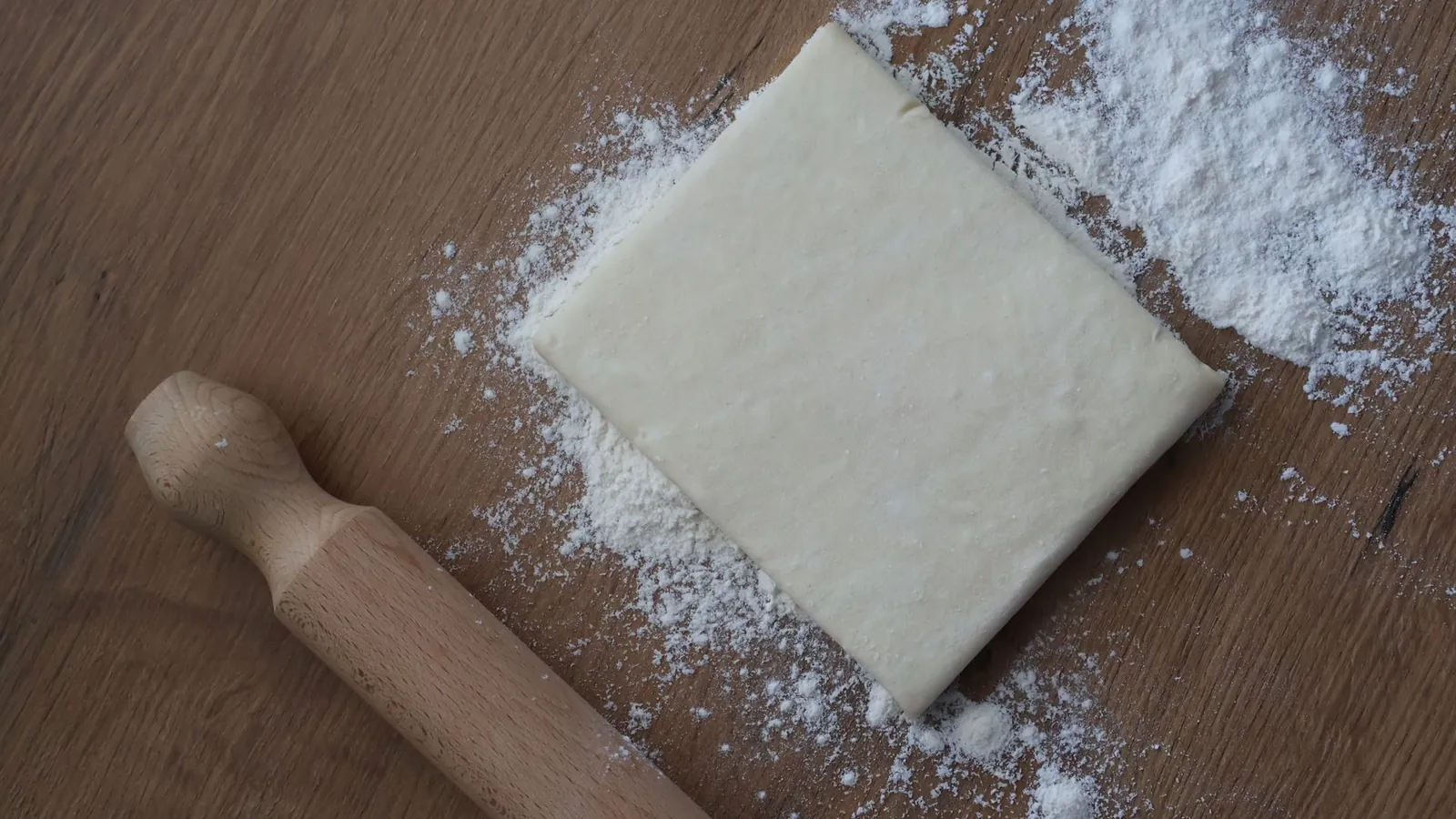
The operator checks the sheet width. It looks right at the rollers, then narrows on the belt as though someone has gently pulled both edges inward. At the cutter, the pieces are no longer the shape the team expected. In this imagined bakery, the dough is doing a convincing impression of an elastic band.
That springing back is often called snapback. The dough has been stretched and compressed during sheeting, and some of its internal structure is trying to recover. Understanding that structure is more useful than repeatedly forcing the sheet back to size.
Stretching and springing back are different jobs
Wheat flour contains proteins that form gluten when hydrated and worked. Gluten helps dough hold together. Its behaviour includes elasticity, the tendency to recover after deformation, and extensibility, the ability to stretch before breaking.
Both properties matter. A dough with too much resistance can shrink after sheeting. A dough that stretches easily but has too little strength may tear, stick or struggle to travel through the line. The aim is a workable balance for the cracker and equipment.
Think of gently pulling an elastic band compared with stretching a soft piece of modelling dough. Neither is a perfect picture of food, but the contrast helps explain why making a dough softer is not always the same as making it easier to sheet.
Start with the dough's recent history
Mixing develops the gluten structure and changes dough temperature. Flour characteristics, water availability and the rest of the recipe affect that development. A familiar mixing time can give a different dough when flour properties or starting temperatures change.
Sheeting then adds more mechanical work. Large reductions in thickness can leave the dough under considerable strain. If the sheet is repeatedly reworked, or a variable amount of scrap returns to the mix, the material reaching the cutter may have a different history from the fresh dough first tested.
Follow the dough from mixer to cutter. Note mixing conditions, dough temperature, resting stages and the route taken by returned material. Check whether snapback starts immediately after a particular roller gap or builds along the line. That location helps narrow the investigation.
A rest can be productive work
During resting, stresses in the dough can relax and water can redistribute. A sheet that resists handling straight after mixing may behave more calmly after an appropriate rest. This is one reason that timing belongs in the process record.
Resting is not a magic pause button. Conditions during the rest matter, including temperature, protection from drying and any fermentation taking place. An uncovered surface can form a skin while the centre remains soft, introducing a new handling problem.
Make comparisons at matched stages. If one dough gets a longer queue before sheeting, its improved behaviour cannot fairly be attributed only to a recipe adjustment. In a busy bakery, the waiting time between operations is easy to overlook precisely because nobody thinks of it as an ingredient.
Where protease can help
Proteases are enzymes that cut proteins into smaller pieces. In suitable cracker doughs, controlled protein breakdown can reduce resistance and help the dough relax. The enzyme is changing the gluten structure, rather than simply lubricating the rollers.
Its effect depends on the preparation and the conditions it encounters, including time, temperature and the dough environment. A result from one process cannot be transferred confidently to another without a trial. Ask our team for starting levels and a suitable way to compare performance.
Too much weakening brings its own trouble. Dough may become sticky or difficult to carry, and the baked cracker can lose the strength needed for packing and handling. A sheet that finally stops shrinking is not a success if the finished pieces crumble before reaching the pack.
Follow the improvement into the oven
Assess dough behaviour and baked performance together. Look at sheet width, shrinkage after cutting, tearing and release from the belt. Then follow the same trial through baking, cooling and normal handling.
Cracker dimensions, surface appearance, bite and breakage all deserve attention. Compare pieces from similar positions and let them cool consistently before judging texture. A warm cracker and a cooled cracker are not fair opponents.
Keep a reference batch and change a manageable part of the process at a time. If rest conditions, flour and enzyme treatment all change together, a better result may leave the team no wiser about what actually helped.
A short line-side checklist
- Record flour identity, mixing conditions and dough temperature.
- Track resting conditions and the handling of returned dough.
- Locate the stage where the sheet begins to recover its shape.
- Compare roller reductions and belt handling under consistent conditions.
- Assess tearing, sticking and cut-piece shrinkage alongside snapback.
- Follow each candidate through cooling, packing and a simple breakage check.
The imaginary operator now has more useful options than another squeeze through the rollers. Sometimes the dough needs a better rest. Sometimes the process needs gentler handling, or an enzyme trial deserves a place. The winning dough is the one that travels calmly and still makes a cracker worth biting.