

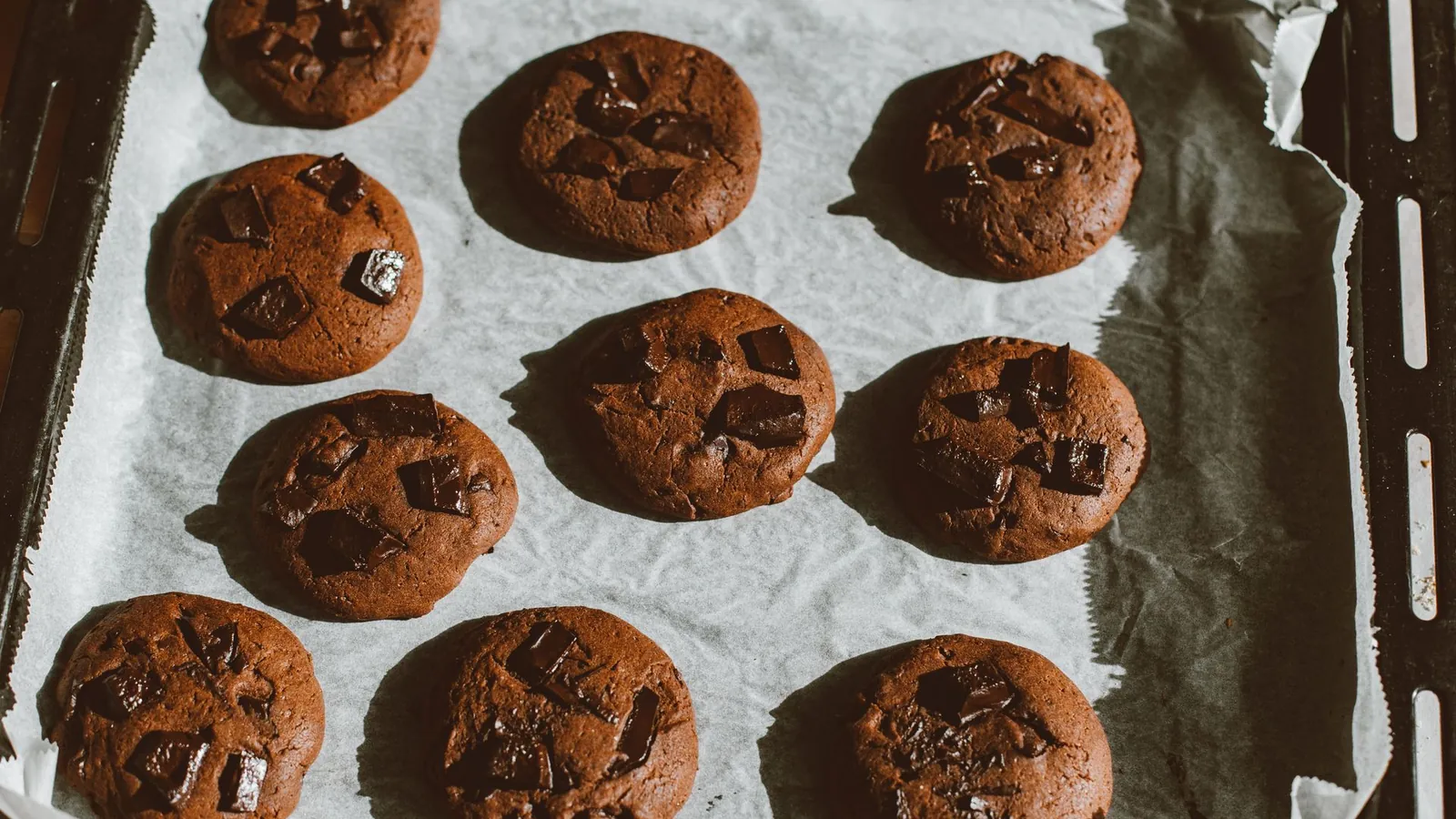
Imagine an operator opening the oven and finding that the cookies have made friends. Every neat dough portion has spread into its neighbour. The tray now holds a single, enthusiastic sheet with faint suggestions of where the edges used to be.
The portions were weighed correctly, so the immediate suspect is the recipe. But cookie shape comes from a conversation between ingredients, dough handling and the oven. Before adding more flour, find out when the dough started moving and when its structure finally stopped it.
A small race happens on every tray
As dough heats, fat softens or melts and the mixture can flow. At the same time, changes in proteins and starch help the cookie develop structure. The balance depends on the recipe. A cookie dough holds little water, so its starch cannot swell and thicken the way it does in a simmering sauce.
If the dough flows readily before enough structure develops, it spreads further. If it resists movement or sets earlier, it stays more compact. The aim is the shape and texture intended for that cookie, not the smallest possible diameter.
That is why a successful correction should be judged by more than appearance. A cookie rescued from spreading by a large recipe change may become hard, dry or floury. Shape, bite and flavour belong on the same trial sheet.
Fat has a starting condition
Fat straight from cool storage does not behave like fat that has softened beside a busy mixer. Its physical condition affects mixing, aeration and the consistency of the dough. Different fats also soften and melt differently, so a description such as bakery fat is not a complete specification.
Record the condition of the fat before mixing and the dough temperature afterwards. Follow the dough through waiting, portioning and loading. A batch may leave the mixer in good condition and become much softer while it waits for oven space.
For a fair comparison, use the same holding arrangement for the reference and trial. A chilled trial beside a warm reference can make an ingredient change look far more effective than it really is. Keep any cooling step consistent with the plant's established handling controls.
Sugar does more than sweeten the bite
Sugar affects how water is shared in the dough and how the mixture behaves during baking. Its type, particle size and degree of dissolution can influence spread. A change in sugar specification may therefore appear on the tray even if the total sugar weight stays the same.
Look at the water carried by liquid ingredients as well. Syrups and other liquids change more than sweetness. Comparing them only by weight misses their contribution to water and solids. Keep a clear record of what actually entered the mixer.
A darker edge is not proof of the same bake through the centre. Sugar also affects browning, so colour can change while the internal texture changes differently. Check the cookie after cooling, when its final crispness or chew is easier to judge.
Flour and mixing can move the finish line
Flour characteristics affect water absorption and dough structure. A new flour lot can produce a different dough consistency under the same mixing routine. Review the specification and the dough behaviour together instead of assuming all flour with the same description is interchangeable.
Mixing after flour addition influences hydration and structure development. Mixing before that point influences how fat, sugar and air are distributed. Record the sequence and the observed dough condition, not just the total time the mixer was running.
Scraping the bowl, adding an ingredient late or extending mixing to remove lumps may all change the batch history. None is automatically the culprit. The useful step is to make those differences visible so they can be tested rather than debated.
Give the tray and oven a fair hearing
A warm tray can soften dough before baking has properly begun. Tray surface, liners, greasing, portion shape and spacing also affect the conditions around each cookie. Use matched trays and consistent portion geometry when comparing recipes.
Check the actual oven behaviour and loading pattern. Heat transfer from below and above influences how the cookie warms and sets. If the first tray behaves differently from later trays, investigate the process sequence before declaring the entire formulation unsuitable.
- Use the same ingredient lots for the reference and trial where possible.
- Record fat condition, dough temperature and waiting time.
- Keep mixing order, portion shape, tray condition and loading consistent.
- Measure cooled width and thickness at several positions on the tray.
- Compare bite, browning and centre texture alongside spread.
Bring back the individual cookie
Change a single suspected cause while keeping the rest of the comparison steady. Take simple photographs from the same angle and keep the handling notes with them. A tray picture becomes much more useful when it tells you what happened before the oven door closed.
The goal is a cookie that knows its place and still tastes worth reaching for. Ask Specsy or the SpecSol team about the pattern you are seeing. The next useful clue may be in the dough queue, rather than in another scoop of flour.