

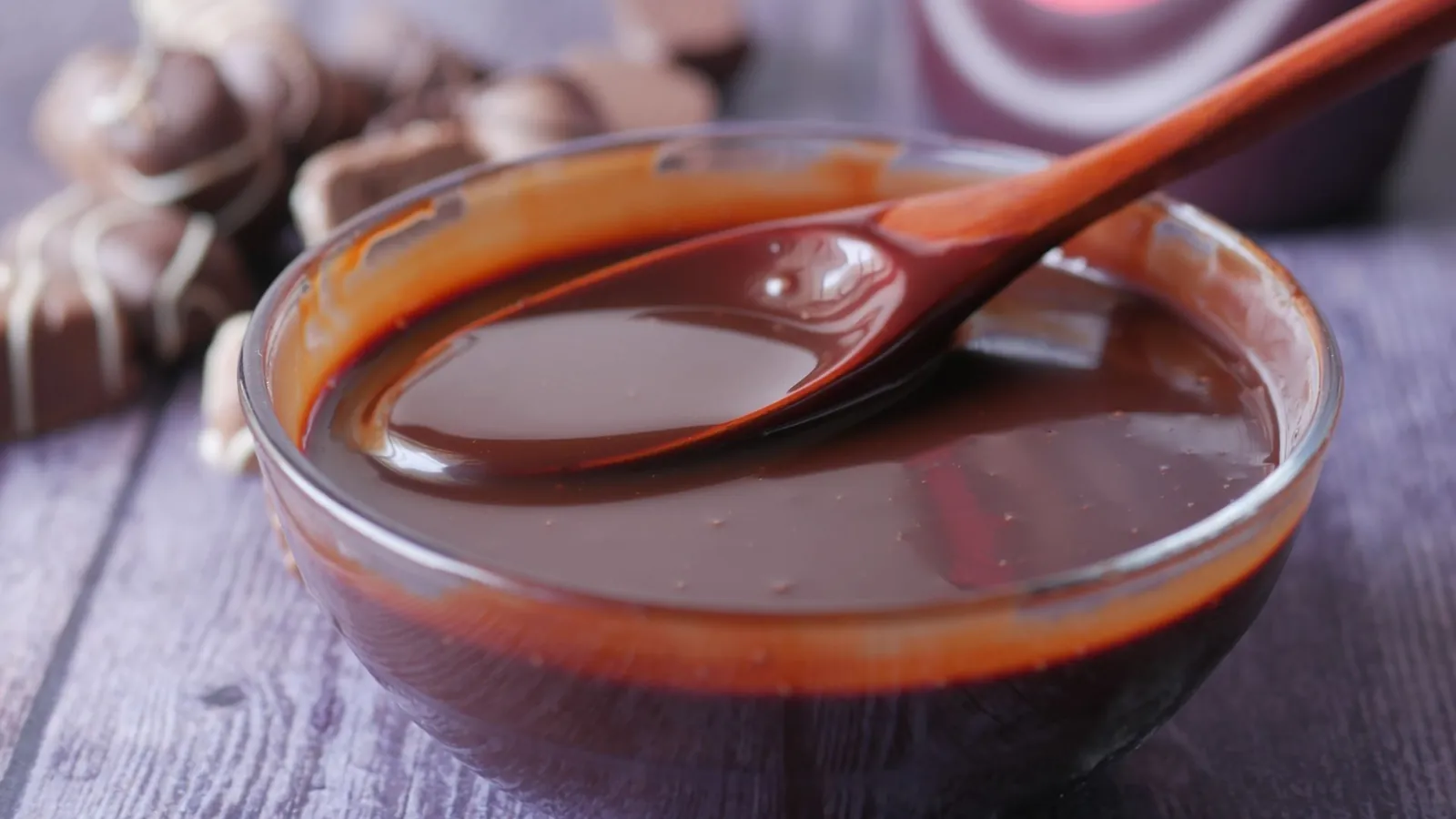
Picture a confectionery operator lifting a utensil from a bowl of flowing compound coating. A moment earlier, the coating fell in a smooth ribbon. Now it clings in thick folds. The utensil had looked clean, but it was still damp. A tiny amount of water has made a very visible entrance.
This sudden change is often called seizing. It is a useful reminder that a fat-based coating is more than melted fat. Fine solid particles are crowded into that fat, and their surfaces help determine whether the mixture flows smoothly or behaves like a paste.
A busy crowd inside the fat
A typical sweet compound coating contains sugar and other solid particles dispersed in a continuous fat phase. Cocoa or milk solids may be present, depending on the product. The fat helps the particles move past each other during pumping, dipping or coating.
Water changes that arrangement. It can wet water-attracting particles and dissolve some sugar at their surfaces. Local concentrated syrup and sticky contacts can make particles gather into clusters instead of remaining well dispersed through the fat.
Those clusters interfere with flow. The effect can be dramatic because the water is not evenly forming a new, deliberately designed liquid phase. It is creating local sticky regions inside a system intended to remain fat-continuous. A small wet patch can therefore have consequences well beyond the original splash.
More heat does not remove the cause
When a coating thickens, it is natural to suspect that it has cooled. Check temperature, but do not assume extra heating will solve every problem. Fat setting and moisture-induced clumping are different mechanisms, even if both make a coating harder to move.
Uncontrolled heating can create further quality problems without restoring the original particle arrangement. Follow the operating guidance for the actual coating. Record the temperature and the timing of the change so the team can distinguish gradual cooling from a sudden event after an addition or contact.
Other causes of thickening remain possible. Excessive holding, unintended solids additions or changes in the coating itself may need investigation. The damp utensil is a strong clue in the illustrative scene, not a diagnostic test that replaces observation in every real batch.
Water has more than one doorway
Freshly washed equipment is an obvious route. Check bowls, utensils, transfer lines and contact surfaces after cleaning and before release for production. Equipment can look clean while retaining water in joints, recesses or parts that are difficult to inspect.
Condensation is easier to miss. A cold surface exposed to warm, humid air can collect moisture. Follow the movement of stored ingredients and equipment into the production area, using the site's approved conditioning and handling procedures to manage that transition.
Moisture-bearing additions also deserve attention. A liquid flavour preparation or a damp inclusion may behave very differently from a dry ingredient intended for fat-based systems. Review suitability and compatibility before addition rather than discovering the difference in the production vessel.
Separate the sudden paste from storage marks
Seizing concerns a loss of flow during handling, often appearing rapidly after moisture contact. Bloom describes visible changes that develop on a set coating or chocolate surface during storage. Both can spoil appearance or performance, but they are different observations with different histories.
Fat bloom and sugar bloom also have different mechanisms. This article's useful first distinction is simpler: did the flowing material turn pasty during processing, or did a previously set surface change later? Record when and where the problem first became visible.
Keep photographs and retained samples identified. A storage defect shown without its history may be mistaken for evidence of the earlier processing problem. Clear records prevent the team from using the same explanation for every pale, rough or thickened coating.
A dry-handling checklist
- Confirm equipment is cleaned, dried and released under the approved procedure.
- Check ingredients and additions for their suitability in the coating.
- Trace cold-to-warm transfers where condensation could occur.
- Record coating temperature and the moment the flow changed.
- Identify recent utensil contact, additions and transfer events.
- Isolate affected material and follow the site's disposition procedure.
Do not improvise a rescue recipe at the line. Adding water, fat or another ingredient can create a different formulation with different behaviour. Any rework route needs technical assessment, traceability and confirmation that the resulting material meets the intended requirements.
A controlled investigation can compare unaffected reference material with a properly planned trial of the suspected cause. Keep that work separate from production release. The goal is to establish a repeatable prevention step, not to turn a fortunate-looking recovery into an undocumented instruction.
Finally, check the real application again after an approved change. Flow in a bowl, coating pickup, drainage and the final set all matter. A material that becomes pourable has not automatically recovered every property needed by the product.
The smooth ribbon is easier to protect when moisture has fewer opportunities to join it. Bring your handling sequence to Specsy or the SpecSol team. Sometimes the most useful coating adjustment begins beside the drying rack, well before the first biscuit reaches the bowl.