

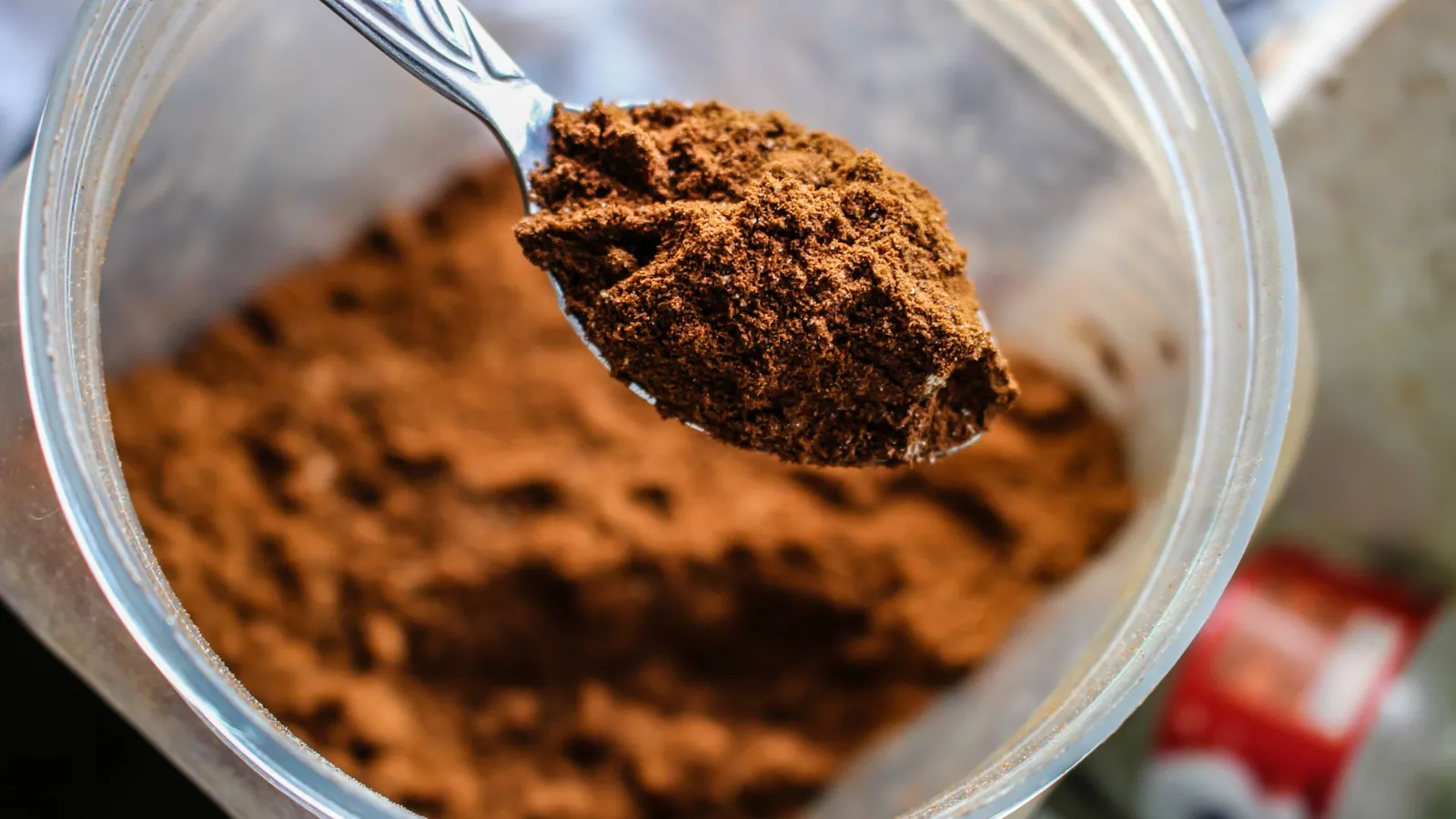
Picture a bakery developer opening a darker cocoa powder beside the usual one. The colour looks wonderfully persuasive. Surely the next cake will taste more chocolatey. Then the trial comes out of the oven with a different crumb and a flavour that is deeper in some ways, quieter in others.
The powder has changed more than the photograph. Cocoa colour, acidity and aroma are connected to processing, but they are not interchangeable measures of strength. A darker shade is a useful description, not a complete ingredient specification.
What alkalisation changes
Natural cocoa powder has not undergone an alkalisation treatment. Alkalised cocoa has been treated with alkaline material during processing to change properties such as acidity, colour and flavour. The extent and conditions of that treatment help determine the resulting character.
Natural cocoa generally retains more acidity, while alkalisation reduces that acidity and can produce darker colours. The flavour may become less sharp and take on a different balance of roasted or mellow notes. There is still variation within each broad description.
Cocoa also brings the history of its raw material, fermentation, roasting and further processing. Alkalisation is therefore an important part of the story, but not the only chapter. Powders with similar colours can deliver noticeably different sensory results.
The eye makes a very quick judgement
A dark powder can create an expectation of intensity before anyone tastes the product. That expectation is understandable. It becomes a problem when the team uses colour alone to select an ingredient intended to deliver a particular aroma or flavour.
Separate the observations. Describe colour, cocoa aroma, bitterness, acidity and the finish after swallowing. A powder may make a cake look richer while giving a softer impression of acidity. Another may taste lively but appear lighter in the same recipe.
Taste samples under consistent preparation and serving conditions. Comparing dry powder with finished cake is not a fair shortcut, because sugar, fat, water and heating all change the sensory setting. The ingredient needs to be judged in the food where it will work.
The leavening system notices acidity
In a chemically leavened batter, bicarbonate can react with suitable acids to release carbon dioxide. The recipe's balance includes acidic ingredients, alkaline components and any complete leavening preparation. Cocoa can contribute to that balance, depending on its properties.
Changing from a more acidic cocoa to a less acidic one can therefore change the batter's behaviour if the original formulation relied on that acidity. Gas development, flavour and colour may all be affected. The outcome depends on the entire recipe rather than a simple rule attached to a powder name.
Do not assume every cocoa swap requires the same leavening correction. Some recipes obtain their acid balance elsewhere, and some leavening systems bring their own acid components. Review what each ingredient contributes before making a deliberate adjustment.
Acidity is more than a single reading
A pH measurement can help describe the conditions in a prepared cocoa suspension or batter. It does not, by itself, tell you exactly how much acid is available to react across the recipe. The sample preparation and measurement method also matter.
Ask for appropriate technical information and compare measurements consistently. A result from a powder suspension prepared one way should not be treated as directly equivalent to a batter result prepared another way. Keep the method attached to the number.
For development, the finished bake remains essential evidence. Look at rise, crumb structure, surface colour and eating quality alongside the batter observations. A familiar pH reading is not proof that every other ingredient interaction has remained unchanged.
Colour is only one part of the specification
Cocoa powders can differ in fat content, particle characteristics and moisture as well as treatment. These properties can influence dispersion, batter consistency and mouthfeel. Check the actual specification instead of assuming that alkalisation explains every difference between candidates.
Keep mixing and hydration procedures consistent during the first comparison. Lumps or poor distribution can make the powder seem weaker or create uneven colour. Establish that each ingredient has been incorporated properly before deciding which flavour the team prefers.
- Identify cocoa treatment and relevant composition differences.
- Compare powders in the same complete recipe first.
- Record batter consistency and the leavening system used.
- Assess rise, crumb, colour and flavour separately.
- Make any recipe adjustment deliberately and document it.
- Recheck the finished product after its intended storage.
Use the first trial to understand the swap, then develop any necessary recipe changes in a controlled comparison. A direct replacement test answers a different question from a fully adjusted formulation. Keep those results separate so a promising ingredient is neither dismissed too early nor accepted without enough evidence.
The darker powder may be exactly right for the product, or the lighter one may deliver the character everyone wanted. Let the finished food make the case. Ask Specsy or the SpecSol team to help connect cocoa properties with your recipe, and give colour a seat at the table without letting it chair the meeting.