

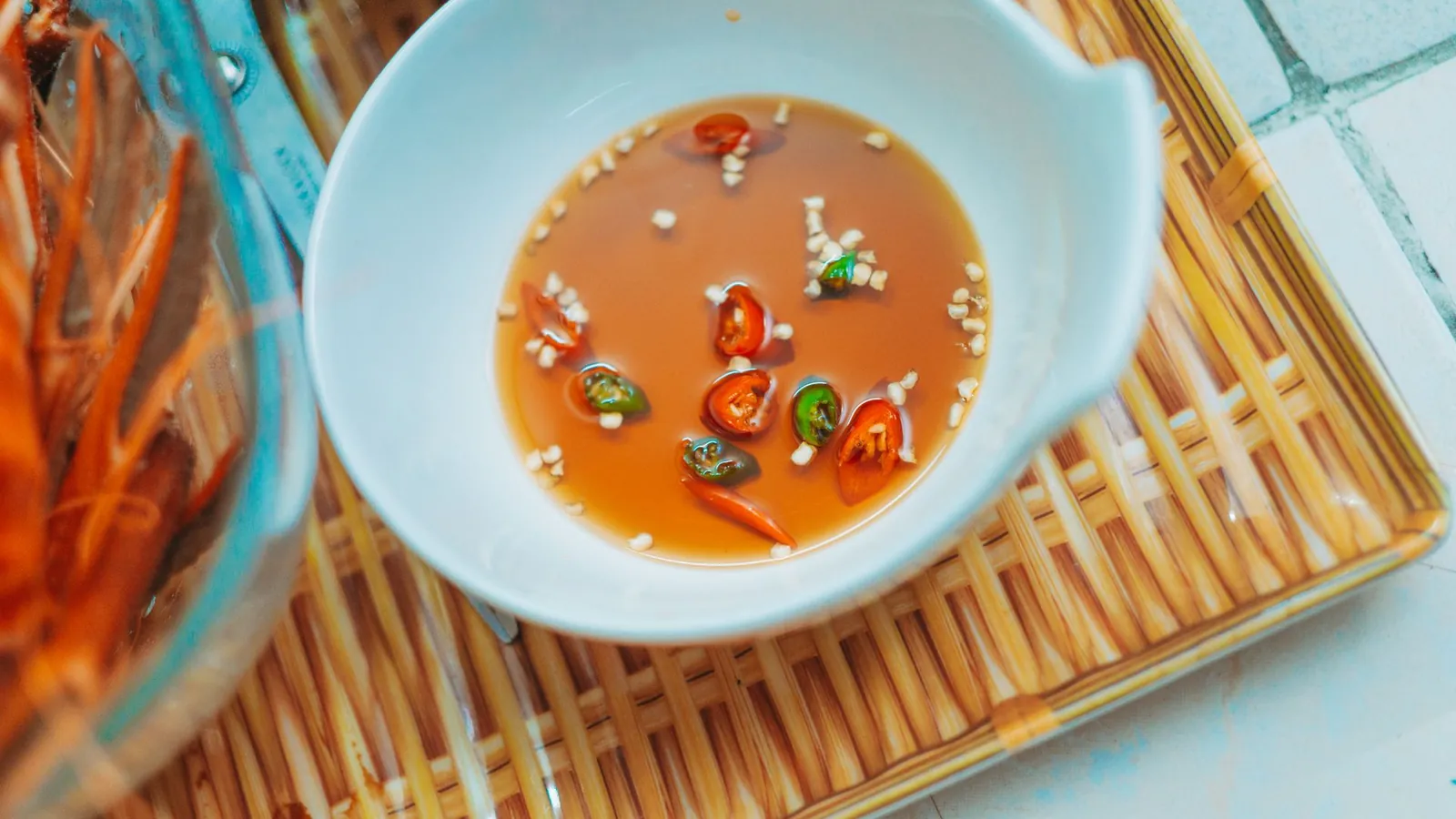
Picture a tasting panel gathered around a new chilli sauce. Everyone likes the colour. Then the notes begin to disagree. One spoonful seems gentle, another leaves a lingering burn, and a third feels somewhere in between. The development cook looks back at a mixing record that appears perfectly ordinary.
There are several questions inside that disagreement. The chilli itself may vary, the sauce may be uneven, and the tasting conditions may influence the result. Following each question in turn is more productive than immediately adding extra chilli to the next batch.
The heat travels with the ingredients
Capsaicinoids are the compounds responsible for much of chilli's pungency. They have low solubility in water and a greater affinity for oily surroundings. In a sauce containing water, oil and pieces of chilli, their distribution therefore depends on how the ingredients are prepared and brought together.
Chilli particles carry pungent material, while oil can extract and carry some of those compounds. A spoonful with more chilli solids or a different share of the oil phase may give a different experience. The sauce can look uniformly red while its components are distributed less evenly than expected.
Particle size matters to sampling too. A coarse sauce naturally gives each small spoonful a limited selection of pieces. Decide how much visible texture the product should have, then assess whether the chosen ingredient preparation and portion size give an acceptably consistent eating experience.
Start with the chilli that entered the kettle
Chilli pungency varies with raw material. Variety, growing conditions and the composition of the supplied material can all contribute to differences. Colour alone gives an incomplete picture of heat. Keep lot identity attached to the formulation record, and review the agreed raw-material checks when the whole batch seems hotter or milder.
A retained reference can help the team compare a new lot under consistent preparation conditions. Where pungency is commercially important, agree an appropriate analytical specification and method with the technical team. Sensory observations and analytical results provide different kinds of information and are most useful when their conditions are recorded.
Look for the pattern across samples. If samples throughout the batch shift in a similar direction, raw-material variation deserves attention. If samples within the same batch differ widely, investigate distribution and sampling. Both issues can occur together, so keep the lot record and the filling observations connected.
Mixing must reach the whole sauce
Check the addition sequence, mixer setup, batch size and product consistency. A visibly active surface does not establish that every part of the vessel is circulating well. Thick sauce, coarse particles and vessel geometry can make movement uneven, especially when a bench recipe moves to a larger kettle.
Follow the sauce beyond the mixing step. During holding, oil may rise and particles may settle or gather, depending on the formulation. Transfer and filling can then carry different proportions of those components into successive packs. Record the holding and agitation conditions used during the actual filling run.
A thickener or emulsifying system may help a particular sauce maintain its distribution, but selecting one needs a clear target. First establish whether the observed issue is oil separation, particle settling or incomplete initial mixing. Then assess candidate changes for pouring, flavour release and the intended texture.
Make the tasting comparison fair
Chilli sensation can linger and build across repeated tastings. People also differ in sensitivity and familiarity with pungent foods. Use a consistent sensory procedure with suitable breaks, neutral sample codes and a varied serving order. Keep serving temperature and sample presentation matched.
Agree whether the sauce is being assessed alone or with a food. Bread, rice or another carrier changes the eating context. Use the same carrier and portion presentation across samples, and include the intended eating occasion in the final comparison. Record immediate heat and the lingering sensation separately.
- Trace the chilli lot and preparation used in every trial.
- Collect separate samples from the beginning, middle and end of filling.
- Observe oil distribution and chilli particles before preparing tasting portions.
- Use matched serving conditions and neutral sample codes.
- Allow appropriate recovery between tastings and record the serving order.
- Compare retained packs after the intended holding period.
Turn disagreement into a useful observation
Keep samples from different filling stages separate during the investigation. Combining them into a single jar can conceal the very variation the team is trying to find. If the product carries a normal mixing instruction before use, record observations both before and after that step.
Choose a trial that answers the strongest question in the record. That might involve better circulation during holding, a more consistent chilli preparation or a clearer raw-material specification. Compare the changed process with the reference while keeping the sensory procedure steady.
Our imagined panel can now explain where its spoonfuls came from. Bring those observations to Specsy or the SpecSol team and discuss the next comparison. A lively chilli sauce can still have a dependable personality from the first pack to the last.