

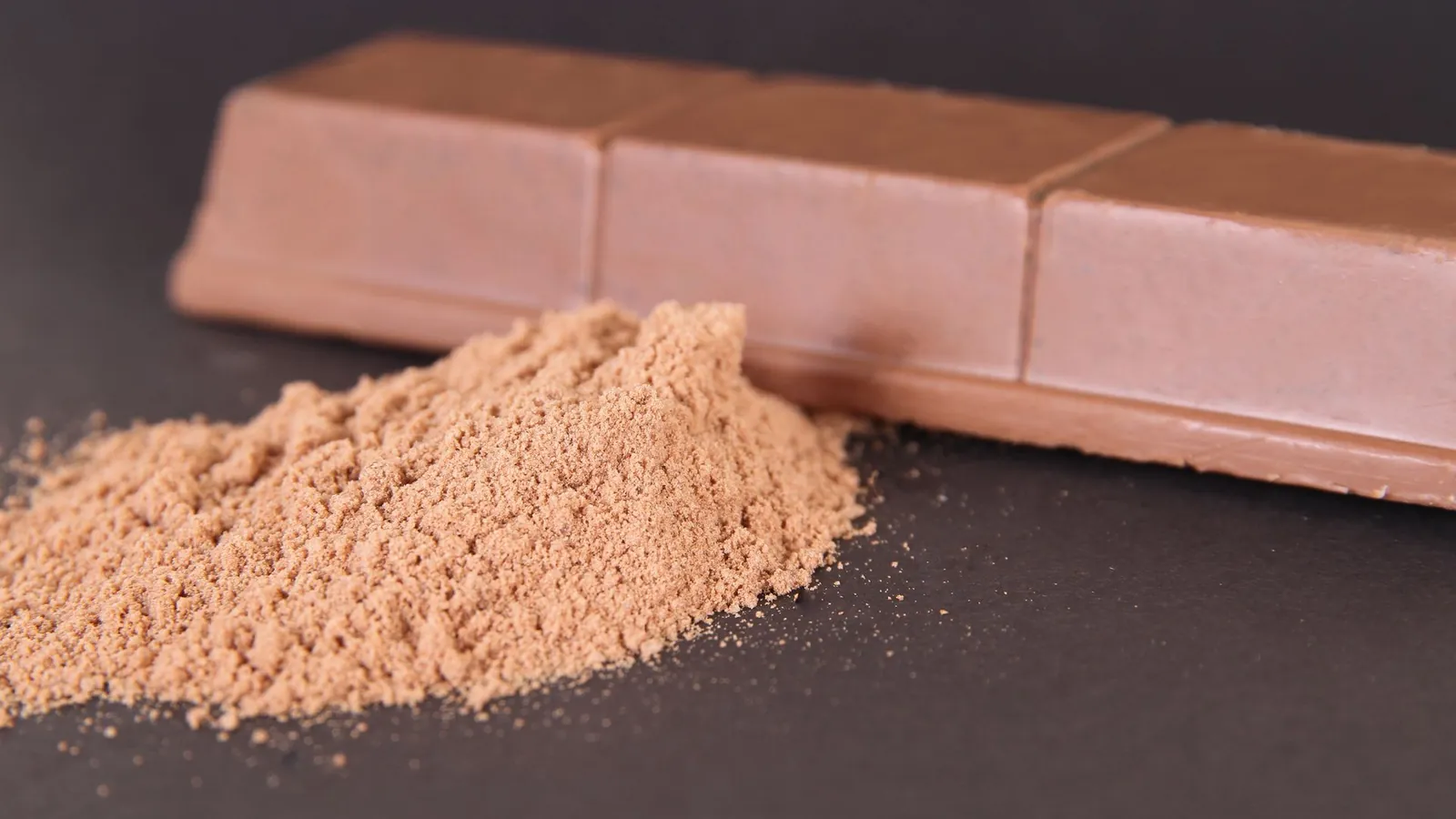
Imagine a confectionery developer holding two bowls of filling under the same light. The brown shades are close enough to earn a pleased nod. Then comes the tasting. The carob version has its own roasted sweetness, while the reference has a different bitterness and aroma. The eyes agreed before the mouth had its turn.
Roasted carob can play a useful role in cocoa-style recipes, but it deserves to be treated as an ingredient with a personality. A colour match is an encouraging observation, not proof of a complete substitution.
Meet the powder before assigning the job
Carob powder is made from the pulp of carob pods, commonly with roasting to develop flavour and colour. It is distinct from locust bean gum, which comes from the seed and is used for a different functional purpose. Sharing a plant origin does not make the two ingredients interchangeable.
Roast character, particle size and composition can vary between carob powders. Start with the specification and the actual sample. Descriptions such as light or dark can help organise options, but the food trial must show what those descriptions mean in your recipe.
Cocoa powders also vary. Define the reference you are trying to match rather than comparing carob with an imaginary single cocoa flavour. The original powder and the finished product together make a much clearer target.
Give each flavour note its own space
Compare sweetness, bitterness, roasted notes and aroma separately. Carob can contribute noticeable sweetness and a roasted character that differs from cocoa. Depending on the material and recipe, the result may suggest a different direction rather than a perfect imitation.
Ask the tasting team to describe the finish as well as the first impression. A filling may look convincing and taste pleasant initially, yet leave a lingering note that changes the overall judgement. Short, specific descriptions are more useful than simply calling a sample close.
Keep the serving temperature consistent. A cold filling and a warm filling can differ in aroma release and texture. If the product is usually eaten inside a biscuit or cake, include that surrounding food in the final comparison.
The solids balance changes too
Replacing a powder changes the mixture of sugars, fibre, fat and other solids in the recipe. The precise change depends on both ingredients. Equal weights of carob and cocoa do not guarantee equal contributions to sweetness, fat content or the behaviour of the filling.
Look at the complete mass balance before correcting the result by feel. If the new powder contributes different sweetness, adjusting added sugar changes another part of the formulation. If liquid is changed to fix consistency, that can affect stability and the process as well.
Record every adjustment so the trial remains reproducible. A filling rescued by several unrecorded spoonfuls may be delicious, but it is not yet a usable development result. Keep the successful tasting connected to a recipe that can be made again.
Texture needs a trial in the right surroundings
In a fat-based filling, powder particles must be distributed and wetted by the surrounding phase. Particle size and the interaction between solids and fat affect flow and mouthfeel. A matching colour says little about whether the filling will spread, deposit or feel smooth.
In a water-containing filling, hydration becomes another part of the picture. Fibre and other solids can influence consistency during mixing and holding. Evaluate the sample after the normal process and waiting stages, not only while it is freshly stirred.
Use the actual equipment sequence as far as practical. Mixing that produces a smooth laboratory cup may not represent the shear or residence time on the line. Capture the process alongside the formulation so the next trial can investigate a specific difference.
A comparison that keeps the story clear
- Define the reference cocoa powder and the intended finished product.
- Record the carob powder's roast description, composition and particle information.
- Compare colour, sweetness, bitterness and roasted character separately.
- Review the recipe's solids, fat and water balance after any substitution.
- Check depositing or spreading behaviour and the bite after holding.
- Taste the complete product at its usual serving temperature.
Keep an unchanged reference through the trial. Memory is surprisingly generous to the sample tasted before lunch. A fresh side-by-side comparison makes it easier to distinguish a real improvement from a change in expectations.
Let the finished food choose the direction
The brief may allow a distinctive roasted filling rather than an exact cocoa match. If so, develop that character deliberately. If the brief requires a close match, decide which differences matter most and whether the ingredient can realistically meet them.
Review the ingredient declaration and product description with the finished formulation, and check the current FSSAI regulations. A development shorthand should not quietly become the final label.
Carob does not need to pass a disguise test to be useful. Ask Specsy or the SpecSol team about the food you want to make. A clear brief gives colour, flavour and texture a chance to arrive at the same answer.