

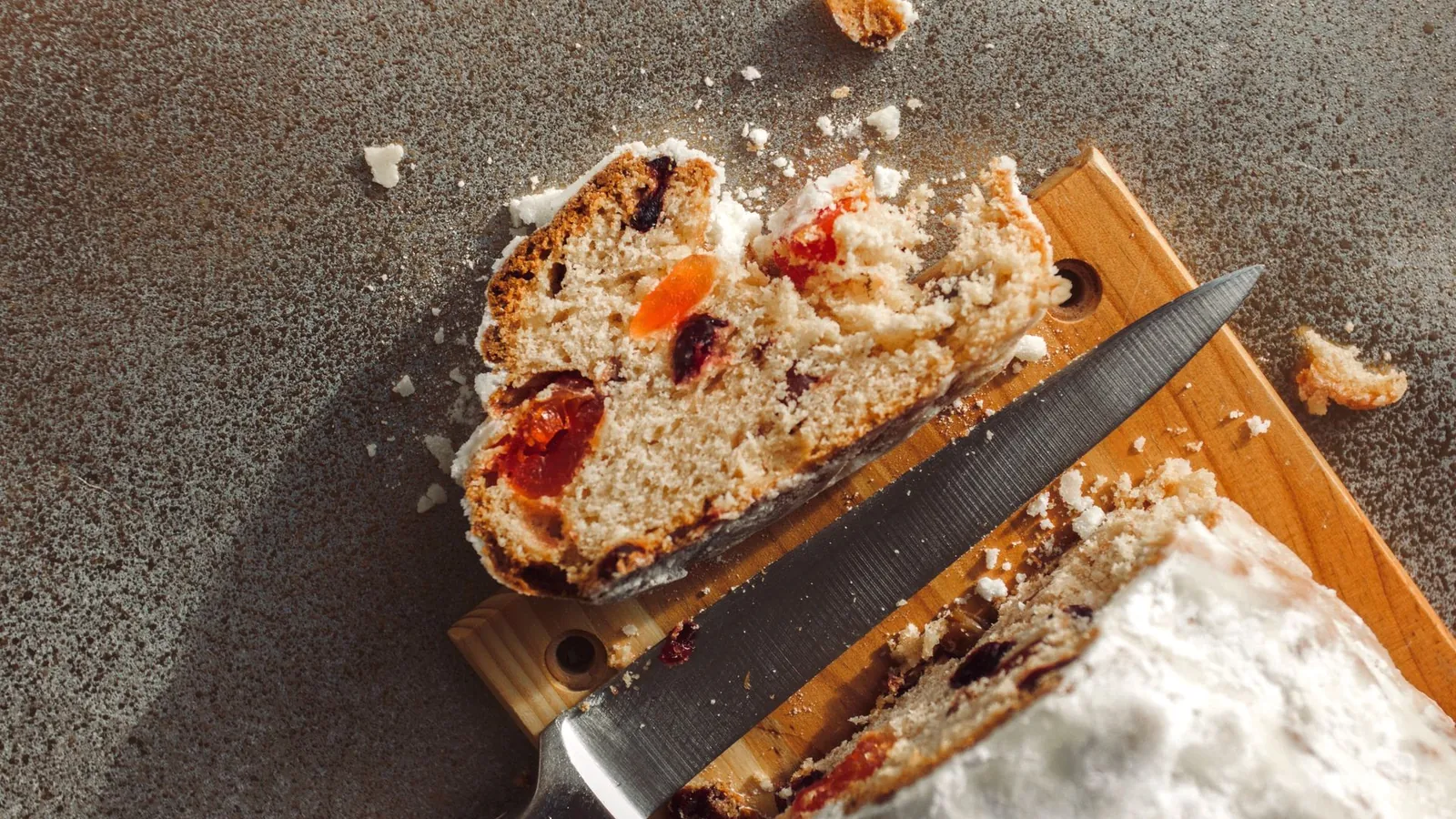
Picture a bakery developer lifting a fresh slice of fruit cake towards the light. The top looks wonderfully even. The bottom looks like the fruit has arranged a meeting. Almost every piece has gathered along the base, leaving a generous stretch of plain crumb above.
The fruit may have been distributed evenly when mixing ended. The trouble can happen later, while the batter waits or warms in the oven. Getting a good distribution means understanding a small race: how quickly pieces settle compared with how quickly the cake develops enough structure to hold them.
The batter is holding moving passengers
Fruit pieces have weight, size and shape, and they sit within an aerated batter. If they are denser than their surroundings, gravity encourages them downwards. The batter resists that movement, but the amount of support depends on its structure and how it behaves while resting.
A larger piece generally presents a different settling challenge from a small fragment. Fruit preparation matters too. Drained, soaked, chopped or sticky pieces do not enter the batter in the same condition. Record what actually goes into the mixer, including any liquid carried on the surface.
A batter that looks thick on a spoon may still allow pieces to move during a long wait. Flow during mixing and support at rest are related but different behaviours. The useful question is whether this batter holds these inclusions for the time and conditions the process requires.
The oven does not set everything at once
During heating, batter properties change before the crumb becomes fully established. Fats can melt, gas cells expand and the mixture changes its resistance to movement. Later, starch gelatinisation and protein setting help form the cake structure that fixes the inclusions in place.
There is therefore a vulnerable interval between depositing and adequate setting. Its length depends on the recipe, cake dimensions and heating pattern. A result from a small test cake may not transfer directly to a deeper production format, even with the same ingredient list.
Check that the oven is operating as intended and that loading is consistent. Keep baking changes within an assessed process that produces a fully baked cake. A darker crust alone does not tell you whether the centre developed structure at the right stage.
Watch the fruit enter and travel
Inspect inclusion addition and mixing. Insufficient mixing can leave uneven distribution before the batter reaches the depositor. Excessive working may damage delicate fruit or change the batter's aeration. Aim for an addition method that distributes the pieces while preserving the intended batter and fruit condition.
Then follow the bowl, transfer vessel and depositor. Fruit may gather in a holding container or be distributed unevenly through a discharge sequence. Compare the beginning and end of a run. An oven adjustment cannot correct a portion that received an unusually heavy cluster at depositing.
Record waiting between mixing, depositing and baking. A delay that seems harmless for plain cake can give inclusions more opportunity to settle. If the first tray is evenly distributed and the last is bottom-heavy, the time sequence deserves attention before the recipe is rewritten.
The flour dusting deserves a fair hearing
Dusting fruit with flour is a familiar suggestion. It can change the surface condition and help separate some sticky pieces, but it cannot guarantee suspension in every batter. A heavy piece still has weight, and a poorly supporting batter still needs to do its job.
If you compare dusted and undusted fruit, keep the overall recipe accounting clear. Extra flour changes the batter composition unless it is taken from an agreed part of the formula. Compare fruit preparation consistently so that a drainage difference is not mistaken for a dusting effect.
Consider the eating experience alongside distribution. Smaller pieces may distribute more readily but create a different cake identity. Increasing batter body may influence volume and tenderness. A successful correction keeps the recognisable fruit bite and the crumb the product is meant to have.
Read the whole slice
- Record fruit identity, size, preparation and surface moisture.
- Check distribution immediately after inclusion mixing.
- Compare early and late deposits from the same batch.
- Track waiting time and the actual baking sequence.
- Cut comparable slices from different positions in each cake.
- Assess fruit distribution, crumb texture and baked condition together.
Use a consistent cutting and photography method. A single attractive end slice can hide an uneven centre. Look across the depth and length of the cake, describing whether pieces are scattered, clustered or concentrated near the base. Keep those observations with the corresponding process records.
Change one suspected cause for the next trial, such as inclusion preparation or a holding stage. Compare it with the normal method under the same baking conditions. If the distribution improves, repeat the comparison at the intended production scale before calling the problem solved.
That imagined slice should offer a little fruit wherever the fork lands. Ask Specsy or the SpecSol team to review the route from mixing bowl to cut cake. Once the timing and support are understood, the fruit has a much better reason to stay where it was invited.