

Picture a biscuit operator checking neat dough pieces on the belt. Each one is flat, evenly cut and ready for the oven. At the exit, some have grown little pillows. A few look almost proud of themselves, but the packing line would prefer them to lie down.
These raised patches are blisters formed during baking. They can spoil appearance, disturb stacking and create an uneven bite. Before changing the flour or reducing the lift of the entire biscuit, look at how gas and vapour move through the dough sheet.
A small pocket can lift a big patch
Heat turns some of the dough's water into vapour, while trapped air expands and any chemical leavening contributes gas. As the biscuit structure develops, local pockets can inflate if the gas cannot escape readily. A thin layer above a pocket may lift while the surrounding area stays flatter.
The dough's structure influences where this happens. Layers created during sheeting or lamination can provide places for separation. Uneven thickness, folds and trapped air can also create local differences. A blister is therefore a clue about the sheet and its baking journey, rather than a diagnosis by itself.
Some products deliberately have an uneven or puffed appearance. Start with the intended biscuit. A light, layered cracker and a flat sandwich biscuit need different structures. Decide which raised areas belong to the design and which are defects before trying to remove all signs of expansion.
The pins are doing more than decorating
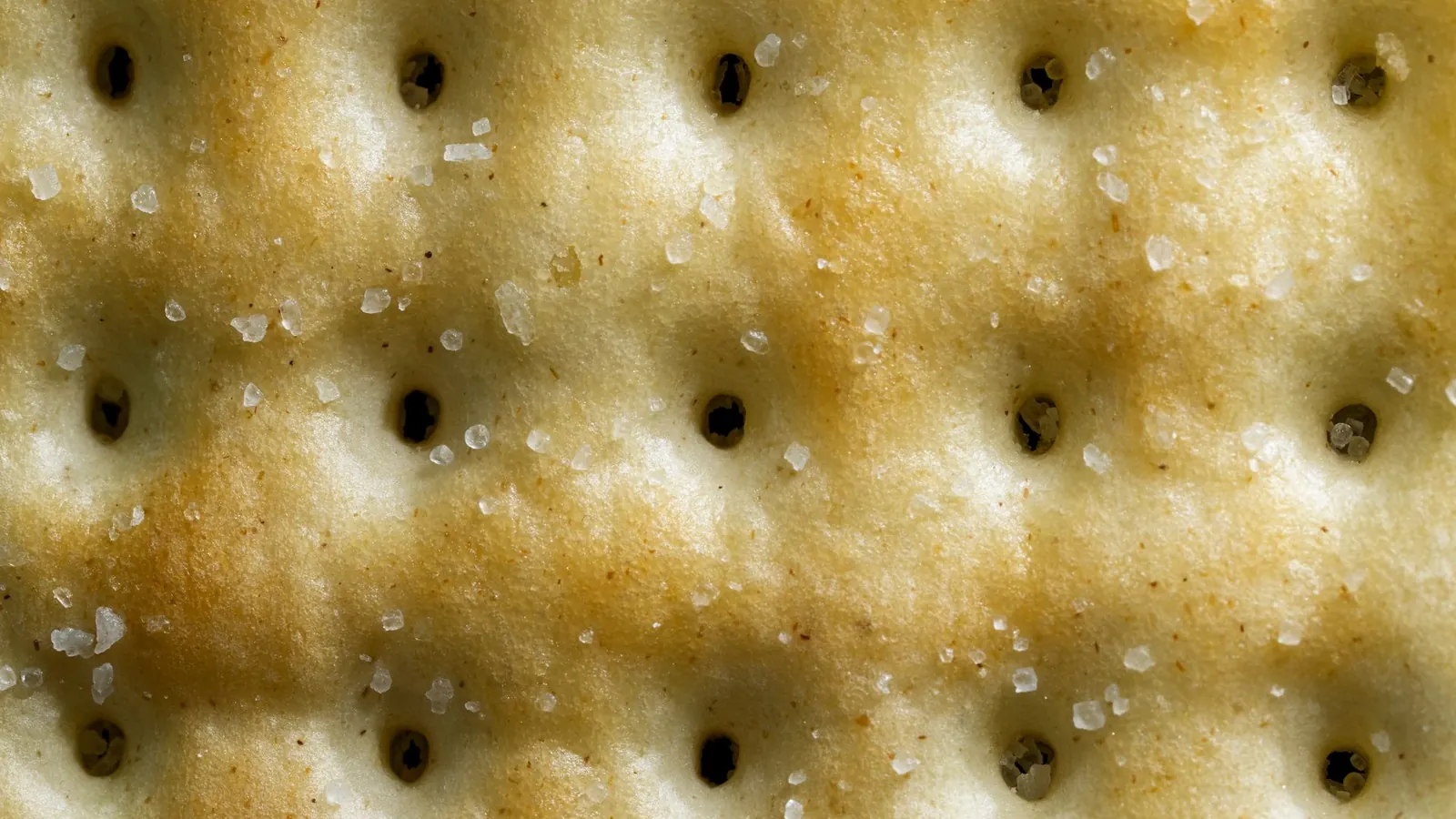
Docking makes small openings through a suitable dough sheet. These give vapour and gas routes through the structure and can help limit large local lifts. The tidy pattern on the biscuit has a practical purpose alongside its appearance.
A visible mark is not necessarily an effective opening. If a pin barely dents the surface, it may leave a convincing pattern without making the intended path. Check penetration through the actual sheet, using the equipment's safe inspection procedure rather than judging only the top view.
Pin condition and cleanliness matter too. Dough stuck around a pin can change how it enters and leaves the sheet. Worn or damaged components may produce inconsistent marks across the belt. Compare the pattern at different positions instead of assuming every biscuit receives the same treatment.
A hole can change before the oven
Dough continues to respond after docking. An elastic sheet can pull back, narrowing an opening. Soft or sticky dough can also lose the shape of the hole during handling. A good pattern immediately beneath the roller may look different by the time it reaches the oven entrance.
Follow the sheet through transfer points, waiting and any further working. Check whether a belt transition stretches or compresses it. Record dough condition and thickness at the same time. Altering the docking equipment cannot reliably compensate for every change happening later in the line.
Thickness deserves a proper comparison. A locally thick patch carries a different amount of material and moisture through the same oven journey. It can also receive different effective pin penetration. Look across the width of the sheet and along the run, especially around joins or changes in feeding.
Keep the oven in the conversation
The timing of expansion and structure setting affects the final shape. The oven's heat transfer and the dough's condition together determine how quickly the surface and interior develop. An oven setting alone does not describe the experience of every piece on the belt.
Record where blisters first become visible using safe observation points. Compare their positions across the oven and their relationship to sheet features. A repeated lane pattern points towards a different investigation from random blisters associated with folds in the dough.
Do not confuse these raised areas with checking cracks that appear after baking. Checking involves stresses developing as the biscuit cools and moisture redistributes. Blisters have already inflated in the oven. Recording when the defect first appears helps keep those investigations separate.
Give the next tray a clear question
- Confirm the intended appearance and the type of dough being sheeted.
- Compare sheet thickness, folds and trapped air before docking.
- Inspect pin condition and effective penetration under safe procedures.
- Check whether openings remain visible at the oven entrance.
- Map blister positions and assess the cooled biscuit's stack and bite.
Keep reference samples and photographs from comparable belt positions. Note whether a raised patch is hollow, whether its surface colours differently and whether it breaks during packing. These observations are more informative than a single overall score for appearance.
Change a relevant factor in a controlled comparison, such as restoring consistent docking after an equipment check. Keep the rest of the process as steady as possible. Then assess thickness, breakage and eating quality together, since flattening a biscuit is only useful if it still performs as intended.
Those little holes deserve a closer look before anyone gives the whole recipe a stern talking-to. Ask Specsy or the SpecSol team to help connect your sheet, docking and oven observations. The next useful clue may already be sitting neatly in the pattern on top.